Last year, General Motors announced its next major step toward personal autonomy: introducing autonomous highway driving, beginning in 2028 with the Cadillac ESCALADE IQ.
Today, we’re sharing the next big step in that journey: expanding autonomous highway driving to our highest-volume, best-selling vehicle lineups, including full-size SUVs and light-duty pickups.
Our vision is to build vehicles that can drive themselves or their occupants anywhere they need to be. This includes a future where your vehicle can handle mundane tasks for you, like heading out into bumper-to-bumper traffic to pick up groceries or dry cleaning, giving you valuable time back.
Here is a look at how we are using frontier AI and machine learning breakthroughs to accelerate development.
What’s powering the expansion: A single, high-compute core
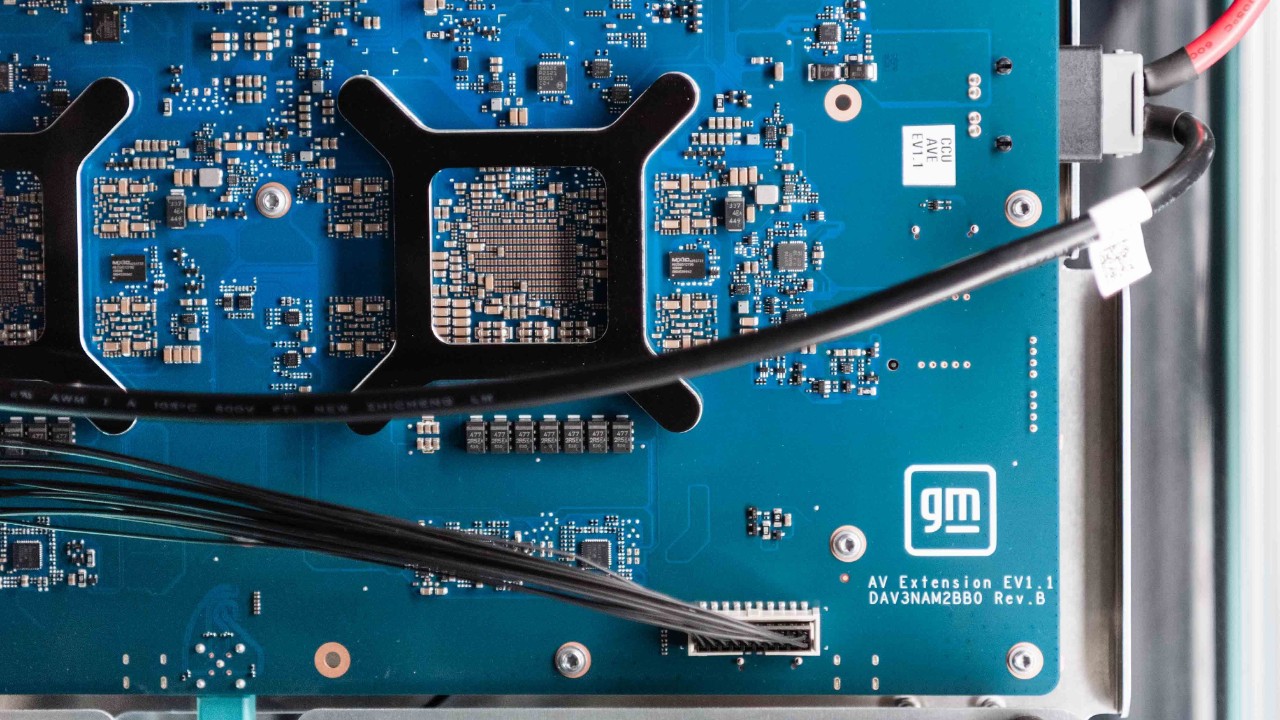
Photo caption: An inside look at GM’s in-house-designed Central Compute Unit (CCU).
Scaling autonomous driving technology across millions of diverse vehicles requires a radical departure from traditional automotive electronics. In the past, features lived in separate, fragmented modules.
Driving this rapid rollout is GM’s next-gen centralized compute and electrical architecture:
One backbone across gas and electric vehicles: GM’s new central compute architecture decouples software from physical hardware. It’s designed to provide a common computing, network, software, and interface foundation across a broad portfolio while allowing each vehicle to retain the hardware and controls required for its specific purpose.
Liquid-cooled central compute unit (CCU): At the center is a CCU with roughly 40x more compute capability than today's vehicles—offering enough headroom to support the AI and autonomy experiences we're building toward. A centralized high-performance computing hub consolidates autonomy, active safety, chassis, and propulsion software onto a single, high-speed core.
Zonal aggregators & high-speed ethernet: Regional zonal hubs replace complex, vehicle-spanning wiring harnesses by aggregating sensors and actuators into an ultra-fast data backbone. Connected via high-speed Ethernet, this supports 36x more data than previous systems, giving the vehicle a much more complete understanding of what is happening around it.
Rapid, continuous innovation: Rather than re-engineering systems for every trim and body style, improvements validated on one model can be deployed across the portfolio via frequent over-the-air updates.
By integrating the full autonomous driving stack—from newly developed ultra-high-resolution, ultra-low-cost radar to frontier machine learning architectures—our autonomy platform can scale efficiently across popular retail lineups.
Building the foundation: Over one billion miles and hybrid AI models
Expanding autonomous capabilities to high-volume vehicles requires validation at unprecedented scale. That foundation starts with the trust built over more than 1.2 billion hands-free miles driven by Super Cruise customers. To accelerate autonomous deployment safely, our engineering teams are combining real-world data collection with frontier AI and machine learning tools.
Video caption: Mary Barra and Sterling Anderson test GM’s autonomous-driving technology.
The data flywheel
We’ve built a continuously compounding flywheel, including data from retail vehicles where customers have opted in, to operating hundreds of data collection vehicles collecting 1 million miles per month of full-rate, multi-sensor data across diverse weather, traffic patterns, and edge cases. This scale helps us learn from what expert drivers do well. This scale helps us learn from what drivers do well and anticipate where challenges can arise.
Self-play and reinforcement learning
Imitation learning can only learn from situations people have encountered and recorded. Self-play with reinforcement learning extends that boundary by allowing the system to generate new experiences and learn from their outcomes.
Consider a busy highway merge. In simulation, different versions of the driving software control the merging vehicle and surrounding traffic, learning through repeated interactions when to yield, adjust speed, or enter a gap.
In closed-loop, multi-agent training, the vehicles and simulators continually challenge one another. As the driving policy improves, scenarios become more demanding—creating an adaptive curriculum that builds resilience to the variation of real-world roads.
Turning simulation into a scale advantage
Caption: On the left, a drive collected by one of our test vehicles. On the right, a synthetic recreation of the same road, demonstrating our simulation capabilities for long-tail scenarios as the car steers around a giraffe lunging into its path.
Credits:
Giraffe model: "Giraffe" by BlueMesh, CC BY 4.0.
Gait reference: "Le galop de la girafe" by Thierry Dugnolle, Wikimedia Commons, CC BY-SA 3.0.
Large-scale simulation makes it possible to explore strategies that may not have been explicitly demonstrated by humans, and evaluate candidate behaviors before they are introduced into real-world testing. It also lets the system learn from rare or adversarial situations in a controlled environment.
Every day, our stack drives more than three billion virtual miles. At an average speed of 50 mph, a vehicle operating 24/7 would cover 1,200 miles per day—meaning it would take about 2.5 million vehicles to match our daily output.
This also brings a significant engineering challenge: simulation and distributed training can be computationally expensive.
To address that challenge, we have invested in optimizing large-scale, multi-node distributed training and simulation so we can get more miles per GPU-hour. In practical terms, that efficiency can help us move from identifying a specific opportunity to improve the system to seeing that improvement on the road within a single day.
Why the combination matters
Imitation learning and self-play solve different parts of the learning problem:
Imitation learning anchors the system in the breadth of real-world data and the judgment demonstrated by experienced drivers.
Self-play enables many variations and difficulty levels of scenarios and helps discover robust responses to rare situations.
Simulation creates a scalable environment to generate and evaluate millions of interactions before candidate behaviors reach real-world testing.
Together, they offer a scalable path for improving autonomous driving capability while prioritizing the safety, diversity, and accountability required for deployment.
Showcasing in-vehicle experience
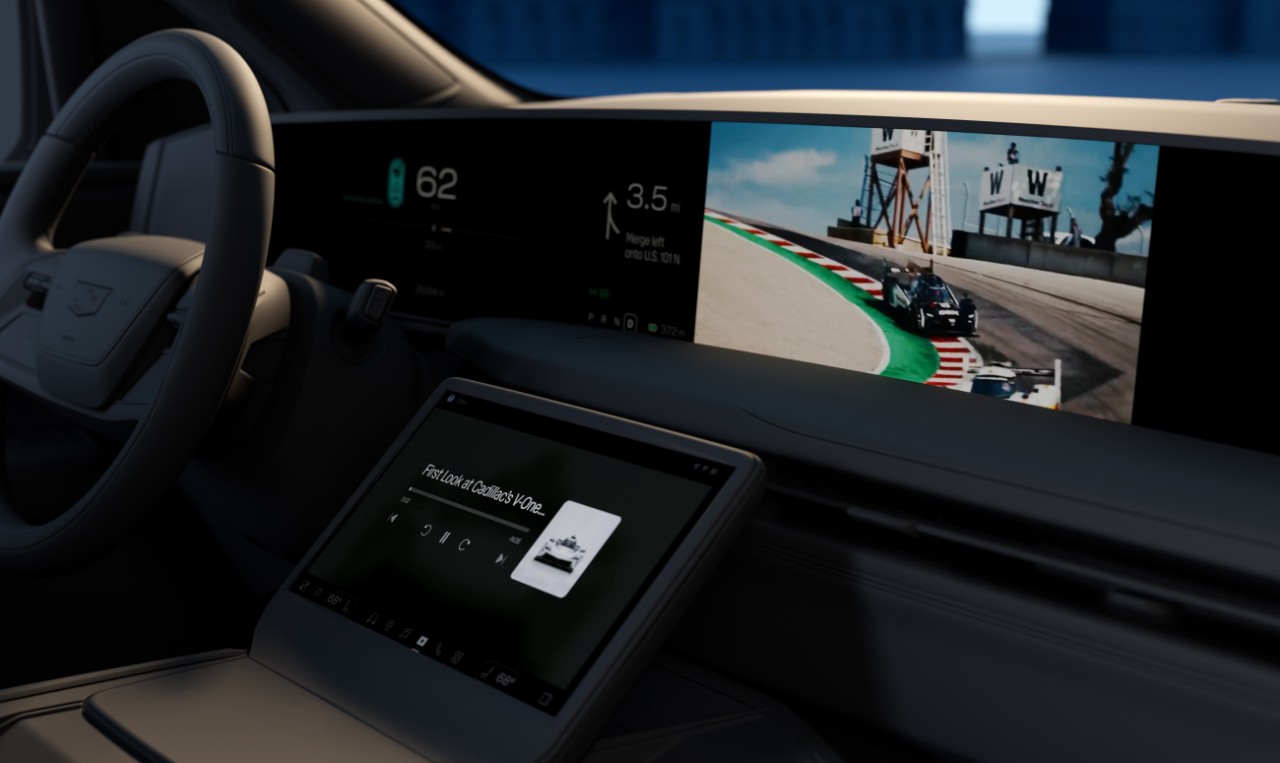
Our vision, Concept Horizon, showcases a future where autonomous highway driving transforms the cabin into a space to relax, work, and unwind. Built around human needs and informed by our research into how passengers use longer autonomous journeys, Concept Horizon is designed to understand context, respond at the right moment, and create greater calm and confidence. Grounded in the trust GM drivers have placed in Super Cruise—more than 1.2 billion hands-free miles across nearly 750,000 vehicles—it points toward a future where every journey is more productive, restorative, and human.
Photo caption: A look at GM’s vision, Concept Horizon, coming to life in a vehicle’s interior.
Autonomy for everyone
The promise of personal autonomy is giving people their time back. By pairing our centralized compute architecture with rigorous real-world validation, GM is moving from an initial limited debut to widespread availability across our most popular trucks and SUVs, making trusted autonomy available to everyday drivers.
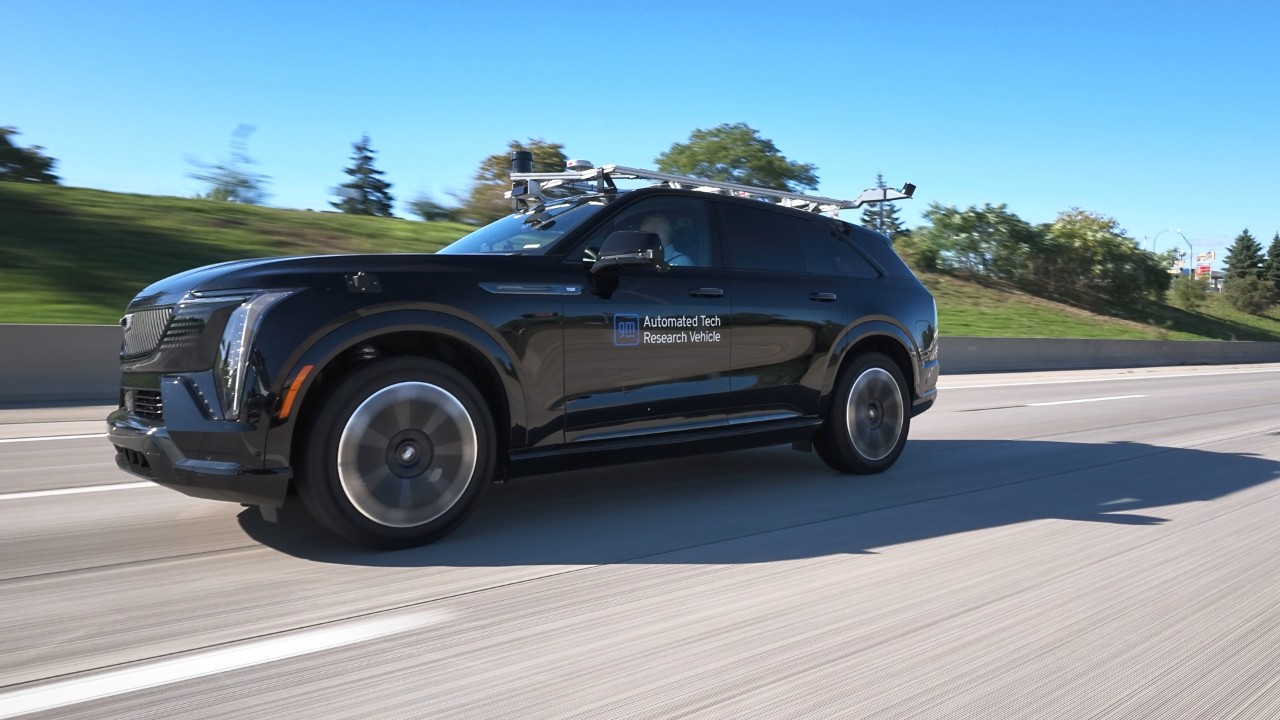
One of GM’s automated research vehicles tests autonomous-driving technology.
Last year, General Motors announced its next major step toward personal autonomy: introducing autonomous highway driving, beginning in 2028 with the Cadillac ESCALADE IQ.
Today, we’re sharing the next big step in that journey: expanding autonomous highway driving to our highest-volume, best-selling vehicle lineups, including full-size SUVs and light-duty pickups.
Our vision is to build vehicles that can drive themselves or their occupants anywhere they need to be. This includes a future where your vehicle can handle mundane tasks for you, like heading out into bumper-to-bumper traffic to pick up groceries or dry cleaning, giving you valuable time back.
Here is a look at how we are using frontier AI and machine learning breakthroughs to accelerate development.
What’s powering the expansion: A single, high-compute core
An inside look at GM’s in-house-designed Central Compute Unit (CCU).
Scaling autonomous driving technology across millions of diverse vehicles requires a radical departure from traditional automotive electronics. In the past, features lived in separate, fragmented modules.
Driving this rapid rollout is GM’s next-gen centralized compute and electrical architecture:
One backbone across gas and electric vehicles: GM’s new central compute architecture decouples software from physical hardware. It’s designed to provide a common computing, network, software, and interface foundation across a broad portfolio while allowing each vehicle to retain the hardware and controls required for its specific purpose.
Liquid-cooled central compute unit (CCU): At the center is a CCU with roughly 40x more compute capability than today's vehicles—offering enough headroom to support the AI and autonomy experiences we're building toward. A centralized high-performance computing hub consolidates autonomy, active safety, chassis, and propulsion software onto a single, high-speed core.
Zonal aggregators & high-speed ethernet: Regional zonal hubs replace complex, vehicle-spanning wiring harnesses by aggregating sensors and actuators into an ultra-fast data backbone. Connected via high-speed Ethernet, this supports 36x more data than previous systems, giving the vehicle a much more complete understanding of what is happening around it.
Rapid, continuous innovation: Rather than re-engineering systems for every trim and body style, improvements validated on one model can be deployed across the portfolio via frequent over-the-air updates.
By integrating the full autonomous driving stack—from newly developed ultra-high-resolution, ultra-low-cost radar to frontier machine learning architectures—our autonomy platform can scale efficiently across popular retail lineups.
Building the foundation: Over one billion miles and hybrid AI models
Expanding autonomous capabilities to high-volume vehicles requires validation at unprecedented scale. That foundation starts with the trust built over more than 1.2 billion hands-free miles driven by Super Cruise customers. To accelerate autonomous deployment safely, our engineering teams are combining real-world data collection with frontier AI and machine learning tools.
Mary Barra and Sterling Anderson test GM’s autonomous-driving technology.
The data flywheel
We’ve built a continuously compounding flywheel, including data from retail vehicles where customers have opted in, to operating hundreds of data collection vehicles collecting 1 million miles per month of full-rate, multi-sensor data across diverse weather, traffic patterns, and edge cases. This scale helps us learn from what drivers do well and anticipate where challenges can arise.
Self-play and reinforcement learning
Imitation learning can only learn from situations people have encountered and recorded. Self-play with reinforcement learning extends that boundary by allowing the system to generate new experiences and learn from their outcomes.
Consider a busy highway merge. In simulation, different versions of the driving software control the merging vehicle and surrounding traffic, learning through repeated interactions when to yield, adjust speed, or enter a gap.
In closed-loop, multi-agent training, the vehicles and simulators continually challenge one another. As the driving policy improves, scenarios become more demanding—creating an adaptive curriculum that builds resilience to the variation of real-world roads.
Turning simulation into a scale advantage
On the left, a drive collected by one of our test vehicles. On the right, a synthetic recreation of the same road, demonstrating our simulation capabilities for long-tail scenarios as the car steers around a giraffe lunging into its path. Credits: Giraffe model: "Giraffe" by BlueMesh, CC BY 4.0. Gait reference: "Le galop de la girafe" by Thierry Dugnolle, Wikimedia Commons, CC BY-SA 3.0.
Large-scale simulation makes it possible to explore strategies that may not have been explicitly demonstrated by humans, and evaluate candidate behaviors before they are introduced into real-world testing. It also lets the system learn from rare or adversarial situations in a controlled environment.
Every day, our stack drives more than three billion virtual miles. At an average speed of 50 mph, a vehicle operating 24/7 would cover 1,200 miles per day—meaning it would take about 2.5 million vehicles to match our daily output.
This also brings a significant engineering challenge: simulation and distributed training can be computationally expensive.
To address that challenge, we have invested in optimizing large-scale, multi-node distributed training and simulation so we can get more miles per GPU-hour. In practical terms, that efficiency can help us move from identifying a specific opportunity to improve the system to seeing that improvement on the road within a single day.
Why the combination matters
Imitation learning and self-play solve different parts of the learning problem:
Imitation learning anchors the system in the breadth of real-world data and the judgment demonstrated by experienced drivers.
Self-play enables many variations and difficulty levels of scenarios and helps discover robust responses to rare situations.
Simulation creates a scalable environment to generate and evaluate millions of interactions before candidate behaviors reach real-world testing.
Together, they offer a scalable path for improving autonomous driving capability while prioritizing the safety, diversity, and accountability required for deployment.
Showcasing in-vehicle experience
Our vision, Concept Horizon, showcases a future where autonomous highway driving transforms the cabin into a space to relax, work, and unwind. Built around human needs and informed by our research into how passengers use longer autonomous journeys, Concept Horizon is designed to understand context, respond at the right moment, and create greater calm and confidence. Grounded in the trust GM drivers have placed in Super Cruise—more than 1.2 billion hands-free miles across nearly 750,000 vehicles—it points toward a future where every journey is more productive, restorative, and human.
A look at GM’s vision, Concept Horizon, coming to life in a vehicle’s interior.
Autonomy for everyone
The promise of personal autonomy is giving people their time back. By pairing our centralized compute architecture with rigorous real-world validation, GM is moving from an initial limited debut to widespread availability across our most popular trucks and SUVs, making trusted autonomy available to everyday drivers.