
By Chris Perkins, writer and editor, GM News
By Chris Perkins, writer and editor, GM News
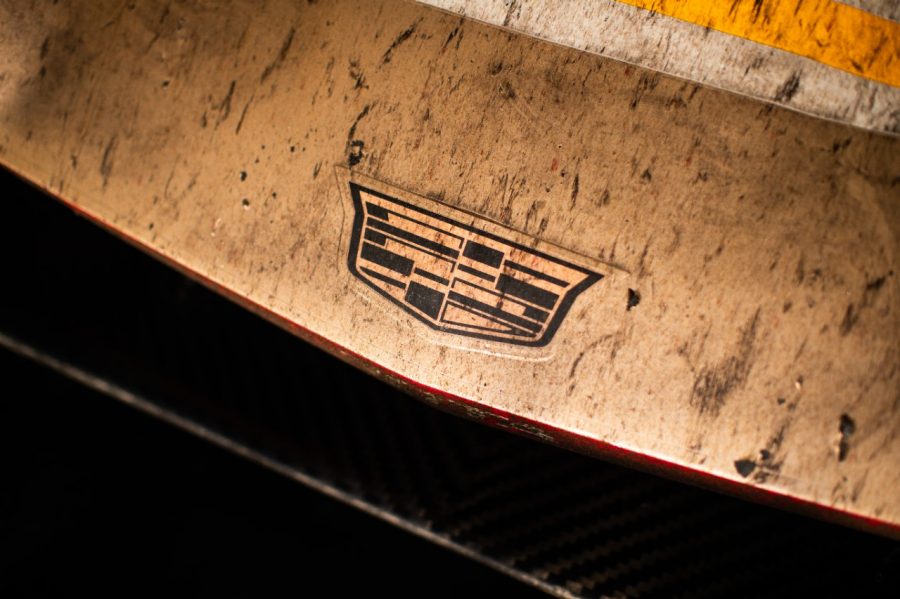
General Motors races almost everywhere. In the US, you see Chevrolet competing in NASCAR, IndyCar, IMSA, Best in the Desert Off-Road Trucks, and NHRA. Chevrolet also competes in GT3 sports car racing with Corvette across the globe, as well as the Supercar series in Australia and New Zealand. Cadillac competes at the top level of prototype sports-car racing in both the U.S.-based IMSA WeatherTech Sportscar Championship and the FIA World Endurance Championship, which competes in eight countries around the globe, including the 24 Hours of Le Mans.
All this racing experience will feed directly into the new Cadillac Formula 1® Team as it prepares for the 2026 racing season.
“GM is racing and winning in many premier race series worldwide.” says Eric Warren, GM Vice President of Global Motorsports Competition. “In each series, GM Motorsports gains knowledge, and our people are battle-tested and proven on all the skillsets we need.”
GM’s wide range of racing programs has created the ultimate training ground for motorsports professionals. Across the organization, engineers, designers, technicians and software experts gain exposure to all the different facets of race car development – propulsion, aerodynamics, simulation, tires, cooling, brakes, suspension, electronics, just to name a few.
“We have the opportunity for young motorsports engineers to gain experience at a rate and level that we believe is unmatched,” Warren says.
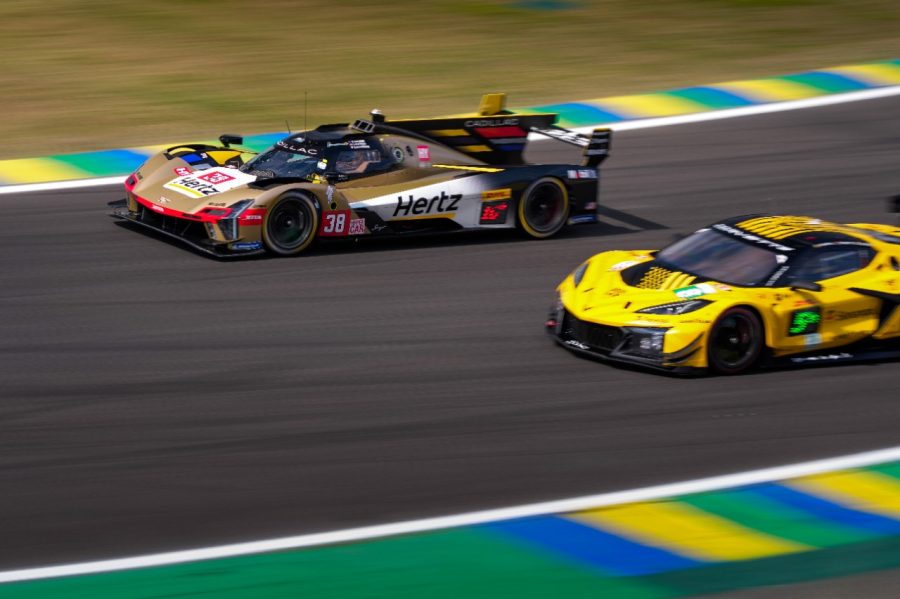
CAPTION: Cadillac V-Series.R and Chevrolet Corvette Z06 GT3.R at the Autódromo José Carlos Pace.
A lot of organizations talk about a “winning spirit,” and a lot of times it’s just that: Talk. For GM Motorsports, winning is a foundation of the culture, and the trophies are proof. In 2025 alone, GM took home championships in the two premier NASCAR racing series, Cup and Xfinity, IMSA GTD Pro, Supercars, European Le Mans, Best in the Desert, and NHRA. In total, winning 114 races and over 17 championships in competitions around the globe.
“There’s something different about being part of a winning organization,” Warren explains. “It’s the mentality, it’s the discipline, it’s the refusal to accept mediocrity.”
It’s not just a matter of people. The technology that GM Motorsports develops and uses in racing today will directly benefit the Cadillac Formula 1® Team in 2026.
“When you start in Formula 1®, nobody hands you a toolset. You've got to develop all your analysis tools that are used in race preparation and at the track,” explains Ken Morris, GM Senior Vice President of product programs, product safety, integration and motorsports. “We have a massive stockpile of skills we can modify for use in Formula 1®. If we need to build something from the ground up, we have a good knowledge basis to work from.”
GM Motorsports can also draw upon more than a century of expertise building high-performance production cars. Today’s Chevrolet Corvette, Cadillac CT4-V Blackwing and CT5-V Blackwing all draw on the latest cutting-edge technology to improve acceleration, braking, and cornering – knowledge that goes to work in every purpose-built racing vehicle. Whether it’s on a dedicated race car or a track-ready production vehicle, GM engineers work to optimize aerodynamics, engine power, and chassis capabilities for maximum performance.
Warren says production-car and Motorsports engineers are in constant communication, sharing knowledge so both sides benefit. Some aerodynamicists work across production and race cars. “It’s like a technology transfer in motion,” Warren says. “We’re working on aerodynamic simulation together, how to make the process faster and more accurate.”
GM also has extensive experience in simulation for production-car development. Virtual development helps manage the increasing complexity of modern cars and lets engineers try new ideas virtually, refining and optimizing them before building real-world prototypes. It’s how the team behind the GMC HUMMER EV was able to develop the electric super truck in half the time typically required to create a brand-new automobile.
Experience in simulation can be a vital asset to the Cadillac Formula 1® Team. In an effort to control the amount of money each team spends, Formula 1 ® regulations significantly limit the amount of real-world testing each team can conduct in a year. That makes high-quality simulation critical – teams can refine the car in virtual testing, maximizing their real-world testing hours.
CAPTION: The GM Motorsports Charlotte Technical Center.
Simulation is only valuable if it’s extremely accurate. In racing, you hear engineers talk about “correlation,” how well the data gathered in simulation matches up with real-world findings in testing.
“If you aren’t good at simulation, you can’t optimize the design before you get to the track,” Warren says. “Then it’s just trial and error, and you are already starting from behind.”
On the road or the racetrack, vehicle performance relies on tire performance. As different as road cars and racecars may be, they can only accelerate, turn or brake thanks to the tires. Automotive and racing engineers spend significant time on tire modeling, recreating the behavior of tires in the simulator – one of the most difficult aspects of vehicle performance to accurately portray in simulation.
Warren holds a PhD in aerospace engineering. “Having experience in rocket science,” he says, “tire modeling is one of the most complex engineering problems in the world.”
When the Cadillac Formula 1® Team hits the grid at the Australian Grand Prix in March 2026, it will be the first new Formula 1® team in a decade, fielding the first-ever grand prix car developed by an American automaker. The team will reflect the extraordinary knowledge, experience, and success of GM Motorsports.
“Winning does not come easy, and we don’t take it for granted. Having the ingredients and understanding of what it takes to win is invaluable,” says Warren. “That’s the real secret sauce of what we’re doing with the Cadillac Formula 1® Team.”
General Motors races almost everywhere. In the US, you see Chevrolet competing in NASCAR, IndyCar, IMSA, Best in the Desert Off-Road Trucks, and NHRA. Chevrolet also competes in GT3 sports car racing with Corvette across the globe, as well as the Supercars series in Australia and New Zealand. Cadillac competes at the top level of prototype sports-car racing in both the U.S.-based IMSA WeatherTech Sportscar Championship and the FIA World Endurance Championship, which competes in eight countries around the globe, including the 24 Hours of Le Mans.
All this racing experience will feed directly into the new Cadillac Formula 1® Team as it prepares for the 2026 racing season.
“GM is racing and winning in many premier race series worldwide.” says Eric Warren, GM Vice President of Global Motorsports Competition. “In each series, GM Motorsports gains knowledge, and our people are battle-tested and proven on all the skillsets we need.”
GM’s wide range of racing programs has created the ultimate training ground for motorsports professionals. Across the organization, engineers, designers, technicians and software experts gain exposure to all the different facets of race car development – propulsion, aerodynamics, simulation, tires, cooling, brakes, suspension, electronics, just to name a few.
“We have the opportunity for young motorsports engineers to gain experience at a rate and level that we believe is unmatched,” Warren says.
A lot of organizations talk about a “winning spirit,” and a lot of times it’s just that: Talk. For GM Motorsports, winning is a foundation of the culture, and the trophies are proof. In 2025 alone, GM took home championships in the two premier NASCAR racing series, Cup and Xfinity, IMSA GTD Pro, Supercars, European Le Mans, Best in the Desert, and NHRA. In total, winning 114 races and over 17 championships in competitions around the globe.
“There’s something different about being part of a winning organization,” Warren explains. “It’s the mentality, it’s the discipline, it’s the refusal to accept mediocrity.”
It’s not just a matter of people. The technology that GM Motorsports develops and uses in racing today will directly benefit the Cadillac Formula 1® Team in 2026.
“When you start in Formula 1®, nobody hands you a toolset. You've got to develop all your analysis tools that are used in race preparation and at the track,” explains Ken Morris, GM Senior Vice President of product programs, product safety, integration and motorsports. “We have a massive stockpile of skills we can modify for use in Formula 1®. If we need to build something from the ground up, we have a good knowledge basis to work from.”

GM Motorsports can also draw upon more than a century of expertise building high-performance production cars. Today’s Chevrolet Corvette, Cadillac CT4-V Blackwing and CT5-V Blackwing all draw on the latest cutting-edge technology to improve acceleration, braking, and cornering – knowledge that goes to work in every purpose-built racing vehicle. Whether it’s on a dedicated race car or a track-ready production vehicle, GM engineers work to optimize aerodynamics, engine power, and chassis capabilities for maximum performance.
Warren says production-car and Motorsports engineers are in constant communication, sharing knowledge so both sides benefit. Some aerodynamicists work across production and race cars. “It’s like a technology transfer in motion,” Warren says. “We’re working on aerodynamic simulation together, how to make the process faster and more accurate.”
GM also has extensive experience in simulation for production-car development. Virtual development helps manage the increasing complexity of modern cars and lets engineers try new ideas virtually, refining and optimizing them before building real-world prototypes. It’s how the team behind the GMC HUMMER EV was able to develop the electric super truck in half the time typically required to create a brand-new automobile.
Experience in simulation can be a vital asset to the Cadillac Formula 1® Team. In an effort to control the amount of money each team spends, Formula 1 ® regulations significantly limit the amount of real-world testing each team can conduct in a year. That makes high-quality simulation critical – teams can refine the car in virtual testing, maximizing their real-world testing hours.

Simulation is only valuable if it’s extremely accurate. In racing, you hear engineers talk about “correlation,” how well the data gathered in simulation matches up with real-world findings in testing.
“If you aren’t good at simulation, you can’t optimize the design before you get to the track,” Warren says. “Then it’s just trial and error, and you are already starting from behind.”
On the road or the racetrack, vehicle performance relies on tire performance. As different as road cars and racecars may be, they can only accelerate, turn or brake thanks to the tires. Automotive and racing engineers spend significant time on tire modeling, recreating the behavior of tires in the simulator – one of the most difficult aspects of vehicle performance to accurately portray in simulation.
Warren holds a PhD in aerospace engineering. “Having experience in rocket science,” he says, “tire modeling is one of the most complex engineering problems in the world.”
When the Cadillac Formula 1® Team hits the grid at the Australian Grand Prix in March 2026, it will be the first new Formula 1® team in a decade, fielding the first-ever grand prix car developed by an American automaker. The team will reflect the extraordinary knowledge, experience, and success of GM Motorsports.
“Winning does not come easy, and we don’t take it for granted. Having the ingredients and understanding of what it takes to win is invaluable,” says Warren. “That’s the real secret sauce of what we’re doing with the Cadillac Formula 1® Team.”