
by Laryssa Hulcio and Stephen Harber, GM Talent Marketing
by Laryssa Hulcio and Stephen Harber, GM Talent Marketing
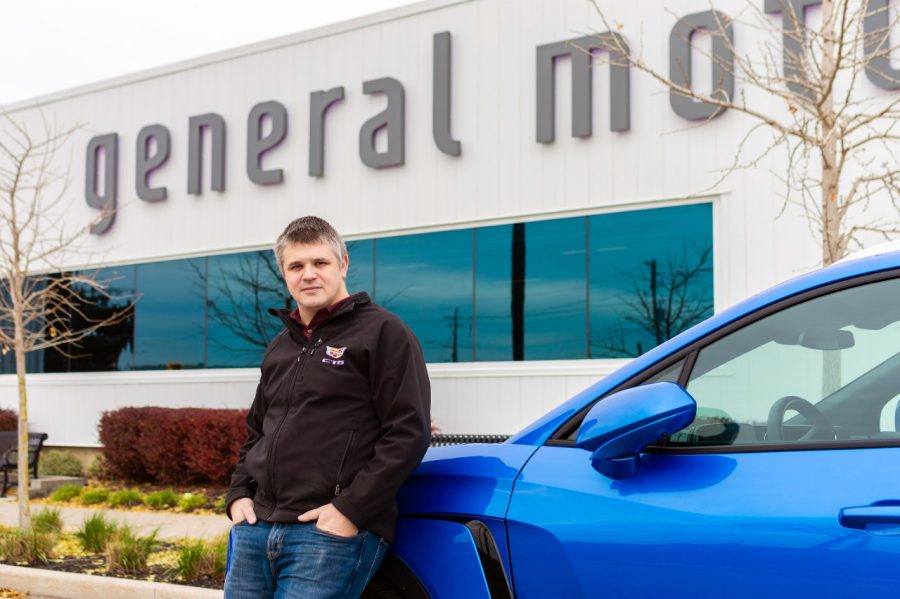
When you press the start button on a GM vehicle, thousands of systems come alive. Kevin Cochran helps make sure they all get along.
As a Diagnostic Architect based out of GM’s Oshawa Office, he shapes the unseen architecture that helps promote vehicle reliability and safety.
Modern vehicles are as much networks of computers as they are machines. With advanced driver-assistance systems, infotainment platforms, and electric propulsion all running on high-performance computing units, diagnostics has never been more essential — or more complex.
The architecture behind our software platform
For Cochran, that complexity is where the challenge begins. His work supports GM’s next-generation software platform designed to help bring continuous innovation to customers through over-the-air updates, app-like experiences, and cloud-based services.
GM’s central compute system can give vehicles the ability to evolve long after they leave the factory, potentially adding new features and improving performance.
“Diagnostics is one of the oldest parts of automotive engineering,” Cochran says. “We’ve got a rulebook that’s been refined for decades—but when you apply it to autonomous or infotainment systems, those old rules don’t always fit.”
Cochran’s role is to bridge proven automotive practices with the rapidly evolving realities of software-defined vehicles. As vehicles become more connected, electrified, and automated, the systems that keep them running safely must evolve too.
“You have to know the rulebook inside and out: what to keep, what to rewrite, and what to toss entirely,” he explains. “That balance between innovation and accountability is what makes the work exciting.”
Designing systems that just work
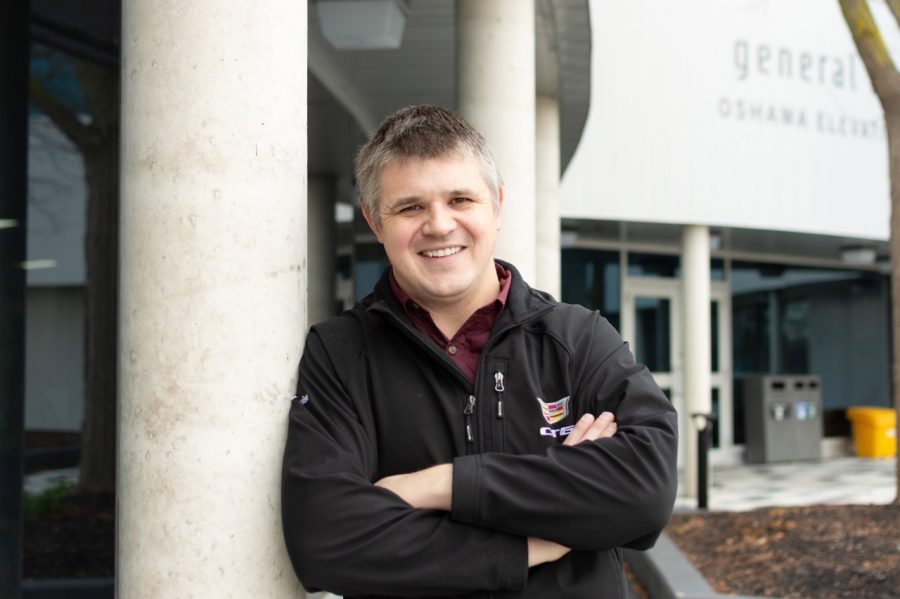
Diagnostics might not be the flashiest part of a vehicle, but it’s among the most critical. Cochran’s team supports some of the most complex electronic control units (ECUs) in GM’s lineup — those managing everything from AV functions to infotainment and safety systems.
Despite that complexity, these systems are designed and validated to meet GM’s rigorous quality and reliability targets. “Given the complexity of AV in our Super Cruise vehicles, our diagnostic performance has been strong. We’ve seen indications of positive impacts on launch timelines or customer experience, and in our testing and observations, the systems performed reliably when used as intended.”
That focus on robustness is one of the ways GM aims to differentiate its vehicles in real-world driving. “From my own experience, I notice how refined our vehicles feel compared to others on the road,” he adds. “Rear-view cameras, adaptive cruise control, Super Cruise — when conditions are appropriate and drivers use them as directed, they all handle many everyday scenarios in a smooth, confidence-inspiring way. That comes from deep collaboration and a lot of hard work behind the scenes.”
Empowering technicians through data
As GM vehicles become more connected, the amount of diagnostic data available to engineers and service technicians is growing exponentially, and with that comes the opportunity to consistently improve vehicles over time.
“Right now, technicians get flooded with data but not enough context,” Cochran explains. “We want to change that, to filter it, prioritize it, and give them the insights they need to fix the car quickly and confidently.”
That focus on usability reflects GM’s commitment to both customer experience and service excellence. “Cars are turning into supercomputers, but they’re still repaired by technicians, not IT pros,” Cochran says. “Our job is to give them the right tools and data to handle increasingly software-driven systems with confidence.”
Quiet innovation
Cochran describes diagnostics as the “quiet enabler” of automotive innovation. It’s not about reinventing the fundamentals, he says, but about executing them well so the systems that define the modern vehicle can continue to evolve safely and seamlessly.
“Our job is to support innovation without adding unnecessary friction,” he says. “We strive to build systems that are reliable, scalable, and flexible enough to evolve.”
In an era where vehicles are increasingly defined by their code as much as their components, that quiet reliability is what keeps innovation moving forward — mile after mile.
Learn more about careers at GM by visiting Careers.GM.com.
When you press the start button on a GM vehicle, thousands of systems come alive. Kevin Cochran helps make sure they all get along.
As a Diagnostic Architect based out of GM’s Oshawa Office, he shapes the unseen architecture that helps promote vehicle reliability and safety.
Modern vehicles are as much networks of computers as they are machines. With advanced driver-assistance systems, infotainment platforms, and electric propulsion all running on high-performance computing units, diagnostics has never been more essential — or more complex.
The architecture behind our software platform
For Cochran, that complexity is where the challenge begins. His work supports GM’s next-generation software platform designed to help bring continuous innovation to customers through over-the-air updates, app-like experiences, and cloud-based services.
GM’s central compute system can give vehicles the ability to evolve long after they leave the factory, potentially adding new features and improving performance.
“Diagnostics is one of the oldest parts of automotive engineering,” Cochran says. “We’ve got a rulebook that’s been refined for decades—but when you apply it to autonomous or infotainment systems, those old rules don’t always fit.”
Cochran’s role is to bridge proven automotive practices with the rapidly evolving realities of software-defined vehicles. As vehicles become more connected, electrified, and automated, the systems that keep them running safely must evolve too.
“You have to know the rulebook inside and out: what to keep, what to rewrite, and what to toss entirely,” he explains. “That balance between innovation and accountability is what makes the work exciting.”
Designing systems that just work
Diagnostics might not be the flashiest part of a vehicle, but it’s among the most critical. Cochran’s team supports some of the most complex electronic control units (ECUs) in GM’s lineup — those managing everything from AV functions to infotainment and safety systems.
Despite that complexity, these systems are designed and validated to meet GM’s rigorous quality and reliability targets. “Given the complexity of AV in our Super Cruise vehicles, our diagnostic performance has been strong. We’ve seen indications of positive impacts on launch timelines or customer experience, and in our testing and observations, the systems performed reliably when used as intended.”
That focus on robustness is one of the ways GM aims to differentiate its vehicles in real-world driving. “From my own experience, I notice how refined our vehicles feel compared to others on the road,” he adds. “Rear-view cameras, adaptive cruise control, Super Cruise — when conditions are appropriate and drivers use them as directed, they all handle many everyday scenarios in a smooth, confidence-inspiring way. That comes from deep collaboration and a lot of hard work behind the scenes.”
Empowering technicians through data

As GM vehicles become more connected, the amount of diagnostic data available to engineers and service technicians is growing exponentially, and with that comes the opportunity to consistently improve vehicles over time.
“Right now, technicians get flooded with data but not enough context,” Cochran explains. “We want to change that, to filter it, prioritize it, and give them the insights they need to fix the car quickly and confidently.”
That focus on usability reflects GM’s commitment to both customer experience and service excellence. “Cars are turning into supercomputers, but they’re still repaired by technicians, not IT pros,” Cochran says. “Our job is to give them the right tools and data to handle increasingly software-driven systems with confidence.”
Quiet innovation
Cochran describes diagnostics as the “quiet enabler” of automotive innovation. It’s not about reinventing the fundamentals, he says, but about executing them well so the systems that define the modern vehicle can continue to evolve safely and seamlessly.
“Our job is to support innovation without adding unnecessary friction,” he says. “We strive to build systems that are reliable, scalable, and flexible enough to evolve.”
In an era where vehicles are increasingly defined by their code as much as their components, that quiet reliability is what keeps innovation moving forward — mile after mile.
Learn more about careers at GM by visiting Careers.GM.com.