
By Andres Mituta, product manager for energy transfer and displays, General Motors
By Andres Mituta, product manager for energy transfer and displays, General Motors
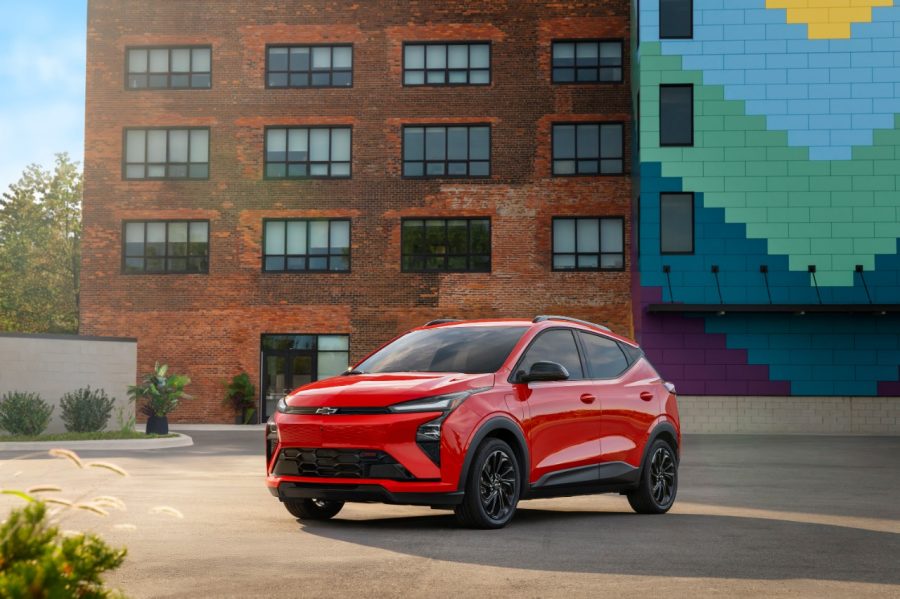
Modern electric vehicles have all the battery range needed for an average week of commuting or a long road trip. In fact, many General Motors EVs, from the Chevrolet Equinox EV to the three-row Cadillac VISTIQ, get more than 300 EPA-estimated miles1 on a full charge. There are things you as a driver can do—like observing posted speed limits or avoiding hard acceleration—but one important piece of technology in your vehicle works in the background to help push your range higher.
Regenerative braking turns the process of slowing a vehicle down into electricity. Drivers can manually enable “regen” by activating One-Pedal Driving mode2 or slowing the car using a steering wheel-mounted paddle on properly equipped vehicles3. But even without choosing those options, GM’s blended regenerative braking technology can add range to the battery.
Understanding regenerative braking
Ever since automotive pioneers like GM founder William Durant created horseless carriages over a century ago, cars have wasted the energy used to slow down as heat from the brakes. Regenerative braking captures a portion of that energy, feeding it back to the battery to help extend your driving range. When you slow down (and the battery has room), you're adding electrons.
With GM’s blended braking system, the car captures energy through regeneration even if the driver is only using the brake pedal to slow down. The driver simply brakes normally, and software automatically transitions braking from regeneration to the vehicle’s traditional brake pads and rotors, based on the braking force required. This happens seamlessly in the background, without requiring any change in the way you drive the car. With regenerative braking, drivers can get more miles per charge and the potential of longer brake life.
Getting more
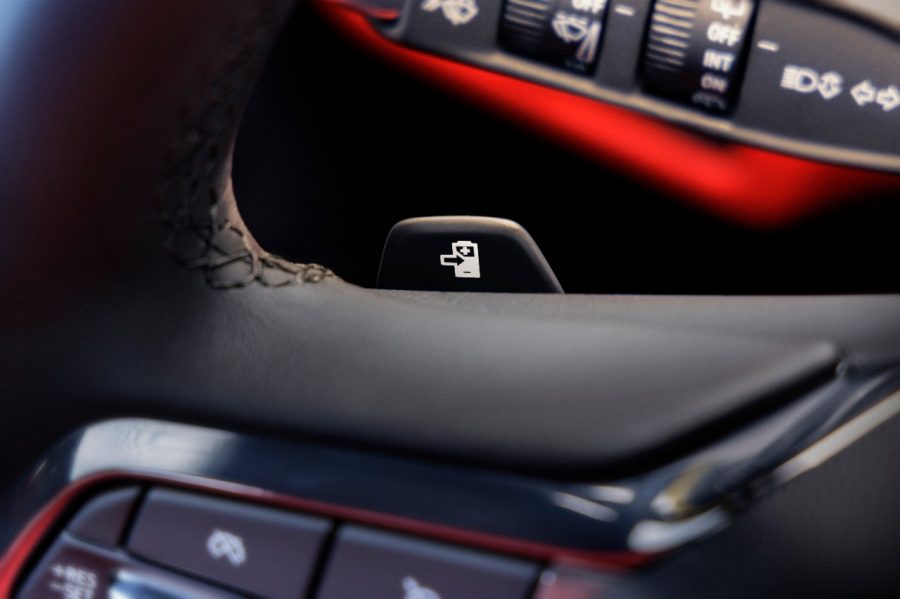
For customers who want to push their range as high as possible, there are proactive options. As noted, many GM EVs have a “Regen on Demand” paddle, located on the steering wheel's left side, that lets you instantly increase regenerative braking when slowing at a stop sign, merging onto a highway off-ramp, or approaching traffic. In some newer EVs, this paddle is variable, meaning it responds to how hard you squeeze it—light pressure for gentle slowing, firm pressure for stronger deceleration.
Caption: The regenerative braking paddle is just behind the steering wheel on this Chevrolet Blazer EV.
All current GM EVs also have One-Pedal Driving functionality accessible through the central touchscreen, offering three settings that change how aggressively the car slows when you lift off the accelerator – normal, high, or off. Ever driven a golf cart? One-pedal driving provides a similar sensation when slowing down, and while it can feel different the first time, the technique unlocks a new style of driving many people really love. (For some older EVs, like the original Chevy Bolt, you can enable One-Pedal Driving by setting the shifter to “L.”)
Regen and Super Cruise
GM's system integrates intelligently with other vehicle technologies. When using GM’s available hands-free Super Cruise driver assistance technology4, the car automatically captures regenerative energy during steep descents or slowdowns, reducing stress on the traditional brakes while maintaining safe speeds. The Smart Regeneration System adjusts braking intensity based on road grade and traffic patterns, optimizing energy recovery without driver intervention.
With our latest regenerative systems, GM also addressed an issue voiced by owners of earlier EVs: an inconsistent braking feel when the battery is fully charged. When batteries can't accept more energy, older systems would suddenly feel different. GM's newer vehicles seamlessly blend in friction brakes during these moments, ensuring your car always responds predictably.
The bottom line
Whether you actively use regenerative braking to its fullest or simply benefit from the technology in the background, your EV’s regenerative brakes will be working quietly and seamlessly. This technology translates into practical advantages: increased driving range, reduced charging frequency, and a more intuitive driving experience that adapts to your preferences and driving conditions.
1Actual range will vary based on several factors, including ambient temperature, terrain, battery age and condition, loading, and how you use and maintain your vehicle.
2Feature may be limited when the battery temperatures are extremely cold or hot or when battery is near full charge. Always use the brake pedal when you need to stop immediately. See Owner’s Manual for details.
3Feature may be limited when the battery temperatures are extremely cold or hot or when battery is near full charge. See Owner’s Manual for details.
4Always pay attention while driving and when using Super Cruise. Do not use a hand-held device. Requires active Super Cruise plan or trial. Terms apply.
Andres Mituta is product manager for energy transfer and displays at the General Motors Milford Proving Ground, in Milford, Michigan.
Questions or comments: news@gm.com
Modern electric vehicles have all the battery range needed for an average week of commuting or a long road trip. In fact, many General Motors EVs, from the Chevrolet Equinox EV to the three-row Cadillac VISTIQ, get more than 300 EPA-estimated miles1 on a full charge. There are things you as a driver can do—like observing posted speed limits or avoiding hard acceleration—but one important piece of technology in your vehicle works in the background to help push your range higher.
Regenerative braking turns the process of slowing a vehicle down into electricity. Drivers can manually enable “regen” by activating One-Pedal Driving mode2 or slowing the car using a steering wheel-mounted paddle on properly equipped vehicles3. But even without choosing those options, GM’s blended regenerative braking technology can add range to the battery.
Understanding regenerative braking
Ever since automotive pioneers like GM founder William Durant created horseless carriages over a century ago, cars have wasted the energy used to slow down as heat from the brakes. Regenerative braking captures a portion of that energy, feeding it back to the battery to help extend your driving range. When you slow down (and the battery has room), you're adding electrons.
With GM’s blended braking system, the car captures energy through regeneration even if the driver is only using the brake pedal to slow down. The driver simply brakes normally, and software automatically transitions braking from regeneration to the vehicle’s traditional brake pads and rotors, based on the braking force required. This happens seamlessly in the background, without requiring any change in the way you drive the car. With regenerative braking, drivers can get more miles per charge and the potential of longer brake life.
Getting more
For customers who want to push their range as high as possible, there are proactive options. As noted, many GM EVs have a “Regen on Demand” paddle, located on the steering wheel's left side, that lets you instantly increase regenerative braking when slowing at a stop sign, merging onto a highway off-ramp, or approaching traffic. In some newer EVs, this paddle is variable, meaning it responds to how hard you squeeze it—light pressure for gentle slowing, firm pressure for stronger deceleration.
All current GM EVs also have One-Pedal Driving functionality accessible through the central touchscreen, offering three settings that change how aggressively the car slows when you lift off the accelerator – normal, high, or off. Ever driven a golf cart? One-pedal driving provides a similar sensation when slowing down, and while it can feel different the first time, the technique unlocks a new style of driving many people really love. (For some older EVs, like the original Chevy Bolt, you can enable One-Pedal Driving by setting the shifter to “L.”)
Regen and Super Cruise
GM's system integrates intelligently with other vehicle technologies. When using GM’s available hands-free Super Cruise driver assistance technology4, the car automatically captures regenerative energy during steep descents or slowdowns, reducing stress on the traditional brakes while maintaining safe speeds. The Smart Regeneration System adjusts braking intensity based on road grade and traffic patterns, optimizing energy recovery without driver intervention.
With our latest regenerative systems, GM also addressed an issue voiced by owners of earlier EVs: an inconsistent braking feel when the battery is fully charged. When batteries can't accept more energy, older systems would suddenly feel different. GM's newer vehicles seamlessly blend in friction brakes during these moments, ensuring your car always responds predictably.
The bottom line
Whether you actively use regenerative braking to its fullest or simply benefit from the technology in the background, your EV’s regenerative brakes will be working quietly and seamlessly. This technology translates into practical advantages: increased driving range, reduced charging frequency, and a more intuitive driving experience that adapts to your preferences and driving conditions.
1Actual range will vary based on several factors, including ambient temperature, terrain, battery age and condition, loading, and how you use and maintain your vehicle.
2Feature may be limited when the battery temperatures are extremely cold or hot or when battery is near full charge. Always use the brake pedal when you need to stop immediately. See Owner’s Manual for details.
3Feature may be limited when the battery temperatures are extremely cold or hot or when battery is near full charge. See Owner’s Manual for details.
4Always pay attention while driving and when using Super Cruise. Do not use a hand-held device. Requires active Super Cruise plan or trial. Terms apply.
Andres Mituta is product manager for energy transfer and displays at the General Motors Milford Proving Ground, in Milford, Michigan.
Questions or comments: news@gm.com