
By Mark Reuss, General Motors President
By Mark Reuss, General Motors President
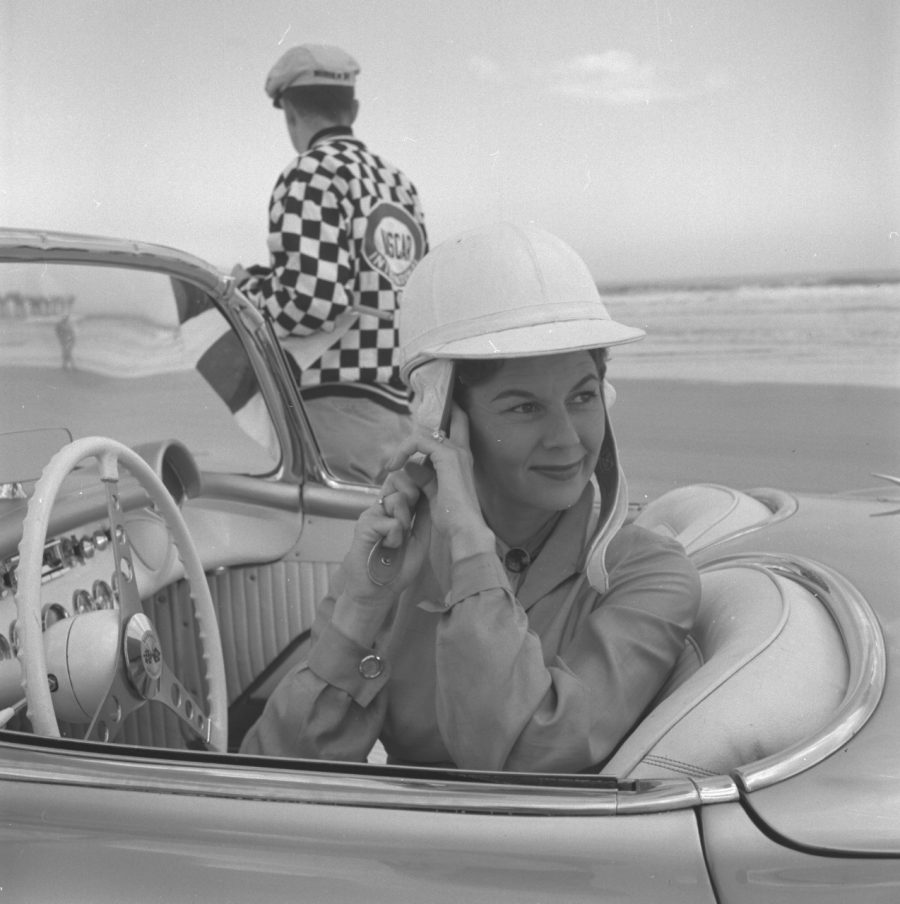
Last night, I had the honor of helping to induct Betty Skelton into the Automotive Hall of Fame. Betty’s story is amazing. She was a true trailblazer, known as “The First Lady of Firsts,” who shattered barriers in aviation, motorsports, and American culture.
I’d like to thank the Automotive Hall of Fame for ensuring Betty’s legacy lives on, along with those of the other inductees in the class of 2025: Ayrton Senna, David E. Davis Jr., and Dieter Zetsche. This is what I said about Betty at the induction ceremony:
If you know who Betty Skelton is, you’re probably wondering why she isn’t in the Hall of Fame already. And if you don’t know who she is, you’re probably going to think I’m describing a character from a Marvel movie.
But Betty was a real person, who had a real, positive effect on aviation and automobiles, on General Motors and Corvette, and on American culture and women’s role in it.
Betty is known as “The First Lady of Firsts.” Let me share but a few examples from her very long list of superlatives:
- She became the youngest American to fly solo, at age 12, and the youngest American to receive a pilot’s license, at 16.
- In various airplanes, she set world speed and altitude records, by the time she was just in her early 20s.
- She won the Feminine International Aerobatic Championship three years in a row from 1949 to 1951, the first and only one ever to do so.
- First woman ever to compete in the stock-car Flying Mile at Daytona, in 1954.
- First woman ever to drive an IndyCar.
- At Daytona Speed Week in 1956, she set nine sports-car records for speed and acceleration, in a Corvette, along with Zora Arkus-Duntov and John Fitch.
- And she set four different land-speed records for women at the Bonneville Salt Flats, including driving a jet-engine dragster 315 mph in a flying mile in 1965, where she averaged 277 mph in a two-way run, also a record.
Fearless on wheels or wings
It wasn’t just that Betty did all these things – it was how she did them. She had absolutely no fear, or, more accurately, no time for fear.
For instance, as she completed her record-setting run at Bonneville, her jet-powered dragster got airborne. That’s not optimal at any time, let alone at 300-plus miles per hour. But she managed to get the car down, under control, and bring it home intact, with the record. When asked if she was scared, she said, “I was too busy.”
Another time, early in her flying career, she was performing a stunt called the “Inverted Ribbon Cut,” where you fly upside down, very low, and cut a handheld ribbon with your wing or wheels. At just a few feet off the ground, the plane’s engine cut out. Somehow Betty managed to snap the aircraft right-side-up, just before her wheels touched ground. Today, her plane, affectionately known as Little Stinker, hangs in the Smithsonian National Air and Space Museum.
Speaking of space, it was a place she always wanted to go. But when NASA trained its first astronauts, the Mercury Seven, military test pilot experience was a strict requirement for applicants. Betty knew this, and yet, when Look magazine pitched a story that would put Betty through the rigorous astronaut testing and training program, she went along with it, for the experience.
She passed most of the tests with flying colors, and when the new issue of Look came out February 2, 1960, there was Betty on the cover, in full astronaut gear. She was known as “Mercury Seven and a Half.”
Beyond being a fearless and highly skilled speed addict, Betty was also blessed with an innate understanding of how to project and market herself. She was a great communicator, a talented writer for multiple magazines, did a radio show and appeared on many TV programs, including “The Dinah Shore Show.”
Betty and the Corvette
Betty was also the face of Corvette and Chevrolet. She worked as a Corvette test driver and was closely involved in the car’s development. Zora and his engineering team took her input as the expert advice it was. Betty also worked at Campbell-Ewald, Chevy’s longtime ad agency, where she became the first female vice president at a major ad agency. After her stint at NASA astronaut training, it was Betty’s idea for Chevrolet to put the Mercury astronauts into brand new Corvettes.
She helped develop and frame Chevrolet’s messages, and organized and led many driving events around the world, year after year, all while opening doors for women along the way.
In fact, she once wrote an essay called, “Advantages and Disadvantages of Women Working with Men in Business.” It’s real Mad Men stuff. And she included this:
“Another advertising vice-president confided [to me] that, no ambitious man will ever be able to stand the idea of working for a woman…”
I can tell you firsthand that ad exec was wrong, and I think Betty knew he was wrong, too.
She was ahead of her time, in countless ways. She accomplished all these things at a time when women didn’t, or couldn’t, do many of the things she did. In many of her endeavors, she would find that records or even categories for women simply didn’t exist. She was an inspiration then, especially for women, and should still be one today, for all of us.
In 2010, Betty was honored in Daytona, by the Women in the Winners Circle Foundation, with its Pioneer Award. Accepting the award, Betty said, “Thank you so much. I thought people had forgotten.” About six months later, she passed away, at age 85.
Tonight, we’re here to make sure that Betty, her amazing life, and her remarkable contributions to the world are always remembered. And I’m grateful to the Automotive Hall of Fame for making this happen.
If you’d like to learn more about Betty Skelton’s remarkable life, check out the documentary “Boundless — Betty Skelton, The First Lady of Firsts”
Mark Reuss has been president of General Motors since January 2019. Reuss is a mechanical engineer who began his GM career as a student intern in 1983.
Questions or comments: news@gm.com
Last night, I had the honor of helping to induct Betty Skelton into the Automotive Hall of Fame. Betty’s story is amazing. She was a true trailblazer, known as “The First Lady of Firsts,” who shattered barriers in aviation, motorsports, and American culture.
I’d like to thank the Automotive Hall of Fame for ensuring Betty’s legacy lives on, along with those of the other inductees in the class of 2025: Ayrton Senna, David E. Davis Jr., and Dieter Zetsche. This is what I said about Betty at the induction ceremony:
If you know who Betty Skelton is, you’re probably wondering why she isn’t in the Hall of Fame already. And if you don’t know who she is, you’re probably going to think I’m describing a character from a Marvel movie.
But Betty was a real person, who had a real, positive effect on aviation and automobiles, on General Motors and Corvette, and on American culture and women’s role in it.
Betty is known as “The First Lady of Firsts.” Let me share but a few examples from her very long list of superlatives:
- She became the youngest American to fly solo, at age 12, and the youngest American to receive a pilot’s license, at 16.
- In various airplanes, she set world speed and altitude records, by the time she was just in her early 20s.
- She won the Feminine International Aerobatic Championship three years in a row from 1949 to 1951, the first and only one ever to do so.
- First woman ever to compete in the stock-car Flying Mile at Daytona, in 1954.
- First woman ever to drive an IndyCar.
- At Daytona Speed Week in 1956, she set nine sports-car records for speed and acceleration, in a Corvette, along with Zora Arkus-Duntov and John Fitch.
- And she set four different land-speed records for women at the Bonneville Salt Flats, including driving a jet-engine dragster 315 mph in a flying mile in 1965, where she averaged 277 mph in a two-way run, also a record.
Fearless on wheels or wings
It wasn’t just that Betty did all these things – it was how she did them. She had absolutely no fear, or, more accurately, no time for fear.
For instance, as she completed her record-setting run at Bonneville, her jet-powered dragster got airborne. That’s not optimal at any time, let alone at 300-plus miles per hour. But she managed to get the car down, under control, and bring it home intact, with the record. When asked if she was scared, she said, “I was too busy.”
Another time, early in her flying career, she was performing a stunt called the “Inverted Ribbon Cut,” where you fly upside down, very low, and cut a handheld ribbon with your wing or wheels. At just a few feet off the ground, the plane’s engine cut out. Somehow Betty managed to snap the aircraft right-side-up, just before her wheels touched ground. Today, her plane, affectionately known as Little Stinker, hangs in the Smithsonian National Air and Space Museum.
Speaking of space, it was a place she always wanted to go. But when NASA trained its first astronauts, the Mercury Seven, military test pilot experience was a strict requirement for applicants. Betty knew this, and yet, when Look magazine pitched a story that would put Betty through the rigorous astronaut testing and training program, she went along with it, for the experience.
She passed most of the tests with flying colors, and when the new issue of Look came out February 2, 1960, there was Betty on the cover, in full astronaut gear. She was known as “Mercury Seven and a Half.”
Beyond being a fearless and highly skilled speed addict, Betty was also blessed with an innate understanding of how to project and market herself. She was a great communicator, a talented writer for multiple magazines, did a radio show and appeared on many TV programs, including “The Dinah Shore Show.”
Betty and the Corvette
Betty was also the face of Corvette and Chevrolet. She worked as a Corvette test driver and was closely involved in the car’s development. Zora and his engineering team took her input as the expert advice it was. Betty also worked at Campbell-Ewald, Chevy’s longtime ad agency, where she became the first female vice president at a major ad agency. After her stint at NASA astronaut training, it was Betty’s idea for Chevrolet to put the Mercury astronauts into brand new Corvettes.
She helped develop and frame Chevrolet’s messages, and organized and led many driving events around the world, year after year, all while opening doors for women along the way.
In fact, she once wrote an essay called, “Advantages and Disadvantages of Women Working with Men in Business.” It’s real Mad Men stuff. And she included this:
“Another advertising vice-president confided [to me] that, no ambitious man will ever be able to stand the idea of working for a woman…”
I can tell you firsthand that ad exec was wrong, and I think Betty knew he was wrong, too.
She was ahead of her time, in countless ways. She accomplished all these things at a time when women didn’t, or couldn’t, do many of the things she did. In many of her endeavors, she would find that records or even categories for women simply didn’t exist. She was an inspiration then, especially for women, and should still be one today, for all of us.
In 2010, Betty was honored in Daytona, by the Women in the Winners Circle Foundation, with its Pioneer Award. Accepting the award, Betty said, “Thank you so much. I thought people had forgotten.” About six months later, she passed away, at age 85.
Tonight, we’re here to make sure that Betty, her amazing life, and her remarkable contributions to the world are always remembered. And I’m grateful to the Automotive Hall of Fame for making this happen.
If you’d like to learn more about Betty Skelton’s remarkable life, check out the documentary “Boundless — Betty Skelton, The First Lady of Firsts”
Mark Reuss has been president of General Motors since January 2019. Reuss is a mechanical engineer who began his GM career as a student intern in 1983.
Questions or comments: news@gm.com