
By: Chris Perkins, Senior Writer and Editor, GM news
By: Chris Perkins, Senior Writer and Editor, GM news
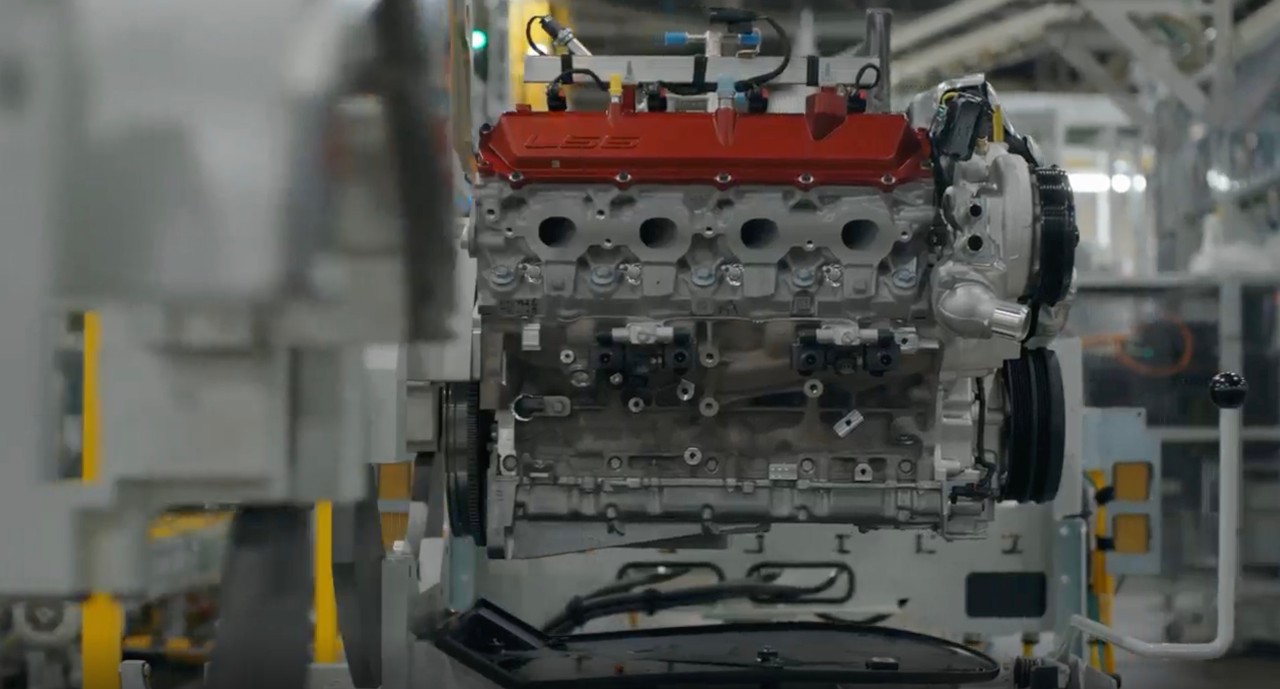
GM’s next-gen Small Block V8 is steeped in history. Not just the 70-plus years of the Small Block itself, but the entire history of General Motors. Now, the Small Block enters its sixth generation with the new LS6 6.7L V8 for the 2027 Chevrolet Corvette.
The engine is not just a milestone for its mouthwatering specs – 535 horsepower, 520 lb-ft of torque, 13.0:1 compression – but because it brings the Small Block back to its birthplace, Flint, Michigan.
To fully explain what led to the Small Block, we need to go back to the turn of the century. In 1904 – four years before Wiliam C. Durant founded GM – Buick introduced the OHV engine into production, an automotive first.
An internal-combustion engine is, essentially, a complicated air pump. It brings atmospheric air into the combustion chamber, and combines that air with precisely delivered fuel and spark to create combustion. That combustion event drives the piston down in the chamber mechanizing fuel energy into motion. Each piston is attached to a large rotating crankshaft near the bottom of the engine. The up-and-down motion of the piston(s) spins the crankshaft, creating the torque that turns a car’s wheels.
This is an oversimplification, but for our purposes, it’s all you need to know. An engine has multiple parts that control the airflow into the cylinder. The throttle is a butterfly valve that regulates the volume of air in the engine’s intake manifold, while intake valves more precisely distribute air into each combustion chamber. The exhaust valves then release excess air into an exhaust manifold, and eventually, back into the atmosphere.
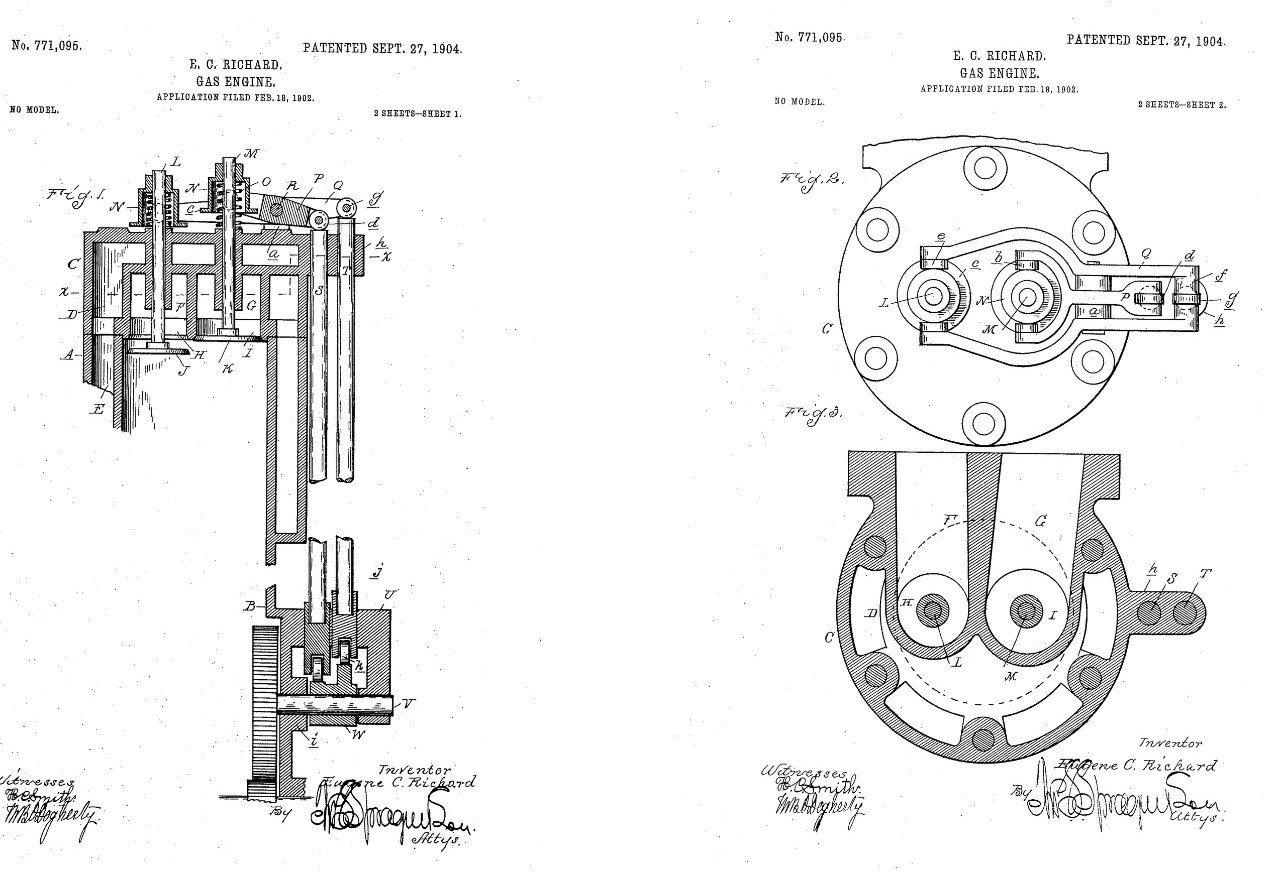
Buick engineer Eugene C. Richard patented the overhead-valve (OHV) engine in 1904. Compared to previous engine types, where the valves were at the sides of the combustion chamber, the overhead valve engine dramatically improved airflow into and out of the combustion chamber, and thus, power and efficiency. Buick engineer Arthur Mason later joined Durant at Chevrolet, and in 1913, the new brand introduced its first OHV four-cylinder engine. It was built in Flint, Michigan.
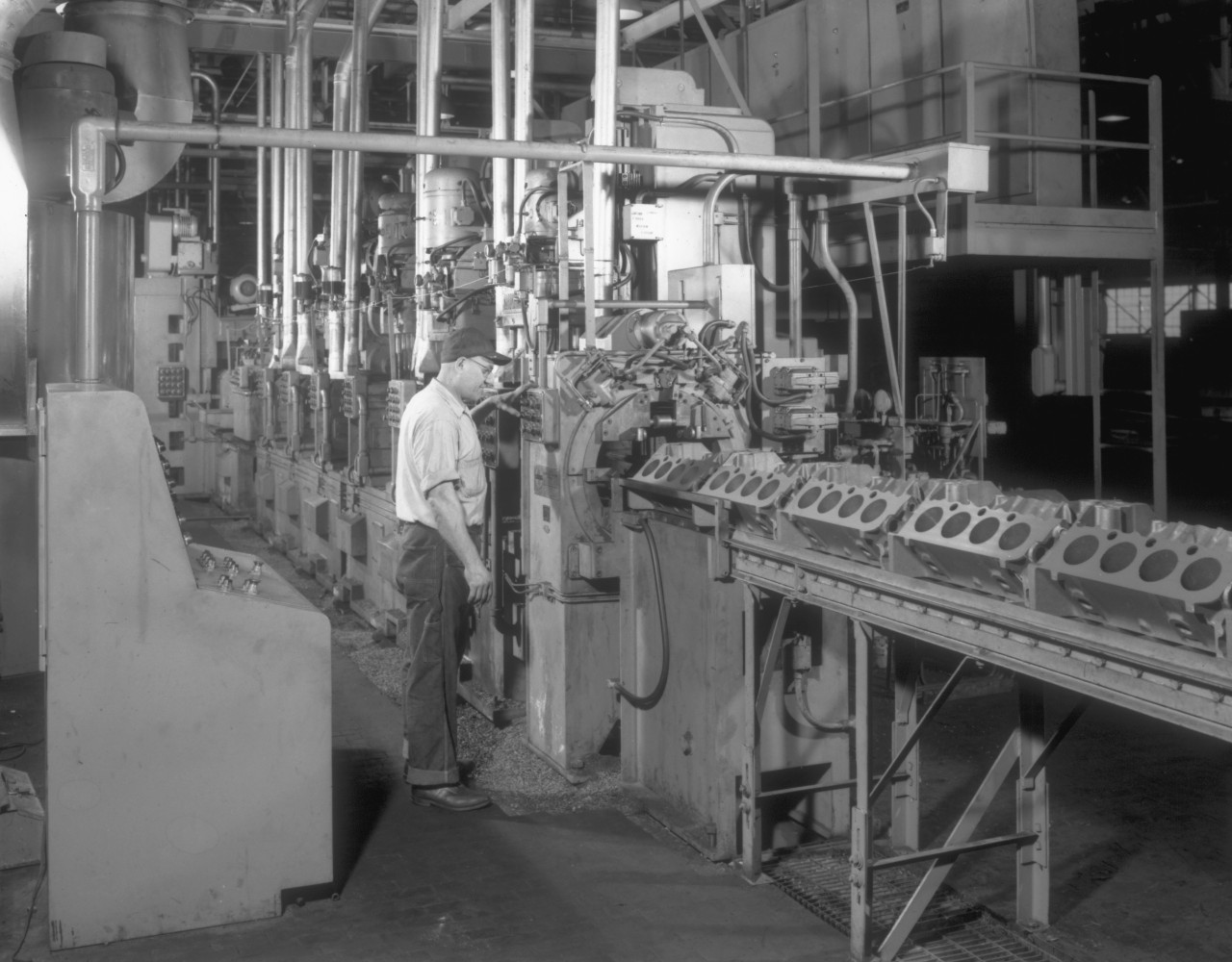
The first Small Block V8 was also built in Flint, on July 9, 1954. Debuting as a 265-cubic-inch (4.3-liter) engine that made up to 195 horsepower in the 1955 Corvette. From those humble origins, Flint went on to make over 40 million Small Blocks up until 1999. GM has bult over 100 million Small Block V8s, and every single one produced over the last 72 years has proudly used the overhead-valve layout. Now, the Small Block returns to Flint Engine with the LS6.
"We are incredibly proud to bring the V8 back home to Flint, especially as we begin assembling the new LS6 here,” says Paul Tanis, Flint Engine Operations plant director. “This is more than just building an engine — it's about honoring our heritage and the deep roots of American engineering and innovation that started right here over a century ago. There’s a special pride in Flint and being part of this next chapter makes it even stronger."
Adds Small Block Assistant Chief Engineer Mike Kociba, “With the LS6, we’re leaning into our Small Block history with a big-displacement, high-compression V8 engine. We are honored to produce this new generation in Flint, the birthplace of the first Small Block engine and a big part of the Small Block evolution since 1955.”
The LS6 isn’t simply a special engine for what it does, but for what it represents. Every 2027 Corvette customer is getting something that represents over a century of manufacturing excellence and engineering innovation. That legacy is backed by real investment: since 2020, GM has invested nearly $60 billion in U.S. manufacturing, including at Flint Engine.
Every LS6 might be one out over 40 million Small Blocks and counting from Flint, or one of over 100 million total, but don’t think for a second that it’s ordinary.
GM’s next-gen Small Block V8 is steeped in history. Not just the 70-plus years of the Small Block itself, but the entire history of General Motors. Now, the Small Block enters its sixth generation with the new LS6 6.7L V8 for the 2027 Chevrolet Corvette.
The engine is not just a milestone for its mouthwatering specs – 535 horsepower, 520 lb-ft of torque, 13.0:1 compression – but because it brings the Small Block back to its birthplace, Flint, Michigan.
To fully explain what led to the Small Block, we need to go back to the turn of the century. In 1904 – four years before Wiliam C. Durant founded GM – Buick introduced the OHV engine into production, an automotive first.
An internal-combustion engine is, essentially, a complicated air pump. It brings atmospheric air into the combustion chamber, and combines that air with precisely delivered fuel and spark to create combustion. That combustion event drives the piston down in the chamber mechanizing fuel energy into motion. Each piston is attached to a large rotating crankshaft near the bottom of the engine. The up-and-down motion of the piston(s) spins the crankshaft, creating the torque that turns a car’s wheels.
This is an oversimplification, but for our purposes, it’s all you need to know. An engine has multiple parts that control the airflow into the cylinder. The throttle is a butterfly valve that regulates the volume of air in the engine’s intake manifold, while intake valves more precisely distribute air into each combustion chamber. The exhaust valves then release excess air into an exhaust manifold, and eventually, back into the atmosphere.
Buick engineer Eugene C. Richard patented the overhead-valve (OHV) engine in 1904. Compared to previous engine types, where the valves were at the sides of the combustion chamber, the overhead valve engine dramatically improved airflow into and out of the combustion chamber, and thus, power and efficiency. Buick engineer Arthur Mason later joined Durant at Chevrolet, and in 1913, the new brand introduced its first OHV four-cylinder engine. It was built in Flint, Michigan.
The first Small Block V8 was also built in Flint, on July 9, 1954. Debuting as a 265-cubic-inch (4.3-liter) engine that made up to 195 horsepower in the 1955 Corvette. From those humble origins, Flint went on to make over 40 million Small Blocks up until 1999. GM has bult over 100 million Small Block V8s, and every single one produced over the last 72 years has proudly used the overhead-valve layout. Now, the Small Block returns to Flint Engine with the LS6.
"We are incredibly proud to bring the V8 back home to Flint, especially as we begin assembling the new LS6 here,” says Paul Tanis, Flint Engine Operations plant director. “This is more than just building an engine — it's about honoring our heritage and the deep roots of American engineering and innovation that started right here over a century ago. There’s a special pride in Flint and being part of this next chapter makes it even stronger."
Adds Small Block Assistant Chief Engineer Mike Kociba, “With the LS6, we’re leaning into our Small Block history with a big-displacement, high-compression V8 engine. We are honored to produce this new generation in Flint, the birthplace of the first Small Block engine and a big part of the Small Block evolution since 1955.”
The LS6 isn’t simply a special engine for what it does, but for what it represents. Every 2027 Corvette customer is getting something that represents over a century of manufacturing excellence and engineering innovation. That legacy is backed by real investment: since 2020, GM has invested nearly $60 billion in U.S. manufacturing, including at Flint Engine.
Every LS6 might be one out over 40 million Small Blocks and counting from Flint, or one of over 100 million total, but don’t think for a second that it’s ordinary.