How a student competition has been building GM’s engineering bench for decades
2026-04-14
There's a good chance some of the engineers who helped design the car or truck you drive right now got their start in the EcoCAR Innovation Challenge, debating ideas, missing sleep, and learning things no textbook could teach them.
The EcoCAR Innovation Challenge has been quietly shaping the auto industry for decades. Since the 1980s, GM has collaborated with the U.S. Department of Energy (DOE) and Argonne National Laboratory on Advanced Vehicle Technology Competitions (AVTCs). The programs have gone by different names over the years, but the idea has remained the same: give students a real vehicle, real engineering challenges, and real stakes, and see what they build.
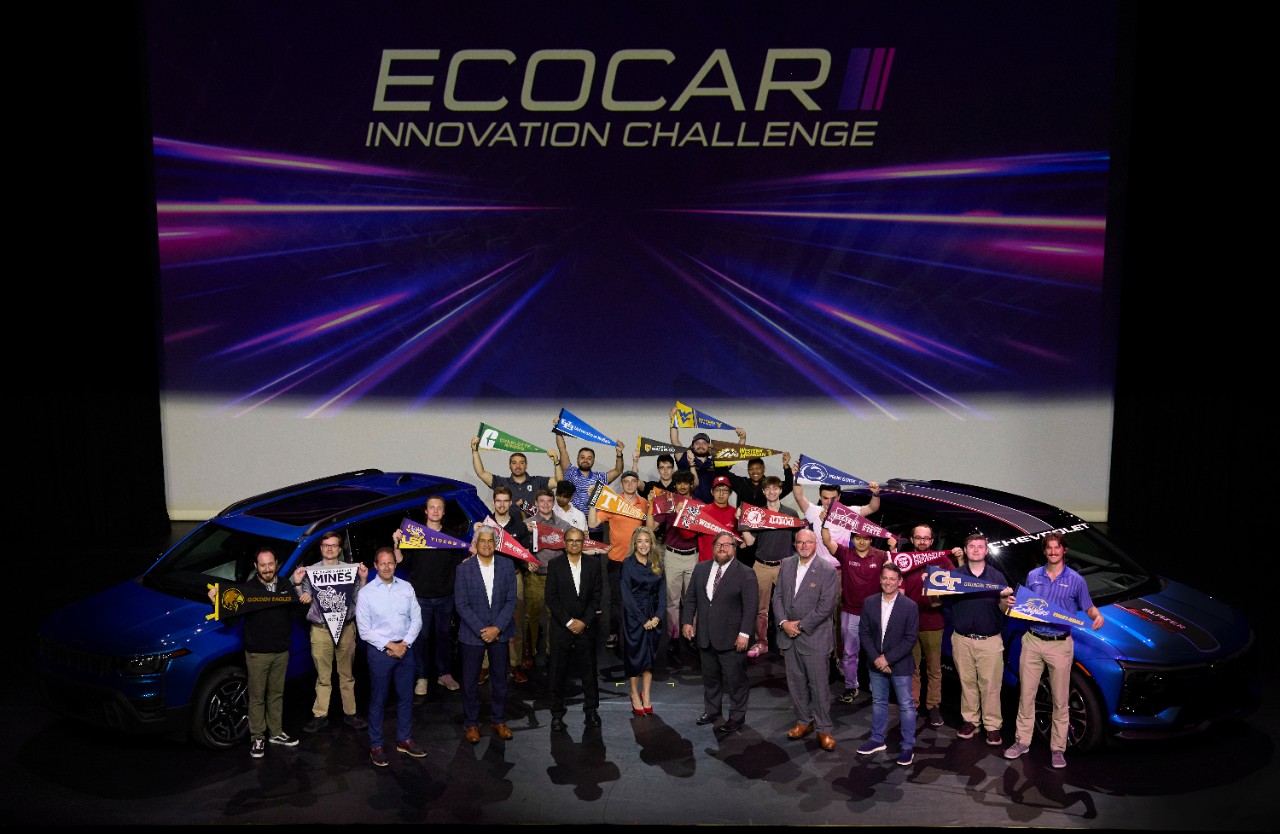
EcoCAR is the latest chapter, and this week, GM helped kick off a new four-year cycle of the Innovation Challenge alongside co-sponsors Stellantis, the DOE, and MathWorks. GM is working with 10 universities for the 2026–2030 program, and for the students who make the cut, it's the kind of experience that tends to change the trajectory of their careers.
What Makes EcoCAR Different
Ken Morris, GM's Senior Vice President of Product Programs, Product Safety, Integration & Motorsports, has seen engineers graduate from this program into jobs at GM for nearly two decades. When he checked in with GM's recruiting team ahead of this spring's kickoff event, they provided a striking statistic: GM has hired close to 300 EcoCAR alumni in the last 18 years.
Many now work in his organization. And many of those alumni give their time back to the program.
"Programs like EcoCAR offer a real 'learn-by-doing' environment that builds a practical talent pipeline," Morris said. "It builds disciplined program habits: engineering tradeoffs, validation, and safety-first thinking."
What sets EcoCAR apart from a classroom is that students aren't working on simulations or hypotheticals. – they're working with GM experts and suppliers on production vehicles.
From EcoCAR to GM
One of those former EcoCAR participants is Marisa Dorrett, Vehicle Performance Team chair in the Global Performance Integration team based at the Milford Proving Ground.
While a student at West Virginia University, Marisa participated in the EcoCAR3 challenge, where she developed hands-on skills and saw “how complex vehicle systems are developed and integrated” in practice, not just in textbooks.
Marisa joined GM in 2016 and has stayed close to the program as part of the GM EcoCAR Recruiting Team. As a member of the VDT, Marisa uses the skills she honed in EcoCAR to coordinate necessary vehicle evaluations that translate customer expectations into concrete performance targets.
IMAGE PLACEHOLDER
The Car and the Challenge
The current EcoCAR cycle wrapping up saw student teams working on a Cadillac LYRIQ. At the kickoff event in Detroit, GM unveiled the competition platform for the 2026–2030 cycle: a 2026 Chevrolet Blazer EV. It's not a coincidence that GM chose this particular vehicle. The Blazer EV's performance credentials – including the high-output SS trim and a one-of-a-kind Pace Car variant showcased at the event – make it a natural fit for a program that culminates with a timed autocross competition.
For the GM track teams, the work ahead breaks into two core areas: advanced propulsion innovation and connected and automated vehicle (CAV) capabilities. On the propulsion side, students will integrate rear propulsion systems, optimize range and regenerative braking, and push the limits of what an EV platform can do. On the CAV side, they'll develop vehicle-to-everything (V2X) communication, energy-aware perception systems, and automated driving capabilities – in other words, the technologies that are defining the next era of mobility.
It's not abstract: GM's own engineers are working in the same territory every day.
Ten Universities. One Industry.
The 10 universities selected for the GM track of the 2026–2030 EcoCAR program are:
Embry-Riddle Aeronautical University
Georgia Institute of Technology (Georgia Tech)
McMaster University
Mississippi State University
Pennsylvania State University (Penn State)
University of Alabama
University of Wisconsin–Madison
Virginia TechWest Virginia University
Western Michigan University
Competitors on the Road, Sponsors of Competition
One of the more unusual aspects of this year's program is who GM is sharing the stage with. Stellantis – a direct competitor – is the other headline co-sponsor of EcoCAR, with its own track of ten universities working on a separate platform.
For Morris, that's a positive.
"Coming together in the spirit of workforce development is the right thing to do," he said. "It's really a win for the whole industry when we can foster the talent of the next generation of engineers."
Of course, once the program gets underway, the competition is real.
“Naturally, we’ll be fiercely competing to give our students the best possible experience and make them want to work at our respective companies,” Morris said.
IMAGE PLACEHOLDER
Advice for the Students Getting Started
Throughout its decades of AVTC involvement, GM has provided participating universities with vehicles, engineering support and testing facilities, seed funding, mentorship, and more.
The infrastructure is there. The opportunity is real.
For the students stepping into it for the first time, Morris had a simple message from the stage: "Lean in with your mentors early, test with discipline, and keep safety at the center as complexity rises."
By Tom Wickham, GM Product Technology Communications Internal Communications Lead
There's a good chance some of the engineers who helped design the car or truck you drive right now got their start in Advanced Vehicle Technology Competitions like EcoCAR, debating ideas, missing sleep, and learning things no textbook could teach them.
Since the 1980s, GM has collaborated with the U.S. Department of Energy (DOE) and Argonne National Laboratory on Advanced Vehicle Technology Competitions and the last five EcoCAR series. The programs have gone by different names over the years, but the idea has remained the same: give students a real vehicle, real engineering challenges, and real stakes, and see what they build.
The EcoCAR Innovation Challenge is the 15th installment of the ATVC series, and this week, GM helped kick off a new four-year series alongside co-headline sponsors Stellantis, the U.S. Department of Energy, Argonne National Laboratory, and MathWorks. GM is working with 10 universities for the 2026–2030 program, and for the students who make the cut, it's the kind of experience that tends to change the trajectory of their careers.
What Makes EcoCAR Different
Ken Morris, GM's Senior Vice President of Product Programs, Product Safety, Integration & Motorsports, has seen engineers graduate from this program into jobs at GM for nearly two decades. When he checked in with GM's recruiting team ahead of this spring's kickoff event, they provided a striking statistic: GM has hired close to 300 EcoCAR alumni in the last 18 years.
Many now work in his organization. And many of those alumni give their time back to the program.
" EcoCAR offers a real 'learn-by-doing' environment that builds a practical talent pipeline," Morris said. "It builds disciplined program habits: engineering tradeoffs, validation, and safety-first thinking."
What sets EcoCAR apart from a classroom is that students aren't working on simulations or hypotheticals. – they're working with GM experts and suppliers on production vehicles.
From EcoCAR to GM
One of those former EcoCAR participants is Marisa Dorrett, Vehicle Performance Team chair in the Global Performance Integration team based at the Milford Proving Ground.
While a student at West Virginia University, Marisa participated in the EcoCAR3 challenge, where she developed hands-on skills and saw “how complex vehicle systems are developed and integrated” in practice, not just in textbooks.
Marisa joined GM in 2016 and has stayed close to the program as part of the GM EcoCAR Recruiting Team. As a member of the VDT, Marisa uses the skills she honed in EcoCAR to coordinate necessary vehicle evaluations that translate customer expectations into concrete performance targets.
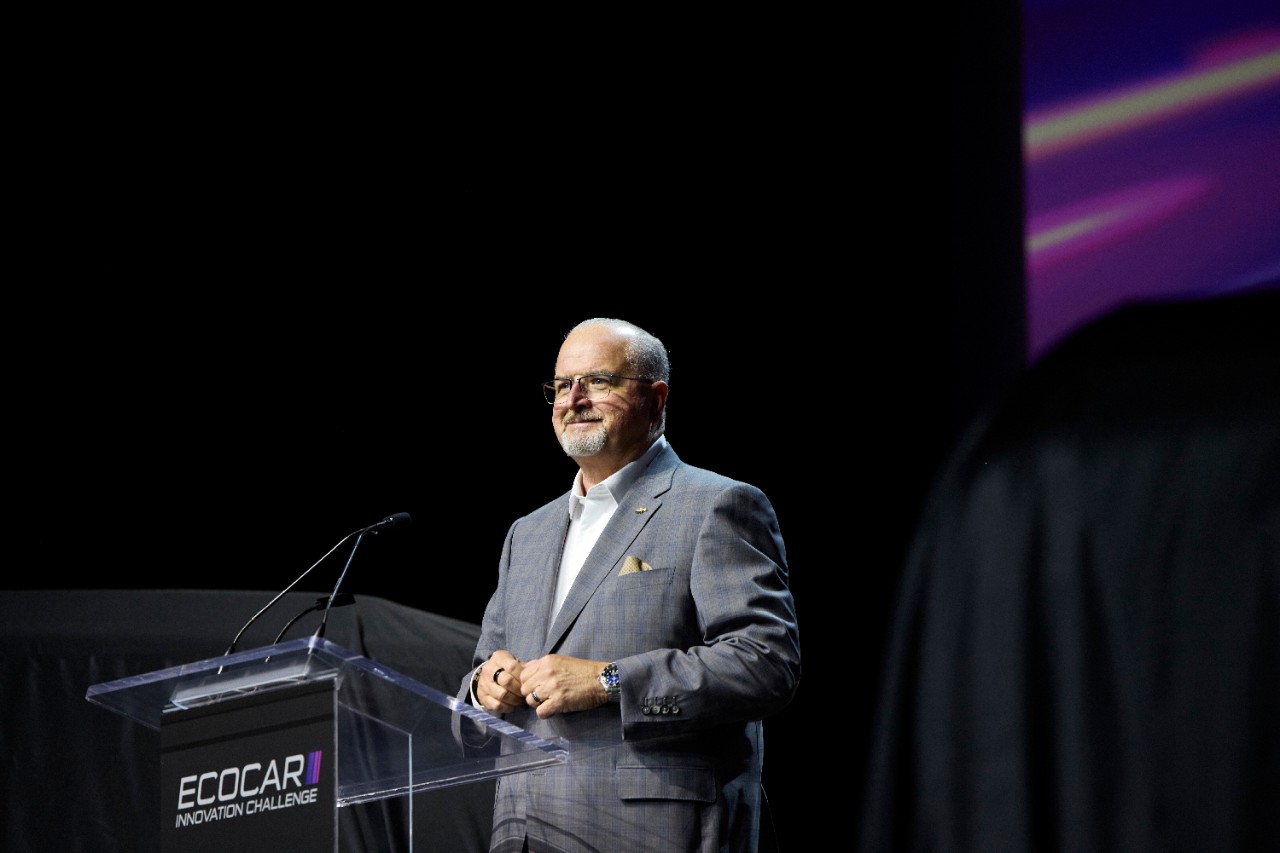
Ken Morris, Senior Vice President of Product Programs, Product Safety, Integration & Motorsports. speaks at the kickoff of this year’s EcoCAR competition.
The Car and the Challenge
The current EcoCAR Challenge series currently wrapping up saw student teams working on a Cadillac LYRIQ. At the kickoff event in Detroit, GM unveiled the competition platform for the 2026–2030 cycle: a 2026 Chevrolet Blazer EV. It's not a coincidence that GM chose this particular vehicle. The Blazer EV's performance credentials – including the high-output SS trim and a one-of-a-kind Pace Car variant showcased at the event – make it a natural fit for a program that culminates with a timed autocross competition.
For the GM track teams, the work ahead breaks into two core areas: advanced propulsion innovation and connected and automated vehicle (CAV) capabilities. On the propulsion side, students will integrate rear propulsion systems, optimize range and regenerative braking, and push the limits of what an EV platform can do. On the CAV side, they'll develop vehicle-to-everything (V2X) communication, energy-aware perception systems, and automated driving capabilities – in other words, the technologies that are defining the next era of mobility.
It's not abstract: GM's own engineers are working in the same territory every day.
Ten Universities. One Industry.
The 10 universities selected for the GM track of the 2026–2030 EcoCAR program are:
- Embry-Riddle Aeronautical University
- Georgia Institute of Technology (Georgia Tech)
- McMaster University
- Mississippi State University
- Pennsylvania State University (Penn State)
- University of Alabama
- University of Wisconsin–Madison
- Virginia TechWest Virginia University
- Western Michigan University
Competitors on the Road, Sponsors of Competition
One of the more unusual aspects of this year's program is who GM is sharing the stage with. Stellantis – a direct competitor – is the other headline co-sponsor of the EcoCAR Innovation Challenge, with its own track of ten universities working on a separate platform.
For Morris, that's a positive.
"Coming together in the spirit of workforce development is the right thing to do," he said. "It's really a win for the whole industry when we can foster the talent of the next generation of engineers."
Of course, once the program gets underway, the competition is real.
“Naturally, we’ll be fiercely competing to give our students the best possible experience and make them want to work at our respective companies,” Morris said.
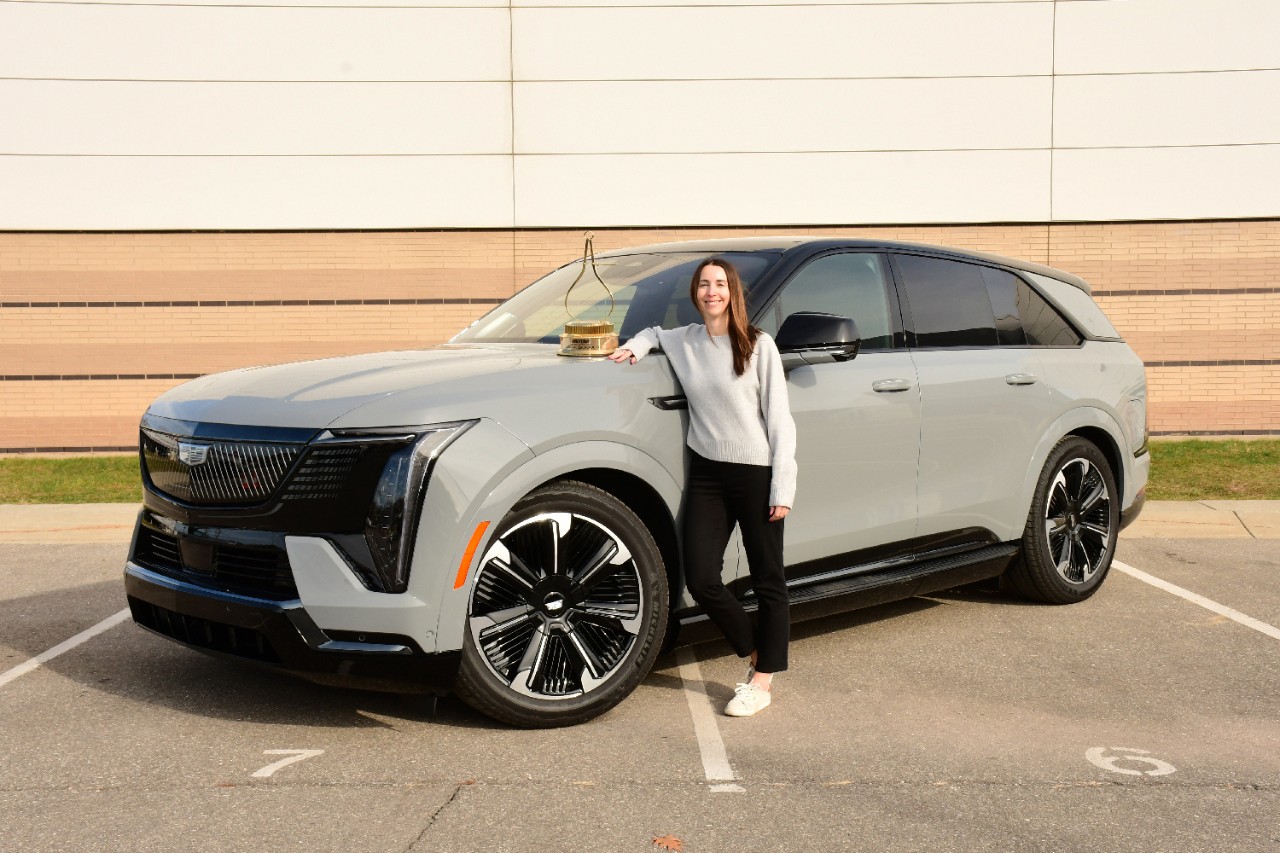
Marisa Dorrett, Vehicle Performance Team chair in the Global Performance Integration team, is a current GM employee and former EcoCAR participant.
Advice for the Students Getting Started
Throughout its decades of AVTC involvement, GM has provided participating universities with vehicles, engineering support and testing facilities, seed funding, mentorship, and more.
The infrastructure is there. The opportunity is real.
For the students stepping into it for the first time, Morris had a simple message from the stage: "Lean in with your mentors early, test with discipline, and keep safety at the center as complexity rises."