
By Laryssa Hulcio & Stephen Harber, Talent Marketing
By Laryssa Hulcio & Stephen Harber, Talent Marketing
A screen comes to life. Light fills the cabin. The interior is brought into focus.
That instant, repeated millions of times each day, is the result of years of collaboration across General Motors interior engineering teams. Their efforts turn early design sketches into the interior systems drivers see and use every day.
This is where the work behind the win takes shape.
Where every drive begins
The interior is the part of the vehicle customers see and touch the most. It establishes trust, comfort, and long-term satisfaction. Even the slightest flaw can change how someone feels about their entire vehicle.
Senior Lead Product Engineer Renato Casola — whose career in automotive interiors spans over two decades across Brazil and the United States — believes this is the most fulfilling part of the job.
“Working on highly visible interior parts that customers see and interact with every day brings a unique sense of fulfillment,” Casola says. “Delivering craftsmanship that delights people every day is absolutely worth the effort.”
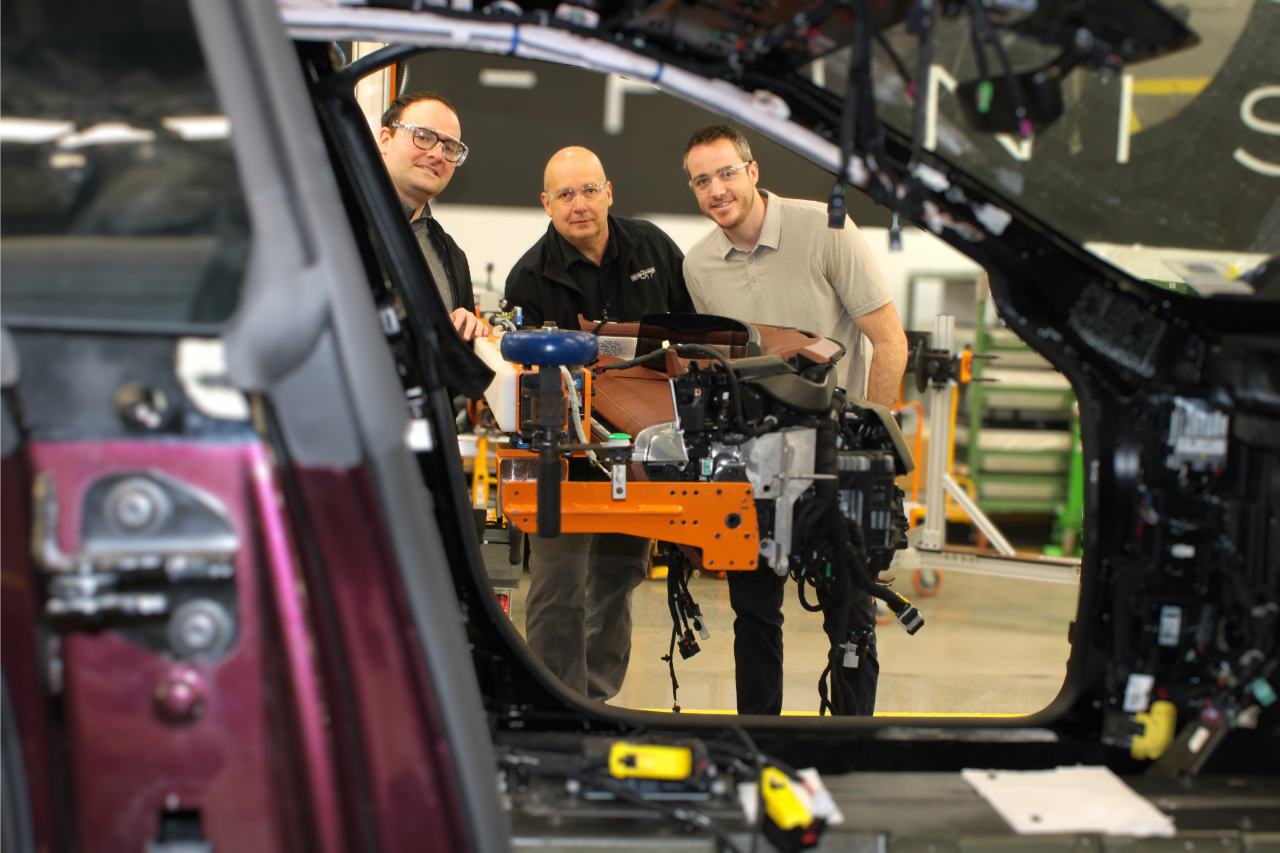
IMAGE CAPTION: The Cadillac CELESTIQ instrument panel assembly is positioned inside the vehicle body at GM’s Artisan Center. From left to right: Ian McAdams, Renato Casola, and Brent Gornall.
Turning vision into reality
Engineers carry each design forward until it can be built, tested, and trusted on the road. Their dedication brings studio intent, engineering precision, and close collaboration with design into one system that must function as a whole.
Inside the cockpit, that system becomes the place where people meet the vehicle. Achieving this goal requires steady negotiation between creative vision and physical reality. The final solution often lives in the space between what is imagined —and what can truly function.
For Design Release Engineer Brent Gornall, that moment never loses its impact. “Seeing designs come to life, from early studio sketches to production vehicles coming off the line, is a cool thing.”
Senior Design Release Engineer Alex Holman sees that same transformation through the details that shape how drivers interact with the interior. “On a recent project, we concealed infotainment screen attachments in a new way.” Holman explains. “Instead of closing off that access, we integrated trim that also supports storage or audio.”
Results like this come from teams working in true alignment, which is what GM’s culture is all about.
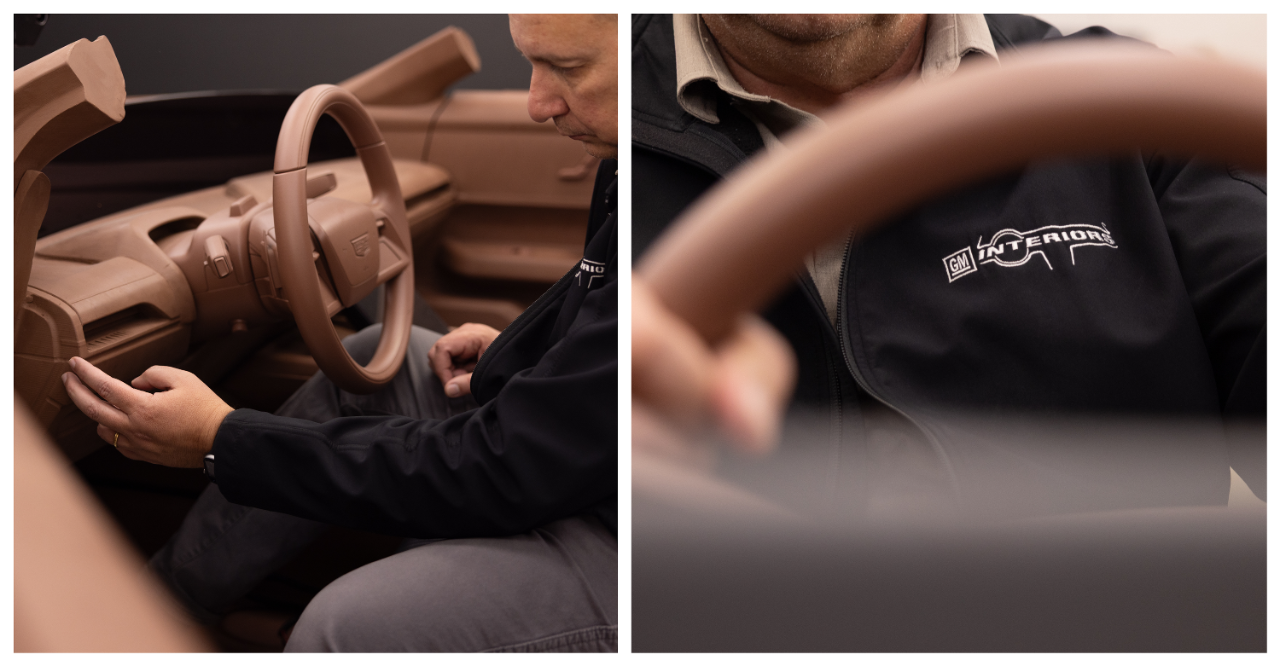
IMAGE CAPTION: Renato Casola reviews the Cadillac CELESTIQ clay model, where early interior concepts are refined with the customer in mind.
Where design and engineering meet
Every vehicle interior begins as an idea inside GM’s Global Design Studio, sketched in pencil, shaped in clay, and imagined as an emotional experience for the driver. Making that vision real depends on bridging imagination with what can truly be built.
“Working with the Design Studio is all about building powerful relationships,” Casola explains. “The pace is electric. ”
Engineers balance design intent with the demands of safety, structure, and cost. At times, the conversation comes down to millimeters that shape performance and the driver’s experience.
For Design Release Engineer Alex Holman, successful collaboration requires empathy as much as engineering skill. “You can’t simply look at a designer’s work and say it isn’t feasible,” Holman explains. “You have to honor the intent and craft, and then thoughtfully share the engineering perspective and constraints so you can work together to realize the vision—because designers are deeply and emotionally invested in what they create.”
Making that vision real relies on a shared vision between design and engineering. Finding new and innovative solutions to bridge imagination with real world use cases resulting in world class execution.
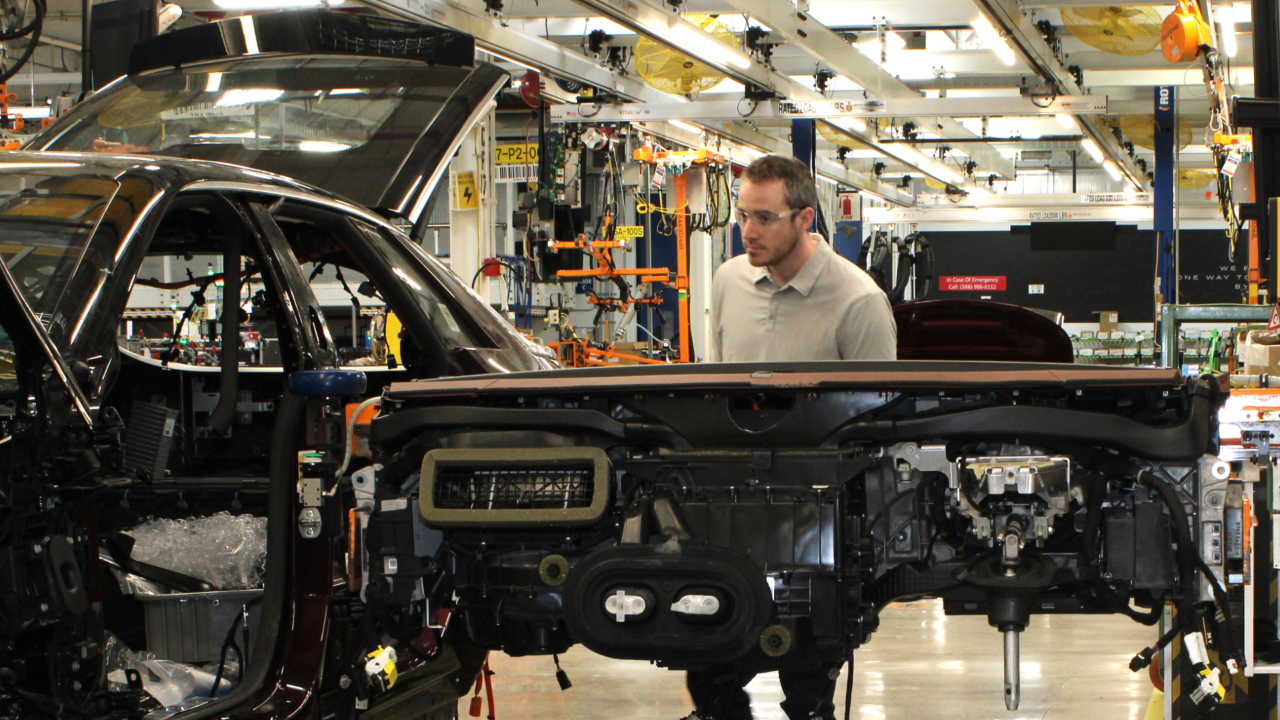
IMAGE CAPTION: Brent Gornall monitors the instrument panel assembly as it is positioned inside the Cadillac CELESTIQ, where precision is critical at every step.
Safety and physics guide decisions
Balancing safety with creative ambition can lead to complex conversations. “Safety is non-negotiable,” Holman says. “Together we (design and engineering) develop something that is good for the customer.”
Over time, that push and pull becomes a shared process of discovery that stretches both disciplines. “Working together develops empathy, persuasion, and negotiation. These are soft skills we’re not trained for, but they make the final product better.”
This cross-team collaboration protects the integrity built into every vehicle.
“When a vehicle is revealed and customers react positively, that is the moment you know everything you did together was worth it,” Holman says.
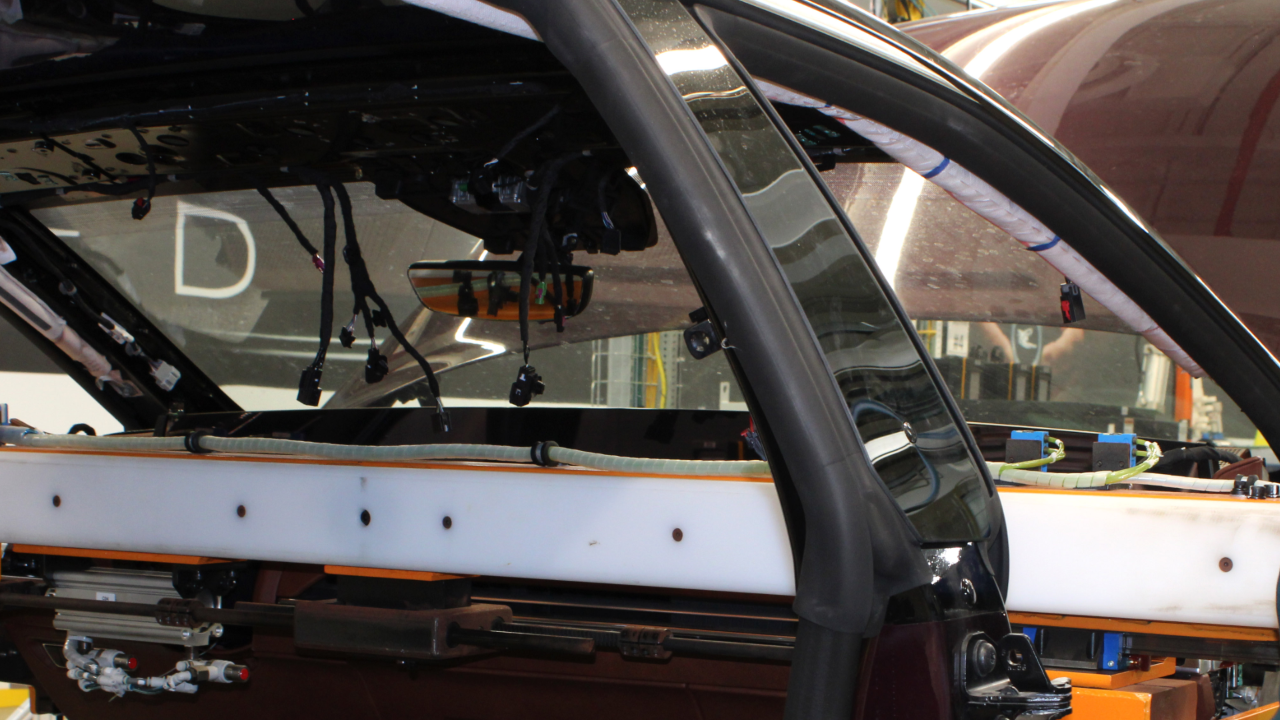
IMAGE CAPTION: With the Instrument Panel assembly installed, the load tool is carefully removed from the Cadillac CELESTIQ at GM’s Artisan Center—marking a precise final step in the integration process.
Power beneath the surface
Inside the cabin, what matters most is rarely seen. This work shapes the experience drivers sense the moment they step inside. What lies beneath the surface is what allows the interior to endure. This hidden engineering governs how the interior performs across years of use.
For Ian McAdams, Design Release Engineer for IP Structures, the instrument panel is far more than a mounting point.
“The IP structure is the backbone of the cockpit,” he says. “It supports critical systems and enables the rest of the interior to function as one.”
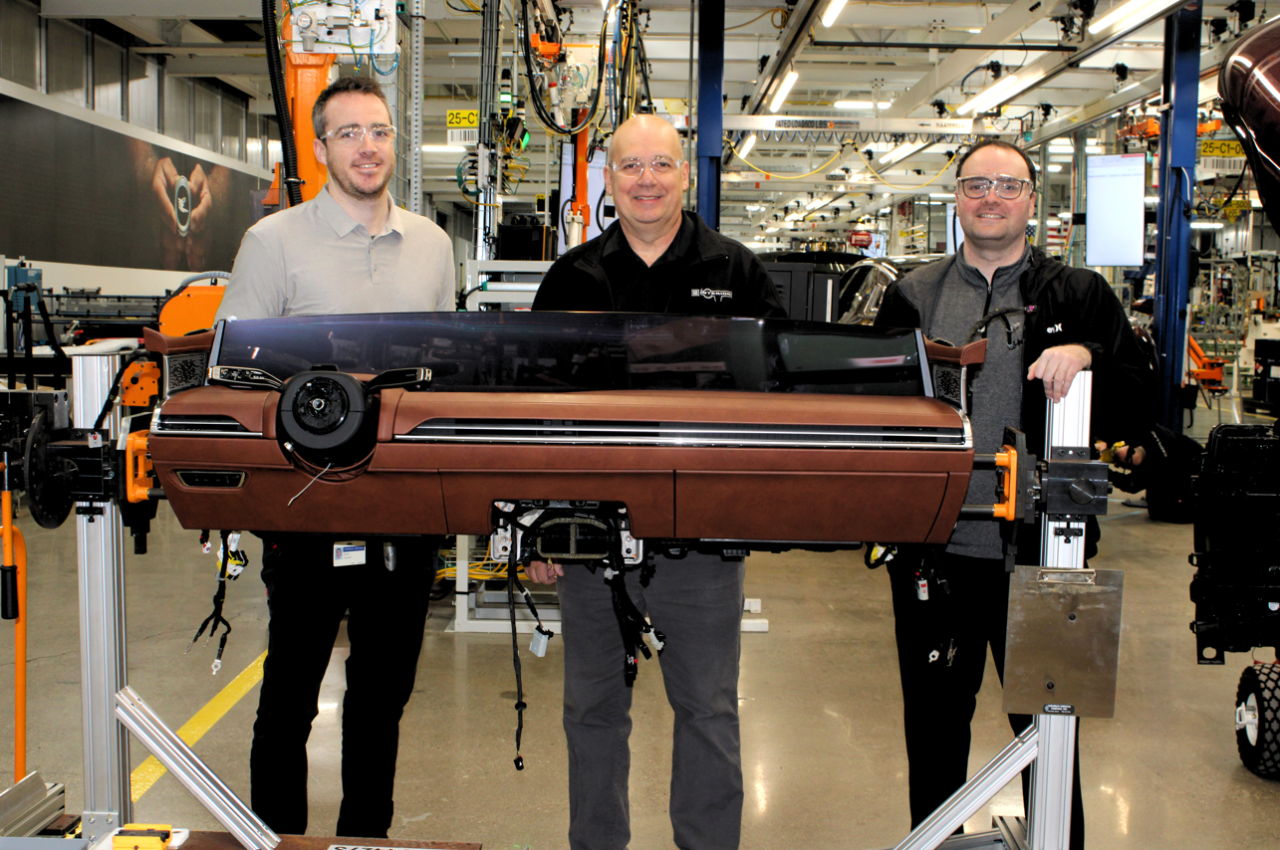
IMAGE CAPTION: Before installation, Brent Gornall, Renato Casola, and Ian McAdams stand with the assembled Cadillac CELESTIQ instrument panel at GM’s Artisan Center.
The Quiet Strength
“If vehicle interiors are like a marching band, Instrument Panel Structure is the tuba,” McAdams explains. “The trim teams may carry the melody, but the structure adds the richness and support that holds the whole orchestra together.”
For Design Release Engineer Ron Lahti, the impact is measured in customer trust. “If the dash creaks or rattles, customers can lose trust in the whole vehicle. Our job is to make sure the interior feels solid, refined, and built to last.”
This work gives the interior its strength long before a driver notices anything at all. Over time, that strength becomes quiet confidence behind the wheel. And that quiet foundation is where lasting pride begins.
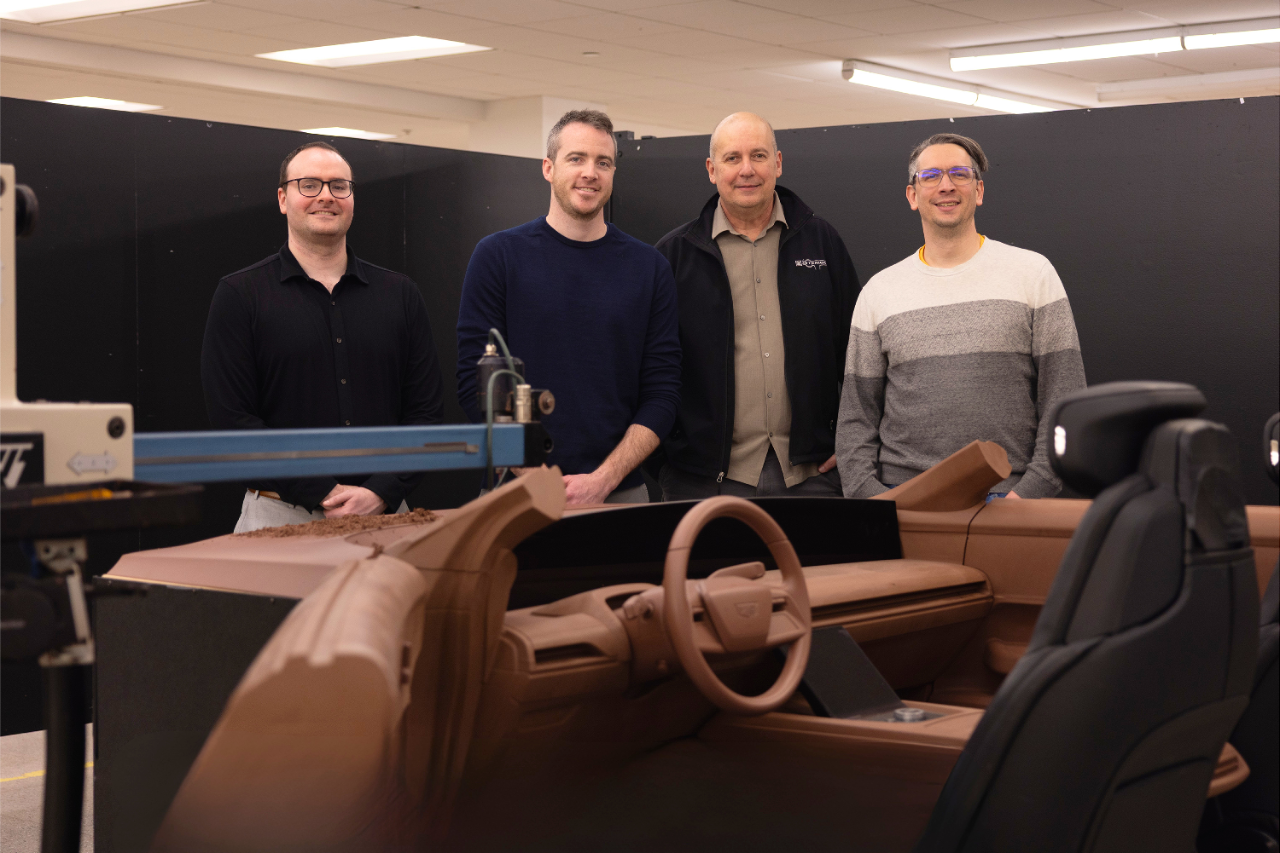
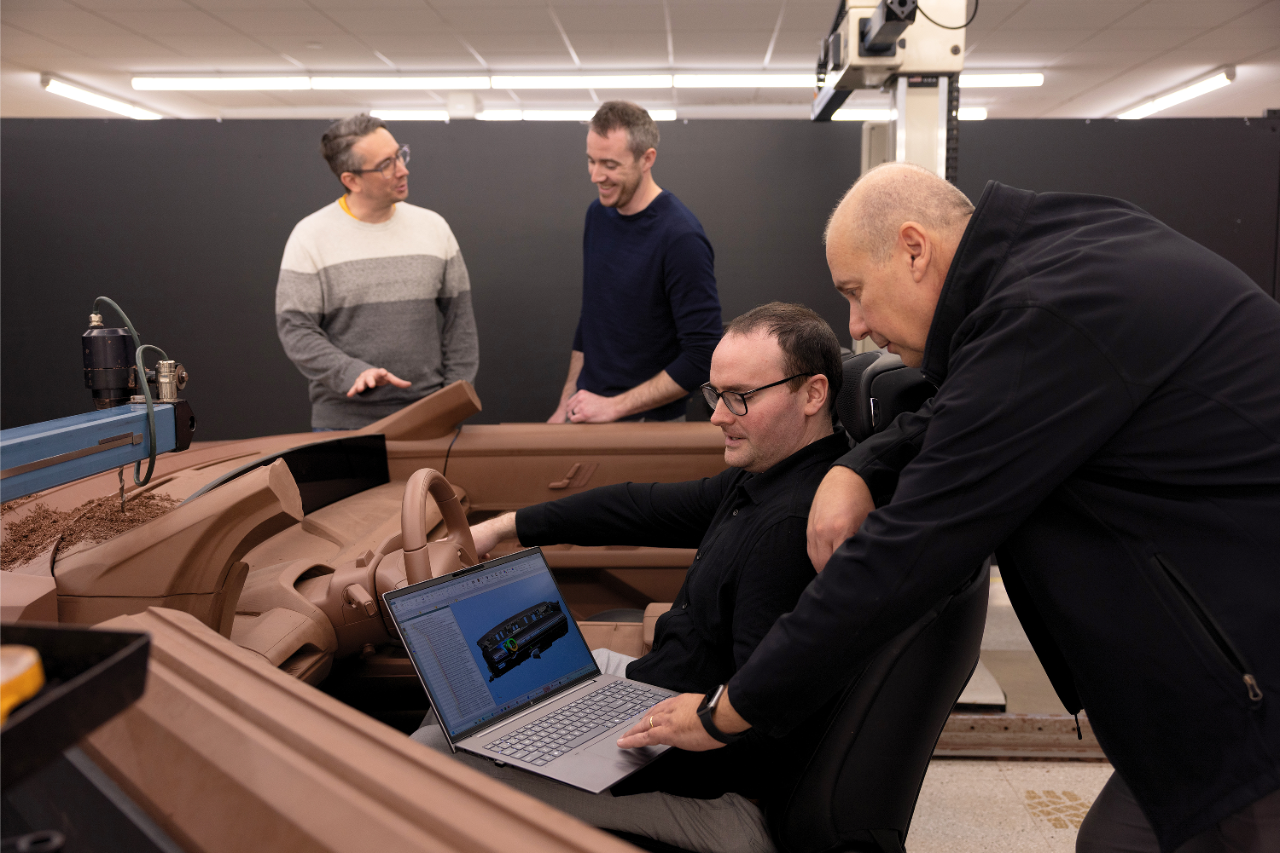
IMAGE CAPTION: In GM’s Design Studio, the clay model and engineering model come together during early interior development for the Cadillac CELESTIQ.
Everyday impact
For the engineers behind GM interiors, the reward appears in everyday life. Their work lives in driveways, parking lots, and daily commutes where customers encounter the results of years of development.
That visibility carries real responsibility. Every decision is made with the driver in mind — shaping how a vehicle feels over time and ensuring that quality, safety, and comfort hold up in real life.
Senior Design Release Engineer Alex Holman recalls one moment that brought the meaning of the work into focus. At a summer concert in Wisconsin, thousands of people gathered to enjoy the night. Rows of vehicles filled the parking lot. Many were GM models he had helped create, in ways both large and small.
“It was very humbling to look across the parking lot and see so many GM vehicles I had played a part in bringing to life,” Holman remembers. “I found myself recognizing each one by one…remembering a problem I helped solve here, a launch I supported there. That was a powerful moment.”
In that instant, years of unseen engineering and craftsmanship became the experience people depend on every day.
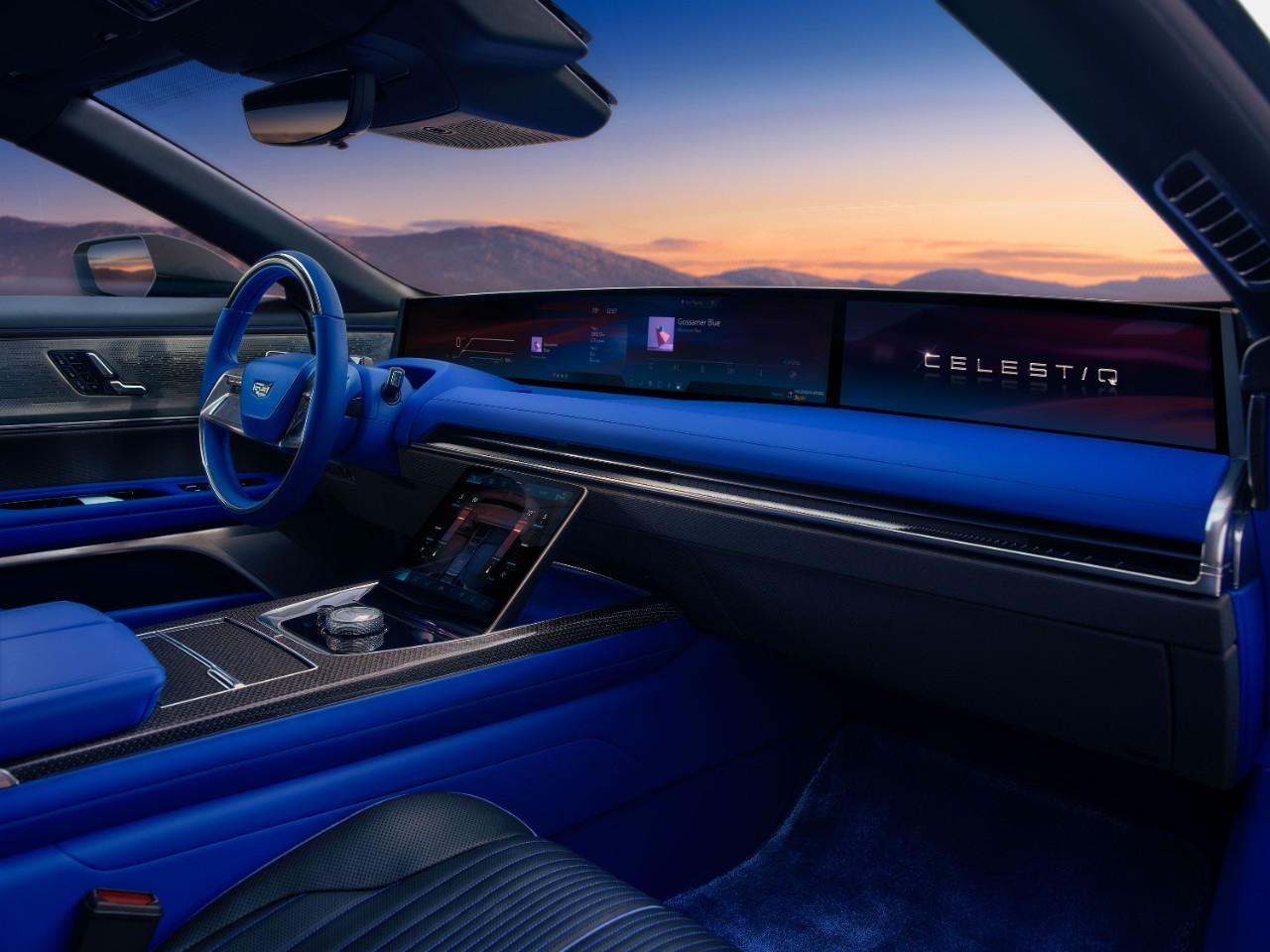
IMAGE CAPTION: Inside the finished Cadillac CELESTIQ, years of unseen engineering and craftsmanship come fully into view.
What stays with you
The significance of a vehicle’s interior persists well after the vehicle leaves the plant. While production marks the beginning of a car’s journey, it’s the interior that influences the long-term satisfaction a customer has with their vehicle.
Design Release Engineer Ron Lahti describes that responsibility in simple terms: “My goal every day is how do I let someone keep their vehicle for 10 years and still be happy with it 10 years later.”
That same commitment is grounded in a culture where people, trust, and shared purpose shape the work from the start. Senior Lead Product Engineer Renato Casola sees that same commitment reflected in GM’s culture.
“I love working at GM. The culture thrives on real inclusion and straight-up respect. Every voice counts, and integrity and trust aren’t optional. They’re the standard,” Casola says. “Working in Interiors makes that even more rewarding, because people can actually see and touch the product I helped develop…from inception on a block of clay all the way to mass production.”
That lasting satisfaction is built over years of unseen engineering and steady collaboration with the customer in mind. It begins before the first drive and stays with the driver long after. That’s the meaning behind every win.
At GM, every journey starts inside — and is built to last.
A screen comes to life. Light fills the cabin. The interior is brought into focus.
That instant, repeated millions of times each day, is the result of years of collaboration across General Motors interior engineering teams. Their efforts turn early design sketches into the interior systems drivers see and use every day.
This is where the work behind the win takes shape.
Where every drive begins
The interior is the part of the vehicle customers see and touch the most. It establishes trust, comfort, and long-term satisfaction. Even the slightest flaw can change how someone feels about their entire vehicle.
Senior Lead Product Engineer Renato Casola — whose career in automotive interiors spans over two decades across Brazil and the United States — believes this is the most fulfilling part of the job.
“Working on highly visible interior parts that customers see and interact with every day brings a unique sense of fulfillment,” Casola says. “Delivering craftsmanship that delights people every day is absolutely worth the effort.”
Turning vision into reality
Engineers carry each design forward until it can be built, tested, and trusted on the road. Their dedication brings studio intent, engineering precision, and close collaboration with design into one system that must function as a whole.
Inside the cockpit, that system becomes the place where people meet the vehicle. Achieving this goal requires steady negotiation between creative vision and physical reality. The final solution often lives in the space between what is imagined — and what can truly function.
For Design Release Engineer Brent Gornall, that moment never loses its impact. “Seeing designs come to life, from early studio sketches to production vehicles coming off the line, is a cool thing.”
Senior Design Release Engineer Alex Holman sees that same transformation through the details that shape how drivers interact with the interior. “On a recent project, we concealed infotainment screen attachments in a new way.” Holman explains. “Instead of closing off that access, we integrated trim that also supports storage or audio.”
Results like this come from teams working in true alignment, which is what GM’s culture is all about.
Where design and engineering meet
Every vehicle interior begins as an idea inside GM’s Global Design Studio, sketched in pencil, shaped in clay, and imagined as an emotional experience for the driver. Making that vision real depends on bridging imagination with what can truly be built.
“Working with the Design Studio is all about building powerful relationships,” Casola explains. “The pace is electric.”
Engineers balance design intent with the demands of safety, structure, and cost. At times, the conversation comes down to millimeters that shape performance and the driver’s experience.
For Senior Design Release Engineer Alex Holman, successful collaboration requires empathy as much as engineering skill. “You can’t simply look at a designer’s work and say it isn’t feasible,” Holman explains. “You have to honor the intent and craft, and then thoughtfully share the engineering perspective and constraints so you can work together to realize the vision—because designers are deeply and emotionally invested in what they create.”
Making that vision real relies on a shared vision between design and engineering. Finding new and innovative solutions to bridge imagination with real world use cases resulting in world class execution.
Safety and physics guide decisions
Balancing safety with creative ambition can lead to complex conversations. “Safety is non-negotiable,” Holman says. “Together we (design and engineering) develop something that is good for the customer.”
Over time, that push and pull becomes a shared process of discovery that stretches both disciplines. “Working together develops empathy, persuasion, and negotiation. These are soft skills we’re not trained for, but they make the final product better.”
This cross-team collaboration protects the integrity built into every vehicle.
“When a vehicle is revealed and customers react positively, that is the moment you know everything you did together was worth it,” Holman says.
Power beneath the surface
Inside the cabin, what matters most is rarely seen. This work shapes the experience drivers sense the moment they step inside. What lies beneath the surface is what allows the interior to endure. This hidden engineering governs how the interior performs across years of use.
For Ian McAdams, Design Release Engineer for IP Structures, the instrument panel is far more than a mounting point.
“The IP structure is the backbone of the cockpit,” he says. “It supports critical systems and enables the rest of the interior to function as one.”
The Quiet Strength
“If vehicle interiors are like a marching band, Instrument Panel Structure is the tuba,” McAdams explains. “The trim teams may carry the melody, but the structure adds the richness and support that holds the whole orchestra together.”
For Design Release Engineer Ron Lahti, the impact is measured in customer trust. “If the dash creaks or rattles, customers can lose trust in the whole vehicle. Our job is to make sure the interior feels solid, refined, and built to last.”
This work gives the interior its strength long before a driver notices anything at all. Over time, that strength becomes quiet confidence behind the wheel. And that quiet foundation is where lasting pride begins.
Everyday impact
For the engineers behind GM interiors, the reward appears in everyday life. Their work lives in driveways, parking lots, and daily commutes where customers encounter the results of years of development.
That visibility carries real responsibility. Every decision is made with the driver in mind — shaping how a vehicle feels over time and ensuring that quality, safety, and comfort hold up in real life.
Senior Design Release Engineer Alex Holman recalls one moment that brought the meaning of the work into focus. At a summer concert in Wisconsin, thousands of people gathered to enjoy the night. Rows of vehicles filled the parking lot. Many were GM models he had helped create, in ways both large and small.
“It was very humbling to look across the parking lot and see so many GM vehicles I had played a part in bringing to life,” Holman remembers. “I found myself recognizing each one by one…remembering a problem I helped solve here, a launch I supported there. That was a powerful moment.”
In that instant, years of unseen engineering and craftsmanship became the experience people depend on every day.
What stays with you
The significance of a vehicle’s interior persists well after the vehicle leaves the plant. While production marks the beginning of a car’s journey, it’s the interior that influences the long-term satisfaction a customer has with their vehicle.
Design Release Engineer Ron Lahti describes that responsibility in simple terms: “My goal every day is how do I let someone keep their vehicle for 10 years and still be happy with it 10 years later.”
That same commitment is grounded in a culture where people, trust, and shared purpose shape the work from the start. Senior Lead Product Engineer Renato Casola sees that same commitment reflected in GM’s culture.
“I love working at GM. The culture thrives on real inclusion and straight-up respect. Every voice counts, and integrity and trust aren’t optional. They’re the standard,” Casola says. “Working in Interiors makes that even more rewarding, because people can actually see and touch the product I helped develop…from inception on a block of clay all the way to mass production.”
That lasting satisfaction is built over years of unseen engineering and steady collaboration with the customer in mind. It begins before the first drive and stays with the driver long after. That’s the meaning behind every win.
At GM, every journey starts inside — and is built to last.
Learn more about careers at GM by visiting careers.gm.com.