How GM’s designers use AI to accelerate their creative vision
2026-04-16
AI is quietly changing the pace inside General Motors’ design studios and engineering labs. Processes that once took weeks or months of heavy lifting now happen in minutes, creating efficiencies that allow more room for human creativity. The people leading this shift within GM will tell you that AI's best use isn’t in taking over car design, it’s augmenting the human creativity that’s so critical to the process of building great cars.
“We’ve been super focused on how we can most effectively ride this coming wave of AI… our goal really is to pioneer the future of transportation with AI,” Director of Design Innovation and Technology Operations Bryan Styles explains. “We’re applying it in a way that enhances the skills that we’re already good at… We’re thinking about it from the perspective of augmenting and accelerating processes,” Styles says.
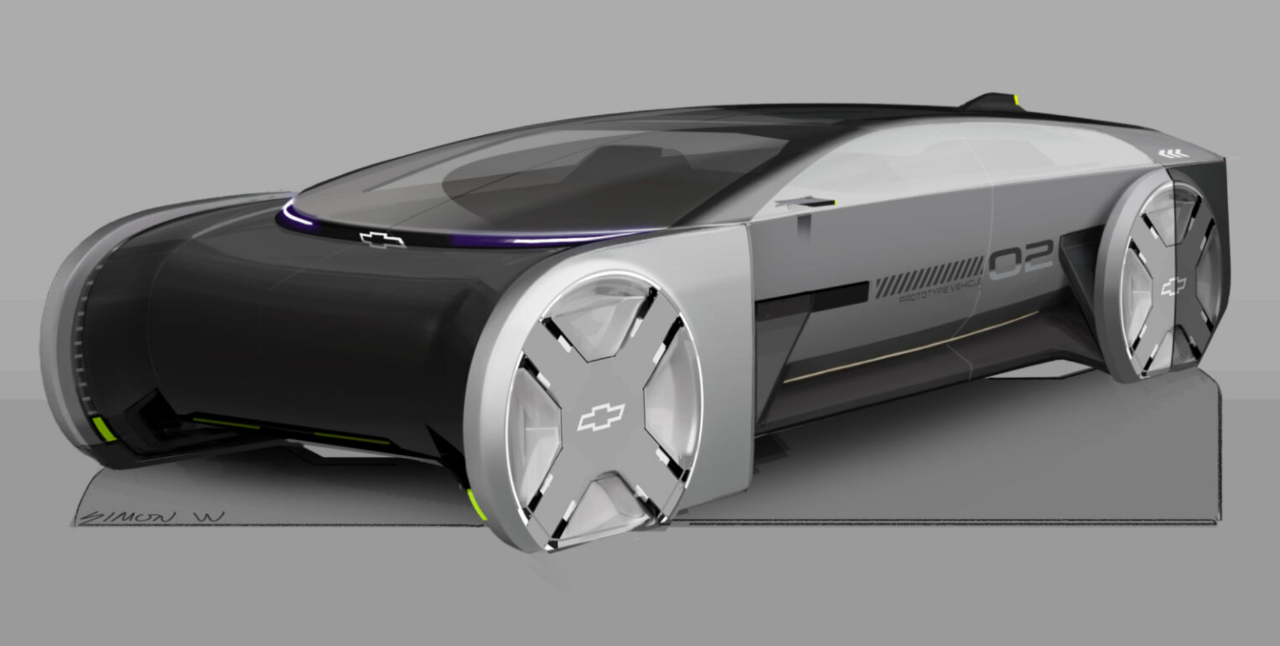
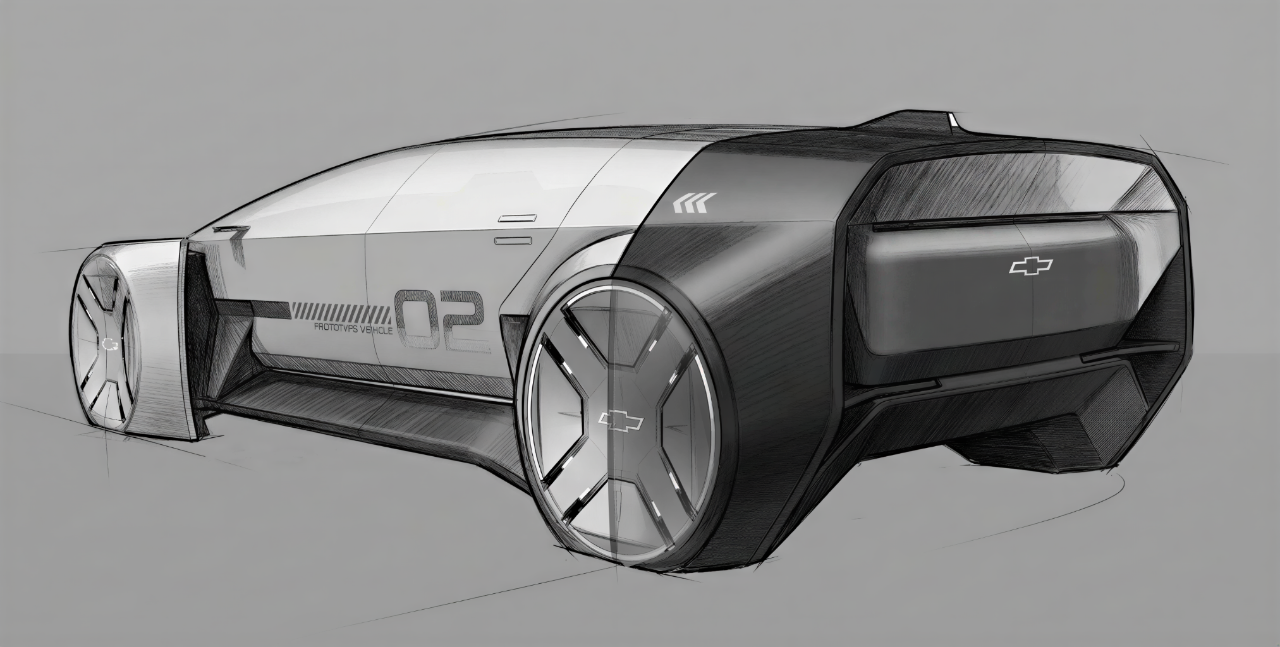
[CAPTION: A creative concept dreamed up by a GM Designer.]
That philosophy underpins a broad push to embed AI throughout GM’s design and development workflows, from the first sketch of a concept vehicle, to virtual wind-tunnel testing of a production-bound model. It means the time that AI saves can allow for more ideas, more iterations, more creativity, and ultimately, better vehicles. All that, while keeping designers, sculptors and engineers firmly in the metaphorical driver's seat.
To reap its fullest benefits, this new approach means leveraging AI’s talents from the very earliest workflows. For many decades, the tip of a pencil has been the starting point for every new vehicle. That hasn’t changed. What’s changed is what designers can extrapolate from those earliest sketches in a single day.
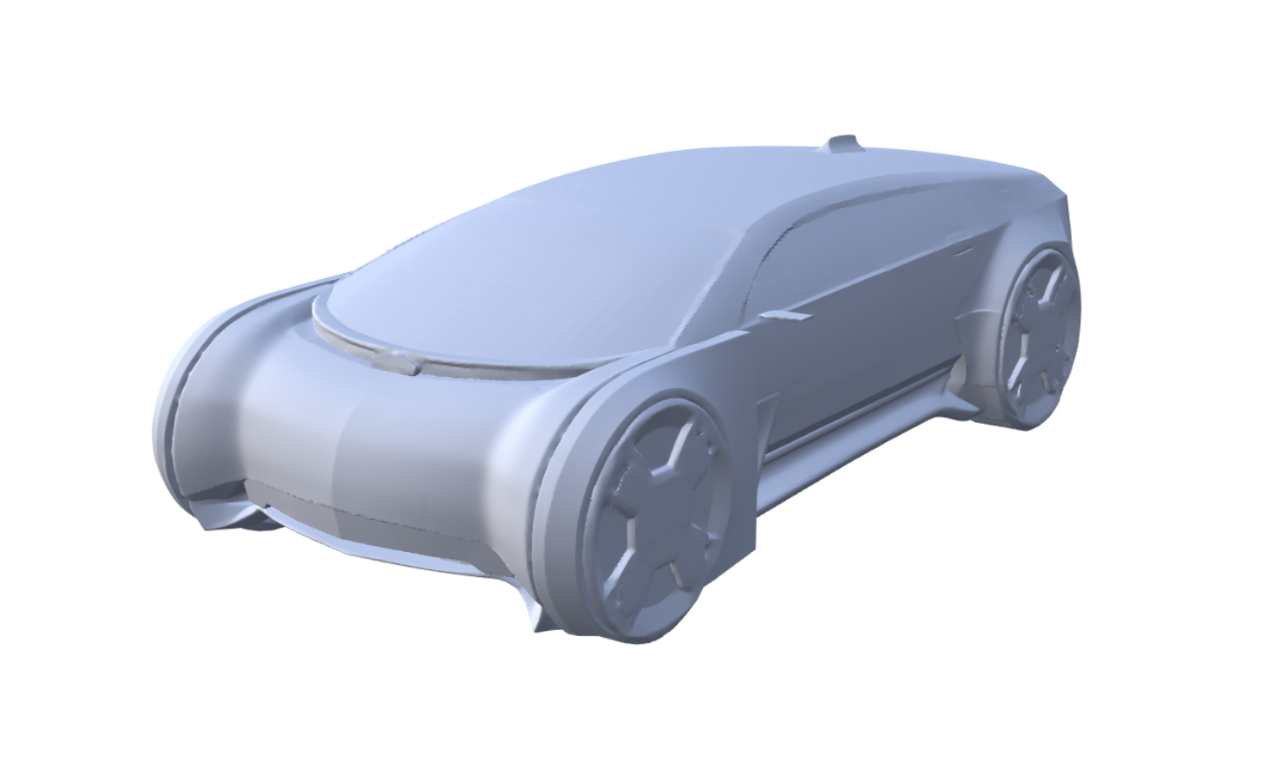
[Caption: From the earliest sketches, Designers can quickly pull out preliminary 3D renders like these.]
“Our starting point here is design intention,” says Daniel Shapiro, a Creative Designer who has experimented with AI-driven visualization tools. “Human creativity sets the vision, AI helps us see the outcomes of that vision sooner.”
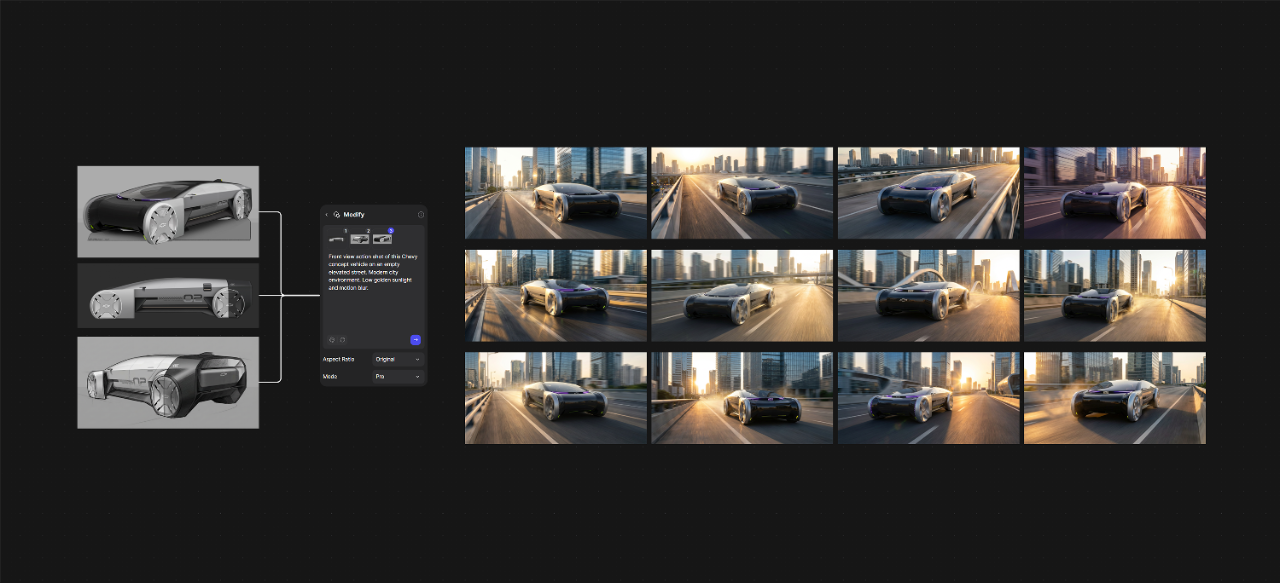
In one recent project, Shapiro began with a handful of hand-drawn views of a futuristic Chevy concept and fed them into an AI tool. From there, Shapiro prompted the AI to generate a series of images and, eventually, a teaser animation that showed how the concept could look in 3D motion.
[CAPTION: AI extrapolates one artist’s initial renders into full 3D animations.]
“Traditionally, going from design sketch to high‑quality animation would have taken multiple teams multiple months of work,” Shapiro says. “Now this can be all done in less than a day by a single designer, and you don’t have to have extensive 3D visualization skills like you did before.”
That shift doesn’t just save time, it changes what’s creatively possible. GM's designers can rapidly generate dozens of variations of a single design, pull the most compelling ones aside, and refine them from a more-advanced starting point. In this use case, AI handles much of the technical setup required for a 3D render, from the virtual cameras to the lighting and CGI environments. This process used to consume days of manual work.
“Instead of just going down this one path, we can explore so much more, and you can be a bit less precious with the ideas,” Shapiro says. “I don’t want to exaggerate here, but it’s changed the way we do our work on a daily basis.”
Still, a human filter is also what keeps GM’s brands distinct in an era when generic AI-generated cars fill our online feeds.
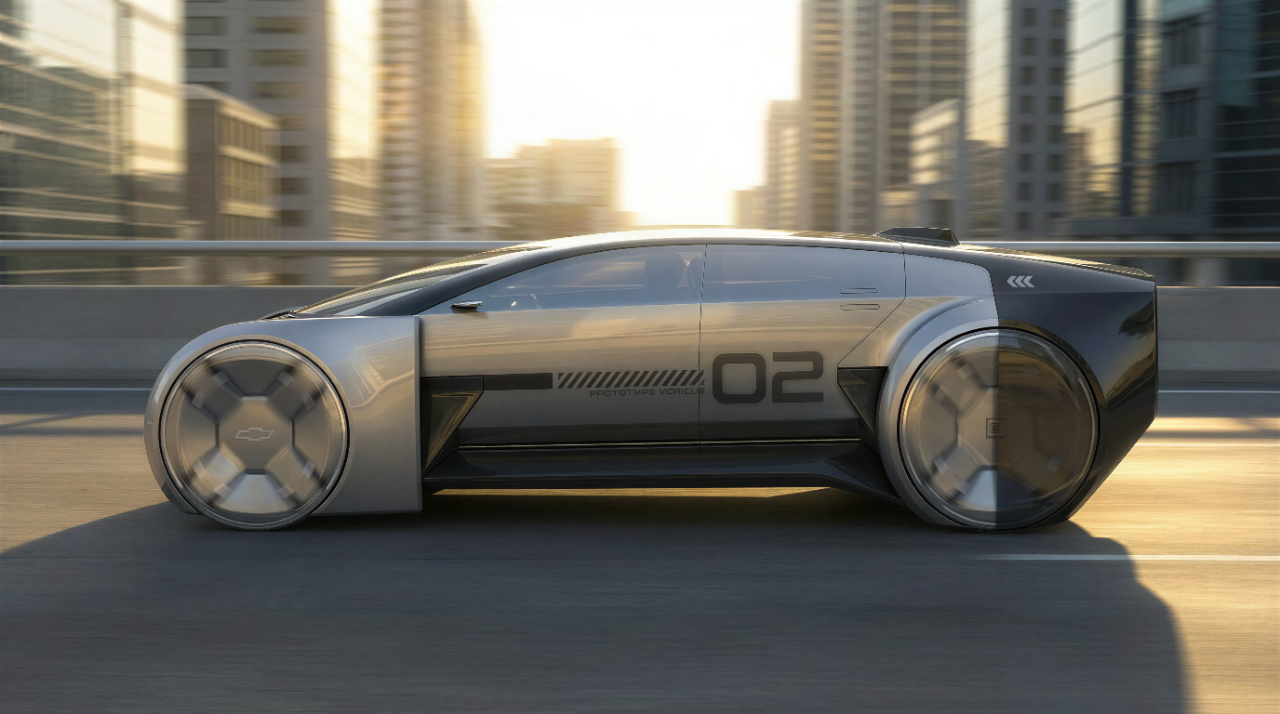
[CAPTION: Another angle of the forward-looking Chevy concept, brought to life in a flash with the aid of AI tools.]
“AI isn’t a one‑click solution,” Shapiro says. “We’re working with it and we’re often working against it to get the result we want. This is where human taste and decision‑making really matter the most. We’re still the ones deciding what feels like a Buick, a GMC, a Cadillac, and in this case, a Chevy,” he explains.
On the engineering side, AI is reshaping one of the most important but historically time-consuming exercises within vehicle design and development: aerodynamics.
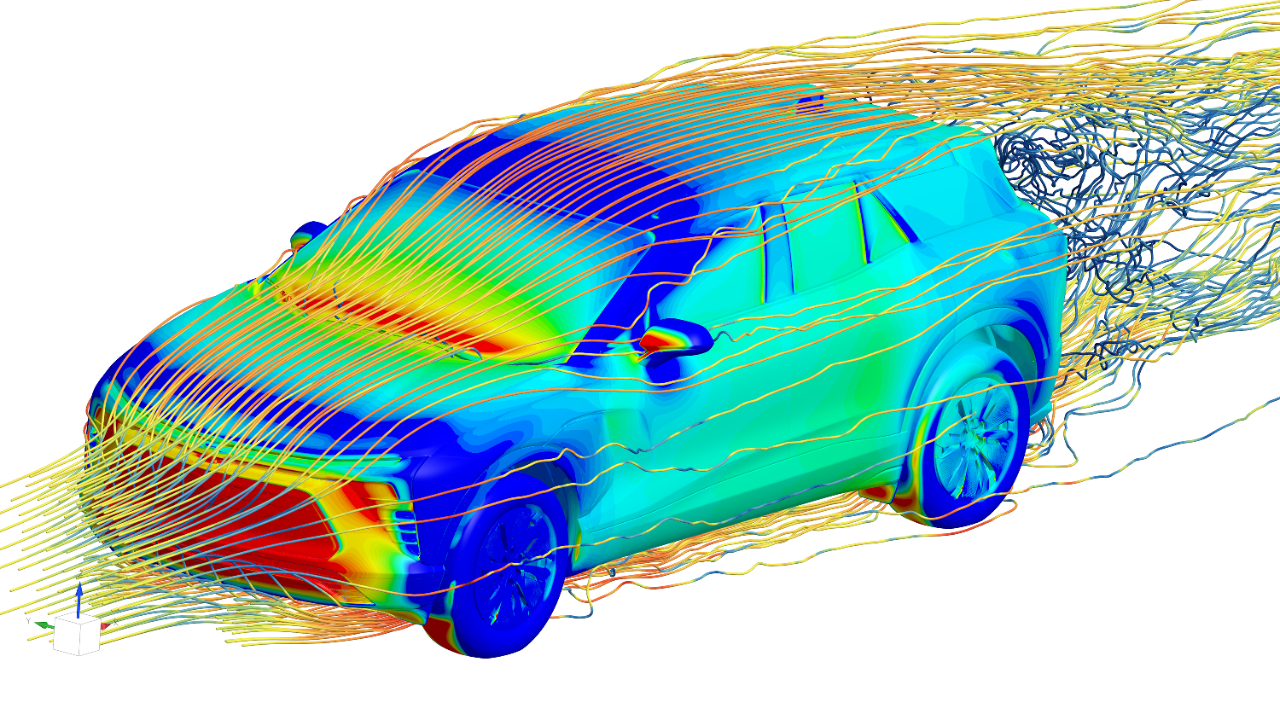
[CAPTION: An AI-powered, virtual wind tunnel allows designers and aerodynamicists to collaborate in real time]
“At GM we’re not just users of AI technology, we’re developers,” says Scott Parrish, a Technical Fellow & Lab Group Manager within GM R&D. His team created an AI‑powered virtual wind tunnel that predicts aerodynamic drag and plugs that information directly into the digital sculpting tools designers already use.
Traditionally, GM has relied on high‑fidelity Computational Fluid Dynamics (CFD) and full‑scale wind tunnel testing. Both produce accurate data, but they’re relatively expensive and slow-moving. In processes using those techniques, the surface of a vehicle would be designed, then “released” to engineers and put into CFD simulation to determine the surface’s coefficient of drag, then sent back days or weeks later with feedback and possible modifications.
Those simulation results could then inform the next phase of design. But by that time, the surface proposed by the designers had often already changed, duplicating work and creating prolonged cycles between the design and testing processes.
“It used to take about two weeks for us to do a full cycle of this sort of design and engineering iteration. And now what we’re looking at is instant,” says Rene Strauss, Director of GM’s Virtual Integration Engineering.
With the new tool, an aerodynamicist and a creative designer can sit together in front of the same screen, tweak a roofline or hood, and see how those changes affect drag nearly in real time – cutting weeks from testing timelines and enabling better, earlier efficiency tradeoffs.
“With just a few clicks, it reads the surface,” Strauss explains. “Less than one minute later, now we’ve got the results… We could have made a decision about the roofline in about one minute, 18 seconds. It’s a game changer.”
The objective of these AI tools isn’t to speed up design for the sake of speed. This level of rapid optimization and iteration produces better real-world outcomes down the line.
“Reducing aerodynamic drag allows us to provide more range to our customers,” Parrish says. “In the case of a battery electric vehicle, maybe a smaller, more cost‑effective battery that we can pass on to the customer.”
Here, again, AI is a force multiplier for human expertise. The virtual wind tunnel runs on a training set built from GM’s own CFD data, generated specifically for this AI database using methods refined over years of lessons learned to deliver highly accurate results. “The model is only as good as the training data,” Parrish notes. It means that GM’s decades of design and engineering experience become an even more valuable asset, used as a base for accelerating design and engineering possibilities.
In other words, GM isn’t handing the keys to AI. It’s using AI to free up time, that most-valuable resource to designers, to offer its creatives and engineers more laps around the track as they dream up tomorrow’s vehicles. These experts at GM believe that’s how you pioneer with AI: by accelerating the brilliant minds of the people within the company.
Under the direction of GM’s Designers, hand-drawn sketches can go from paper to three dimensions with an assist from AI.
AI is quietly changing the pace inside General Motors’ design studios and engineering labs. Processes that once took weeks or months of heavy lifting now happen in minutes, creating efficiencies that allow more room for human creativity. The people leading this shift within GM will tell you that AI's best use isn’t in taking over car design, it’s augmenting the human creativity that’s so critical to the process of building great cars.
“We’ve been super focused on how we can most effectively ride this coming wave of AI… our goal really is to pioneer the future of transportation with AI,” Director of Design Innovation and Technology Operations Bryan Styles explains. “We’re applying it in a way that enhances the skills that we’re already good at… We’re thinking about it from the perspective of augmenting and accelerating processes,” Styles says.
A creative concept dreamed up by a GM Designer.
That philosophy underpins a broad push to embed AI throughout GM’s design and development workflows, from the first sketch of a concept vehicle, to virtual wind-tunnel testing of a production-bound model. It means the time that AI saves can allow for more ideas, more iterations, more creativity, and ultimately, better vehicles. All that, while keeping designers, sculptors and engineers firmly in the metaphorical driver's seat.
To reap its fullest benefits, this new approach means leveraging AI’s talents from the very earliest workflows. For many decades, the tip of a pencil has been the starting point for every new vehicle. That hasn’t changed. What’s changed is what designers can extrapolate from those earliest sketches in a single day.
From the earliest sketches, Designers can quickly pull out preliminary 3D renders like these.
“Our starting point here is design intention,” says Daniel Shapiro, a Creative Designer who has experimented with AI-driven visualization tools. “Human creativity sets the vision, AI helps us see the outcomes of that vision sooner.”
In one recent project, Shapiro began with a handful of hand-drawn views of a futuristic Chevy concept and fed them into an AI tool. From there, Shapiro prompted the AI to generate a series of images and, eventually, a teaser animation that showed how the concept could look in 3D motion.
AI extrapolates one artist’s initial renders into full 3D animations.
“Traditionally, going from design sketch to high‑quality animation would have taken multiple teams multiple months of work,” Shapiro says. “Now this can be all done in less than a day by a single designer, and you don’t have to have extensive 3D visualization skills like you did before.”
That shift doesn’t just save time, it changes what’s creatively possible. GM's designers can rapidly generate dozens of variations of a single design, pull the most compelling ones aside, and refine them from a more-advanced starting point. In this use case, AI handles much of the technical setup required for a 3D render, from the virtual cameras to the lighting and CGI environments. This process used to consume days of manual work.
“Instead of just going down this one path, we can explore so much more, and you can be a bit less precious with the ideas,” Shapiro says. “I don’t want to exaggerate here, but it’s changed the way we do our work on a daily basis.”
Still, a human filter is also what keeps GM’s brands distinct in an era when generic AI-generated cars fill our online feeds.
Another angle of the forward-looking Chevy concept, brought to life in a flash with the aid of AI tools.
“AI isn’t a one‑click solution,” Shapiro says. “We’re working with it and we’re often working against it to get the result we want. This is where human taste and decision‑making really matter the most. We’re still the ones deciding what feels like a Buick, a GMC, a Cadillac, and in this case, a Chevy,” he explains.
On the engineering side, AI is reshaping one of the most important but historically time-consuming exercises within vehicle design and development: aerodynamics.
An AI-powered, virtual wind tunnel allows designers and aerodynamicists to collaborate in real time.
“At GM we’re not just users of AI technology, we’re developers,” says Scott Parrish, a Technical Fellow & Lab Group Manager within GM R&D. His team created an AI‑powered virtual wind tunnel that predicts aerodynamic drag and plugs that information directly into the digital sculpting tools designers already use.
Traditionally, GM has relied on high‑fidelity Computational Fluid Dynamics (CFD) and full‑scale wind tunnel testing. Both produce accurate data, but they’re relatively expensive and slow-moving. In processes using those techniques, the surface of a vehicle would be designed, then “released” to engineers and put into CFD simulation to determine the surface’s coefficient of drag, then sent back days or weeks later with feedback and possible modifications.
Those simulation results could then inform the next phase of design. But by that time, the surface proposed by the designers had often already changed, duplicating work and creating prolonged cycles between the design and testing processes.
“It used to take about two weeks for us to do a full cycle of this sort of design and engineering iteration. And now what we’re looking at is instant,” says Rene Strauss, Director of GM’s Virtual Integration Engineering.
With the new tool, an aerodynamicist and a creative designer can sit together in front of the same screen, tweak a roofline or hood, and see how those changes affect drag nearly in real time – cutting weeks from testing timelines and enabling better, earlier efficiency tradeoffs.
“With just a few clicks, it reads the surface,” Strauss explains. “Less than one minute later, now we’ve got the results… We could have made a decision about the roofline in about one minute, 18 seconds. It’s a game changer.”
The objective of these AI tools isn’t to speed up design for the sake of speed. This level of rapid optimization and iteration produces better real-world outcomes down the line.
“Reducing aerodynamic drag allows us to provide more range to our customers,” Parrish says. “In the case of a battery electric vehicle, maybe a smaller, more cost‑effective battery that we can pass on to the customer.”
Here, again, AI is a force multiplier for human expertise. The virtual wind tunnel runs on a training set built from GM’s own CFD data, generated specifically for this AI database using methods refined over years of lessons learned to deliver highly accurate results. “The model is only as good as the training data,” Parrish notes. It means that GM’s decades of design and engineering experience become an even more valuable asset, used as a base for accelerating design and engineering possibilities.
In other words, GM isn’t handing the keys to AI. It’s using AI to free up time, that most-valuable resource to designers, to offer its creatives and engineers more laps around the track as they dream up tomorrow’s vehicles. These experts at GM believe that’s how you pioneer with AI: by accelerating the brilliant minds of the people within the company.