Everything you need to know about Super Cruise today, and what’s next for the tech
2026-08-18
Super Cruise is GM's hands-free driver assistance technology available in more than 20 models in North America.3
Super Cruise is capable of handling steering, acceleration, and braking on compatible roads under certain circumstances. In 2028, GM plans to introduce eyes-off capabilities, meaning drivers will be able to look away from the road while the system is engaged.1
The tech will be available first on the Cadillac ESCALADE IQ.
With every step General Motors takes on the road to full autonomy, it builds upon technology it pioneered. With nearly 750,000 Super Cruise-enabled vehicles on the road today, the system is already helping drivers with steering, acceleration, and braking on compatible roads in certain conditions.
How do you improve on that? GM’s plans to implement a next-generation Super Cruise system that would allow drivers to take their hands off the wheel and their eyes off the road, first on highways and later expected to expand to more road types. Here's how.
What is Super Cruise?
Super Cruise driver assistance technology is a hardware and software system that uses a suite of sensors and computers to determine what road a vehicle is on, and to assess the conditions around that vehicle. With Super Cruise engaged, a driver can take their hands off the wheel but must pay attention to the road, ready to resume steering if and when necessary. Initially only offered on divided highways, Super Cruise's capabilities have expanded to secondary roads that are mapped with clearly visible lane markings.
Super Cruise is designed to help make driving journeys more comfortable. You can think of it as a more capable version of adaptive cruise control, hence the "super" in the name. With Super Cruise-equipped trucks, you can even tow a trailer hands-free2. Today's Super Cruise is offered on more than 20 GM models in North America, from the attainable Chevy Bolt to the most luxurious Cadillacs. Super Cruise is included for three years upon purchase of equipped vehicles, after which owners can pay for a plan starting at $39.99 a month, with discounts offered for yearly billing.3
How is Super Cruise different from other driver-assistance systems?
While some systems simply know what road the vehicle is traveling on from GPS data, Super Cruise vehicles can determine their position down to the lane. This level of awareness allows for more intelligent lane changes and gives the vehicle a better understanding of what lane markings to expect and how to interpret them, as well as more granular information about the road topography itself.
These advanced capabilities are made possible by high-definition maps downloaded to each vehicle. Using specially equipped vehicles fitted with LiDAR sensors, which bounce light beams off their surroundings to create a 3D image of the physical environment, the Super Cruise mapping process collects data that’s tagged for the system to use. This information is then matched against what the vehicle's sensors detect to precisely locate the vehicle on the road. That extra knowledge of its surroundings can make Super Cruise a very capable system.
What's next for Super Cruise?
GM anticipates the next version of Super Cruise will be eyes-off, meaning drivers would be able to safely look away from the road while the system is engaged, on certain mapped roads. GM plans to launch this tech in 2028 first on the Cadillac ESCALADE IQ.
GM has already begun testing this system on hundreds of prototype vehicles with the sensors and electronics needed to expand Super Cruise's capabilities.
Like the hands-free system today, this next iteration of Super Cruise will eventually be available on multiple models and price points across GM's brands. And, GM is already working to develop vehicles that can one-day drive on their owner's behalf.
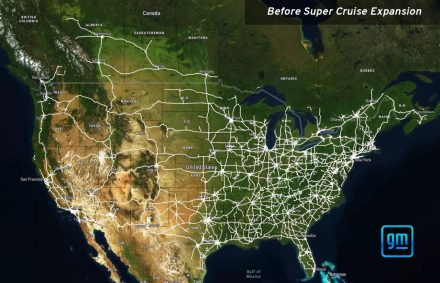
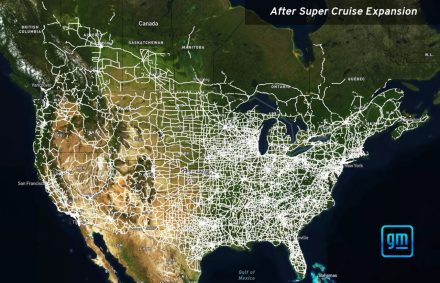
[Caption: An earlier expansion of Super Cruise-compatible roadways saw a huge increase in the number of vehicles and regions where the technology could be used. With time and tons of testing, GM is able to improve these driver assistance technologies and expand where they’re used.]
How is Super Cruise tested?
GM’s large fleet of Super Cruise-equipped vehicles provides a large base of operational and experiential information, which can be used to improve the technology over time. But the software and hardware that make it all possible doesn't reach production vehicles without extensive testing and validation by GM engineers. The goal is to eventually build trusted self-driving technology that every kind of driver can use.
GM uses a layered approach to testing new autonomous driving features. This includes manual driving and testing on closed courses, as well as supervised testing on public roads — always with a driver behind the wheel to observe behavior and step in if needed.
The system is being tested in simulations and in real-world conditions simultaneously, as well.
Simulation is central to the development process. In fact, GM engineers can simulate 100 years' worth of driving every day, something that's simply not possible in the real world. Scenarios can include a close call with another vehicle straying from its lane as well as complex interactions at intersections — some are everyday occurrences, while others represent rarer circumstances, called edge cases. Engineers can pull specific scenarios from production and test fleets, replay them with updated software, and alter them to test even more possibilities.
Combine that with more than one billion miles driven with Super Cruise, and you can see how GM’s scale makes these advances in safety and comfort possible.
1 GM plans to introduce eyes-off capabilities as early as 2028, beginning with the Cadillac ESCALADE IQ, subject to development, validation and other factors. If introduced, this capability would allow drivers to look away from the road only when the system is properly engaged on compatible roads and under compatible conditions.
2 Turn Signal Activated Lane Change and Automatic Lane Change not available while trailering. Always pay attention while driving and when using Super Cruise. Always use Super Cruise in accordance with local laws. Do not use a hand-held device. Requires active Super Cruise plan or trial. Terms apply. Visit OnStar.com for compatible roads and full details.
3 Always pay attention while driving and when using Super Cruise. Always use Super Cruise in accordance with local laws. Do not use a hand-held device. Requires active Super Cruise plan or trial. Terms apply. Visit Buick.com, Cadillac.com, Chevrolet.com, or GMC.comfor compatible roads and full details.
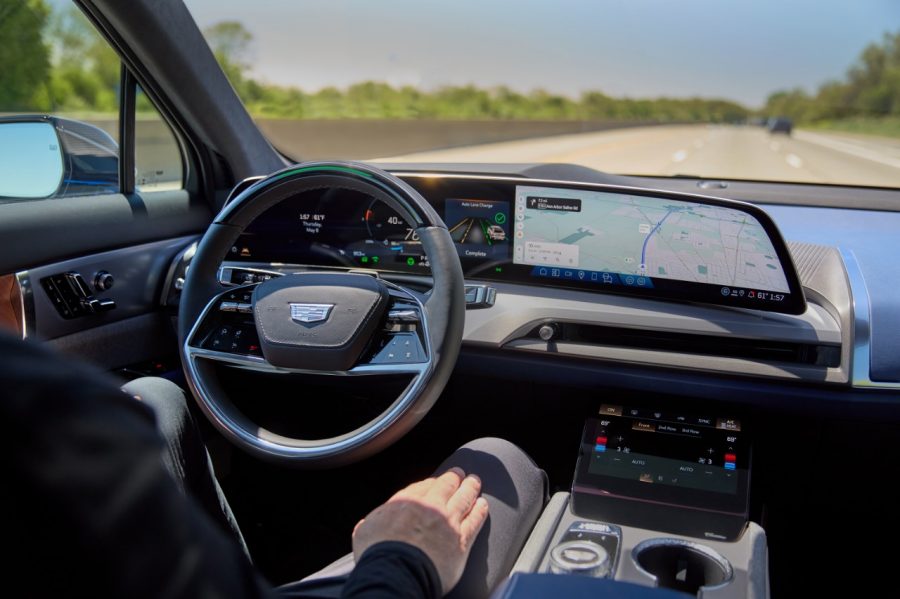
Driver view of the interior of the 2026 Cadillac VISTIQ with Super Cruise hands-free driver assistance technology engaged.
- Super Cruise is GM's hands-free driver assistance technology available in more than 20 models in North America.3
- Super Cruise is capable of handling steering, acceleration, and braking on compatible roads under certain circumstances. In 2028, GM plans to introduce eyes-off capabilities, meaning drivers will be able to look away from the road while the system is engaged.1
- The tech will be available first on the Cadillac ESCALADE IQ.
With every step General Motors takes on the road to full autonomy, it builds upon technology it pioneered. With nearly 750,000 Super Cruise-enabled vehicles on the road today, the system is already helping drivers with steering, acceleration, and braking on compatible roads in certain conditions.
How do you improve on that? GM’s plans to implement a next-generation Super Cruise system that would allow drivers to take their hands off the wheel and their eyes off the road, first on highways and later expected to expand to more road types. Here's how.
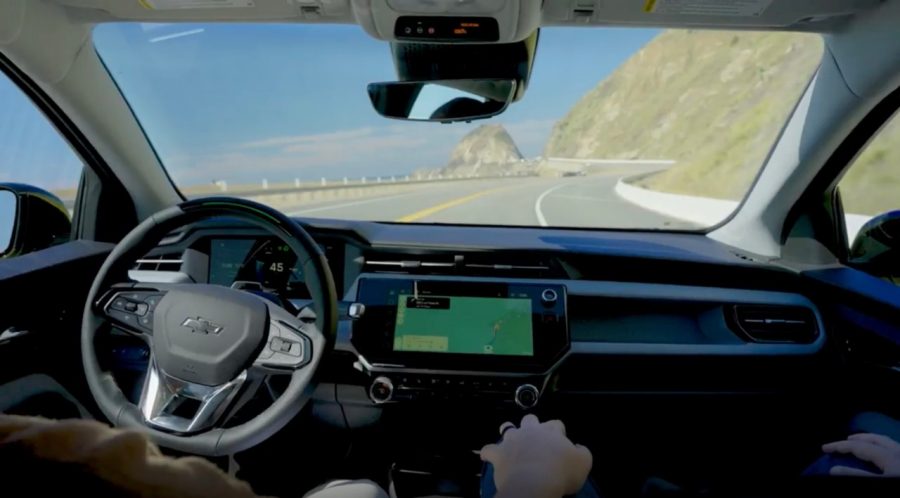
GM now offers the most affordable way to go hands-free in America with the 2027 Chevrolet Bolt, shown here.
What is Super Cruise?
Super Cruise driver assistance technology is a hardware and software system that uses a suite of sensors and computers to determine what road a vehicle is on, and to assess the conditions around that vehicle. With Super Cruise engaged, a driver can take their hands off the wheel but must pay attention to the road, ready to resume steering if and when necessary. Initially only offered on divided highways, Super Cruise's capabilities have expanded to secondary roads that are mapped with clearly visible lane markings.
Super Cruise is designed to help make driving journeys more comfortable. You can think of it as a more capable version of adaptive cruise control, hence the "super" in the name. With Super Cruise-equipped trucks, you can even tow a trailer hands-free2. Today's Super Cruise is offered on more than 20 GM models in North America, from the attainable Chevy Bolt to the most luxurious Cadillacs. Super Cruise is included for three years upon purchase of equipped vehicles, after which owners can pay for a plan starting at $39.99 a month, with discounts offered for yearly billing.3
How is Super Cruise different from other driver-assistance systems?
While some systems simply know what road the vehicle is traveling on from GPS data, Super Cruise vehicles can determine their position down to the lane. This level of awareness allows for more intelligent lane changes and gives the vehicle a better understanding of what lane markings to expect and how to interpret them, as well as more granular information about the road topography itself.
These advanced capabilities are made possible by high-definition maps downloaded to each vehicle. Using specially equipped vehicles fitted with LiDAR sensors, which bounce light beams off their surroundings to create a 3D image of the physical environment, the Super Cruise mapping process collects data that’s tagged for the system to use. This information is then matched against what the vehicle's sensors detect to precisely locate the vehicle on the road. That extra knowledge of its surroundings can make Super Cruise a very capable system.
What's next for Super Cruise?
GM anticipates the next version of Super Cruise will be eyes-off, meaning drivers would be able to safely look away from the road while the system is engaged, on certain mapped roads. GM plans to launch this tech in 2028 first on the Cadillac ESCALADE IQ.
GM has already begun testing this system on hundreds of prototype vehicles with the sensors and electronics needed to expand Super Cruise's capabilities.
Like the hands-free system today, this next iteration of Super Cruise will eventually be available on multiple models and price points across GM's brands. And, GM is already working to develop vehicles that can one-day drive on their owner's behalf.
An earlier expansion of Super Cruise-compatible roadways saw a huge increase in the number of vehicles and regions where the technology could be used. With time and tons of testing, GM is able to improve these driver assistance technologies and expand where they’re used.
How is Super Cruise tested?
GM’s large fleet of Super Cruise-equipped vehicles provides a large base of operational and experiential information, which can be used to improve the technology over time. But the software and hardware that make it all possible doesn't reach production vehicles without extensive testing and validation by GM engineers. The goal is to eventually build trusted self-driving technology that every kind of driver can use.
GM uses a layered approach to testing new autonomous driving features. This includes manual driving and testing on closed courses, as well as supervised testing on public roads — always with a driver behind the wheel to observe behavior and step in if needed.
The system is being tested in simulations and in real-world conditions simultaneously, as well.
Simulation is central to the development process. In fact, GM engineers can simulate 100 years' worth of driving every day, something that's simply not possible in the real world. Scenarios can include a close call with another vehicle straying from its lane as well as complex interactions at intersections — some are everyday occurrences, while others represent rarer circumstances, called edge cases. Engineers can pull specific scenarios from production and test fleets, replay them with updated software, and alter them to test even more possibilities.
Combine that with more than one billion miles driven with Super Cruise, and you can see how GM’s scale makes these advances in safety and comfort possible.
1GM plans to introduce eyes-off capabilities as early as 2028, beginning with the Cadillac ESCALADE IQ, subject to development, validation and other factors. If introduced, this capability would allow drivers to look away from the road only when the system is properly engaged on compatible roads and under compatible conditions.
2Turn Signal Activated Lane Change and Automatic Lane Change not available while trailering. Always pay attention while driving and when using Super Cruise. Always use Super Cruise in accordance with local laws. Do not use a hand-held device. Requires active Super Cruise plan or trial. Terms apply. Visit OnStar.com for compatible roads and full details.
3Always pay attention while driving and when using Super Cruise. Always use Super Cruise in accordance with local laws. Do not use a hand-held device. Requires active Super Cruise plan or trial. Terms apply. Visit Buick.com, Cadillac.com, Chevrolet.com, or GMC.comfor compatible roads and full details.