
By: Chris Perkins, writer and editor, GM News
By: Chris Perkins, writer and editor, GM News
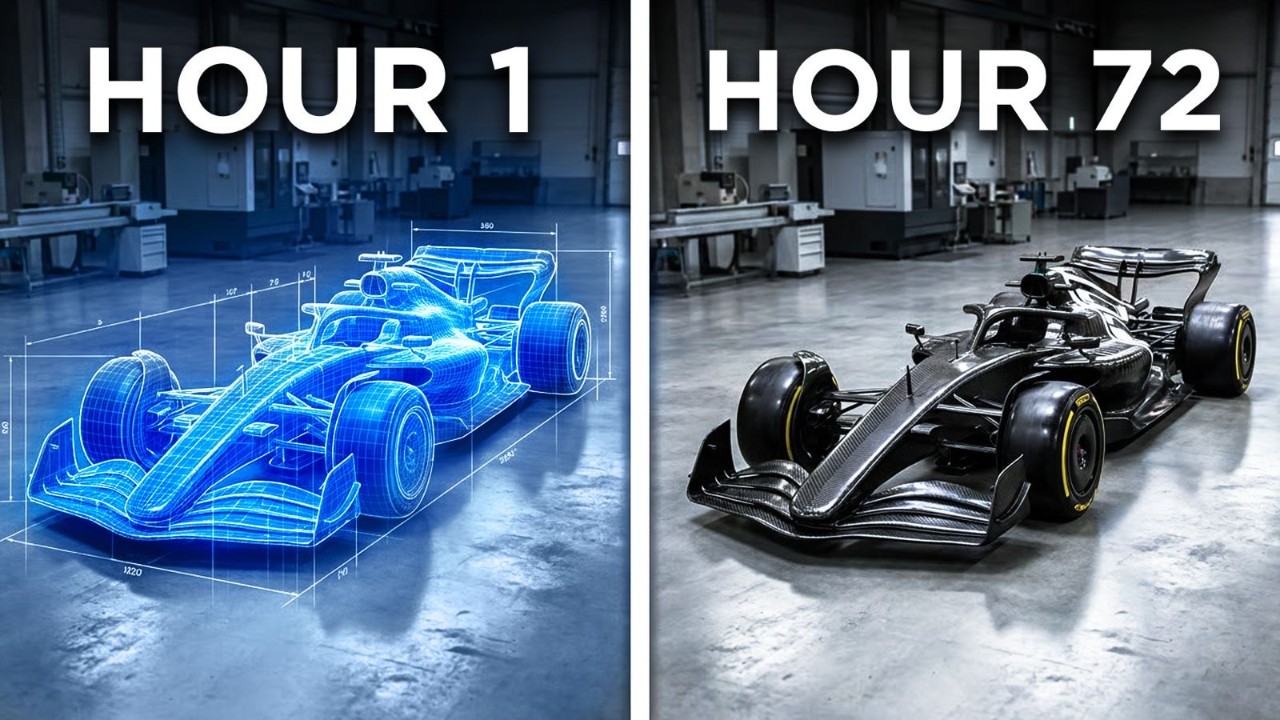
Everything happens fast in Formula 1®, even off the track. Take the Cadillac Formula 1® Team’s dash to build its first car for testing. Even with the team’s debut months away, Cadillac Formula 1® Team, GM engineers and designers worked early mornings and late nights to get the car completed.
Episode 6 of the What Makes Fast docuseries gives fans the rare privilege of seeing the car build in progress. The team is building a car for testing on a dynamometer. On the dyno, as it’s called, the team puts the car on a rolling road. This allows the car to be essentially “driven” in place in a laboratory environment.
The dyno test is a huge milestone for the Cadillac Formula 1® Team. In essence, it’s a chance to make sure the car works as it should, so the team can be certain that when they get to the racetrack, drivers Valtteri Bottas and Sergio Pérez can put in laps.
There are a couple of challenges at hand. For starters, the dyno is in Italy, so the car and all its parts are being shipped out. Second, the team decided to move the schedule forward a week to allow for more testing time. That’s great, but it means thousands of parts have to arrive at the factory sooner than the original plan, and the team has to assemble everything before it goes on the car.
It’s not like putting together a children’s toy. We see an example of one part that has to get reworked with absolute precision just to fit. Every component, down to the fasteners, has to be serialized so it’s traceable. Some engineers are seeing their parts in metal (or carbon fiber) for the first time after months of working with computer models.
“Every single racing car never goes together smoothly,” says Cadillac Formula 1® Team Chief Mechanic Nathan Divey. “They’re all prototypes, really. The tolerances you’re looking at are so fine, tenths of a millimeter, it can take such a small amount to create an issue.”
The team is in good humor about the challenge ahead, but it is still an enormous challenge — installing the engine, transmission, and everything else that makes the wheels turn, then running the dyno test.
“It’s on me, it's on Graeme [Lowdon, Cadillac Formula 1® Team principal] to make sure that we’re leading people to a place that we learn how to deal with adversity,” says Dan Towriss, Cadillac Formula 1® Team Holdings CEO. “It’s going to get a whole lot harder when we’re on the grid, and we have the microscope of Formula 1® down.”
Despite the setback, the team pushed through. A few days after the filming of this episode, the Cadillac Formula 1® Team fired up its car for the first time, and on January 16th, Pérez put the first testing miles on the car at Silverstone Circuit.
Watch Episode 6 below.
Everything happens fast in Formula 1®, even off the track. Take the Cadillac Formula 1® Team’s dash to build its first car for testing. Even with the team’s debut months away, Cadillac Formula 1® Team, GM engineers and designers worked early mornings and late nights to get the car completed.
Episode 6 of the What Makes Fast docuseries gives fans the rare privilege of seeing the car build in progress. The team is building a car for testing on a dynamometer. On the dyno, as it’s called, the team puts the car on a rolling road. This allows the car to be essentially “driven” in place in a laboratory environment.
The dyno test is a huge milestone for the Cadillac Formula 1® Team. In essence, it’s a chance to make sure the car works as it should, so the team can be certain that when they get to the racetrack, drivers Valtteri Bottas and Sergio Pérez can put in laps.
There are a couple of challenges at hand. For starters, the dyno is in Italy, so the car and all its parts are being shipped out. Second, the team decided to move the schedule forward a week to allow for more testing time. That’s great, but it means thousands of parts have to arrive at the factory sooner than the original plan, and the team has to assemble everything before it goes on the car.
It’s not like putting together a children’s toy. We see an example of one part that has to get reworked with absolute precision just to fit. Every component, down to the fasteners, has to be serialized so it’s traceable. Some engineers are seeing their parts in metal (or carbon fiber) for the first time after months of working with computer models.
“Every single racing car never goes together smoothly,” says Cadillac Formula 1® Team Chief Mechanic Nathan Divey. “They’re all prototypes, really. The tolerances you’re looking at are so fine, tenths of a millimeter, it can take such a small amount to create an issue.”
The team is in good humor about the challenge ahead, but it is still an enormous challenge — installing the engine, transmission, and everything else that makes the wheels turn, then running the dyno test.
“It’s on me, it's on Graeme [Lowdon, Cadillac Formula 1® Team principal] to make sure that we’re leading people to a place that we learn how to deal with adversity,” says Dan Towriss, Cadillac Formula 1® Team Holdings CEO. “It’s going to get a whole lot harder when we’re on the grid, and we have the microscope of Formula 1® down.”
Despite the setback, the team pushed through. A few days after the filming of this episode, the Cadillac Formula 1® Team fired up its car for the first time, and on January 16th, Pérez put the first testing miles on the car at Silverstone Circuit.
Watch Episode 6 below.