How a Rolex 24 Win Helped Corvette Racing Create a Dynasty
2026-01-23
Ron Fellows was trying to catch a bit of rest when he saw something he couldn’t quite believe. It was early morning during the 2001 Rolex 24 At Daytona, and Fellows, a professional driver on the Corvette Racing team, was relaxing between driving stints during the grueling 24-hour sports car race. The TV in the Corvette Racing motorhome showed the race-leading car limping off the track with mechanical issues.
“I thought they were showing highlights from previous years,” Fellows recalls. “Then I realized it was live.” Soon after, Doug Fehan, Corvette Racing Program Manager at the time, rushed in and told Fellows “Come on, we need you to finish. We have a chance to win this race overall.”
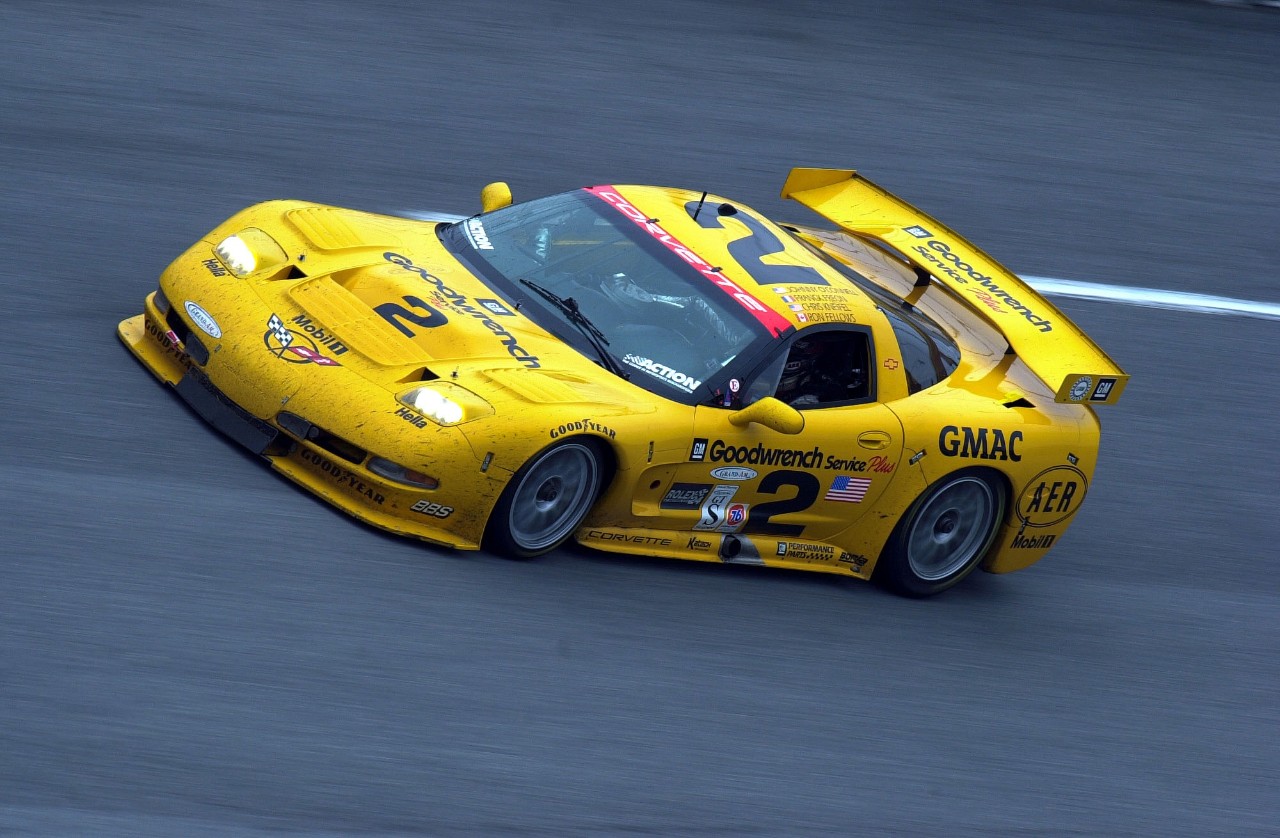
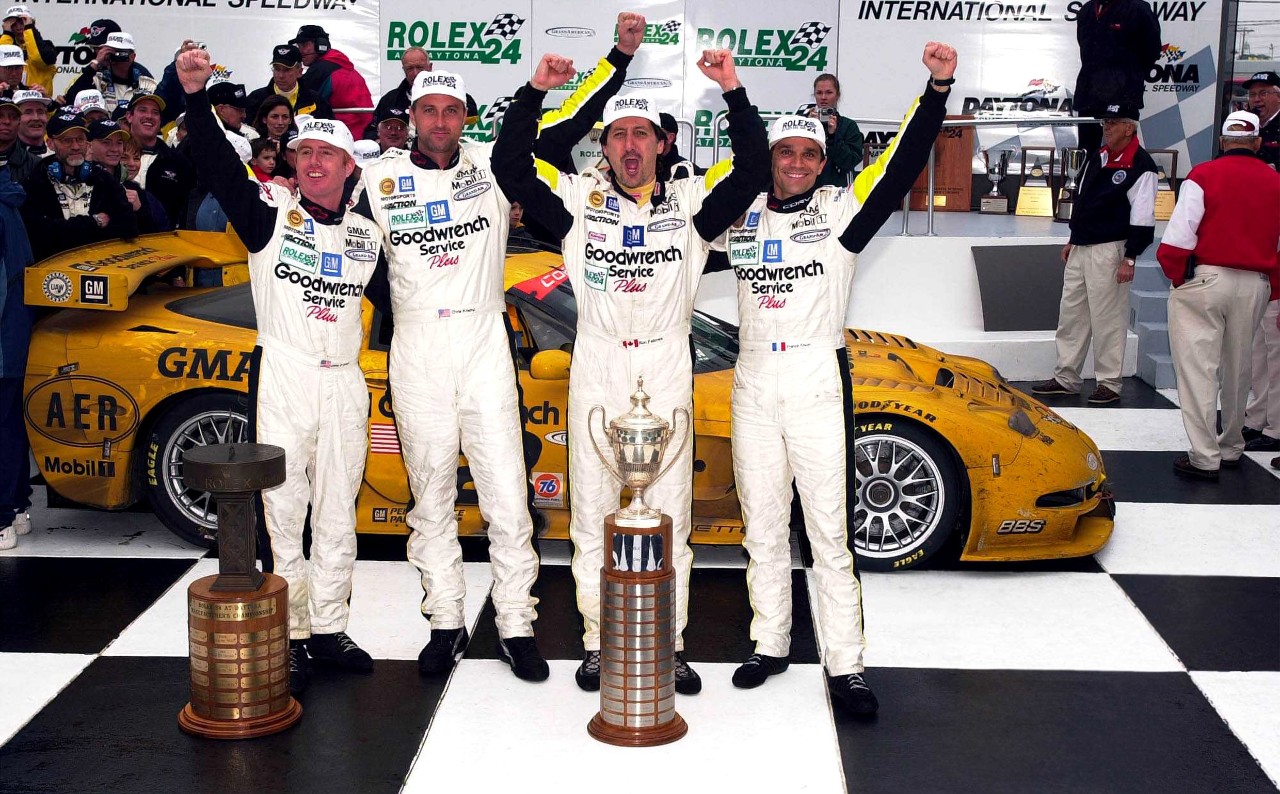
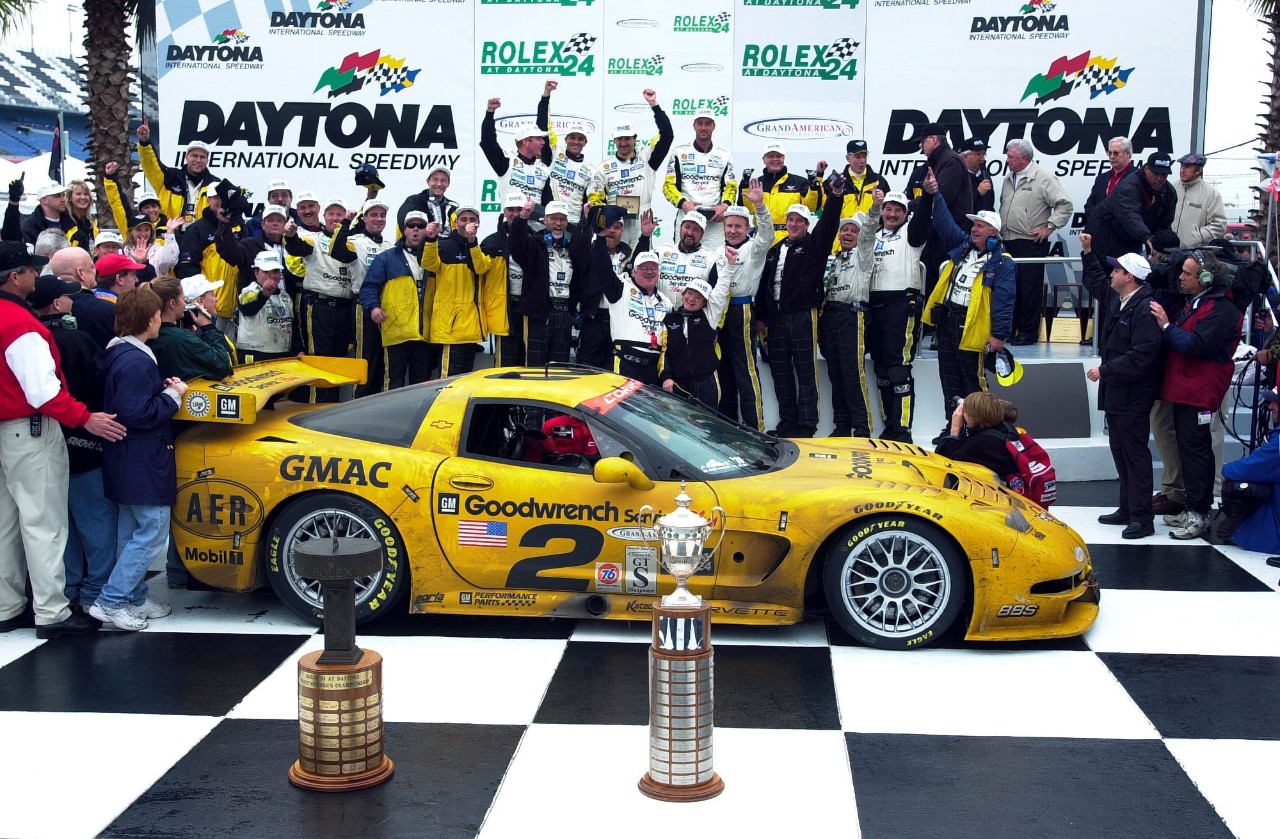
Hours later, Fellows and his teammates in the No. 2 Chevrolet Corvette C5-R did just that. It was a pivotal moment in Corvette history, setting up decades of motorsports success on the world stage.
Corvette Racing made its competition debut in 1999. It's hard to believe now, but this was the first factory-sanctioned motorsport program in the history of the Corvette. Prior to 1999, plenty of people raced Corvettes all over the world, but this would be the first time General Motors put its might behind the car.
The fifth-generation C5 Corvette was a revolution, with a stiff chassis, all-aluminum LS1 V-8 engine, rear-mounted transmission, and aerodynamically efficient bodywork contributing to world-class performance.
Jim Campbell, now GM Vice President of Performance & Motorsports Commercial Operations, was involved with the C5 Corvette in its early days.
“We felt like this was the time to leverage a factory motorsports program,” he says. “It was important to demonstrate the performance credentials of Corvette on the racetrack by competing against the key marques in the sports car segment from around the world.”
Together with engineering firm Pratt Miller Motorsports– which builds today’s Corvette Z06 GT3.R and operates the GTD PRO Covette Racing team in the IMSA WeatherTech SportsCar Championship – Chevrolet transformed the roadgoing C5 into the C5-R race car. Corvette Racing and the C5-R made their debut in 1999, proving their potential with two second-in-class finishes that year.
The 2000 season got off to a bittersweet start. At Daytona, after 24 hours of fighting, the No. 3 Corvette C5-R came within 30 seconds of winning the race outright.
“It was probably the most gut-wrenching race I've ever had,” says Bill DeLong, who served as crew chief for Corvette Racing in 2000 and recently retired as VP of manufacturing for Pratt Miller. “The day after that race, we set the goal of winning next year, at least in class.”
Throughout the 2000 season, Corvette Racing pored over the car in search of more performance and durability. The team also went to work on itself, practicing pit stops and optimizing other operations to maximize their potential. It all paid off later that year, when Corvette Racing had a breakthrough class victory at Texas Motor Speedway and a memorable class win at Petit Le Mans thanks to a once-in-a-lifetime pass by Andy Pilgrim in the No. 3 car.
Over the winter break between 2000 and 2001, everyone kept their heads down, working on car and team performance. Corvette Racing also brought on two additional drivers for the 2001 Rolex 24: NASCAR legends Dale Earnhardt Sr. and Dale Earnhardt Jr.
“As the race got closer, we got news that the Earnhardts were going to join the No. 3 car for the race, which was unbelievable,” DeLong recalls. The NASCAR stars brought additional attention to the program, but for all their fame, he says, they were true team players. “They were the most down-to-earth, genuine, kind, friendly people you ever met. It was refreshing to meet people that famous and have them treat you just like a buddy.”
In the No. 2 car, Fellows was joined by Chris Kneifel, Franck Freon, and newcomer Johnny O'Connell, who would go on to enjoy a long, fruitful tenure with Corvette Racing. Meanwhile, the Earnhardts would share the No. 3 with Andy Pilgrim and Kelly Collins, both Corvette veterans. It would be the only time the father-and-son duo raced in the same car.
Fellows remembers sitting down to dinner with the team a few nights before the race. “We were looking at each other saying, ‘We feel ready. This is the best-prepared we’ve ever been for a long-distance race.’” The No. 2 qualified first in the GTS class, ahead of a number of prototype racecars that weren’t based on production vehicles, with the No. 3 right behind.
As anyone who’s been to the Rolex 24 at Daytona can tell you, Daytona Beach in the wintertime is not a tropical paradise. Biting cold and rain are frequent. The 2001 Rolex 24 was a wet one, which was something of a double-edged sword for the Corvette team.
The C5-Rs were fast in wet conditions, but the rain presents other problems. “There's just so many things that can be out of your control in the wet,” Fellows says. “Anything can happen.”
“We had so much rain, it was flooding the cockpit,” DeLong recalls. “During a pit stop, we actually had to take out a hand drill and drill a hole in the floor just to let the water run out. But that was the only issue we had.”
The No. 2 Corvette kept pressing on. A huge part of success in motorsport is being prepared to take advantage of good luck. When the car leading the race broke down, the No. 2 Corvette was ready to pounce. Fellows held on all the way to the finish, racking up Corvette Racing’s first victory. The No. 3 Corvette finished not far behind, taking 4th place overall, 2nd in class.
“For a variety of reasons, it was just a really special event,” Fellows says. “Knowing how disappointed we were that we didn’t win in 2000 and then, with three or four hours to go, suddenly realizing we had a chance to do this again.” The rest of the 2001 racing season would bring more major achievements for Corvette Racing. The team earned a breakthrough class win at the 24 Hours of Le Mans and its first Teams’ and Manufacturers’ Championship in the American Le Mans Series.
“We loved the Corvette and so did Corvette owners, but there were a lot of people who didn’t think the car could compete on the world stage,” Campbell says. “By racing against competitors in that class and performing well, it substantiates and validates your performance credentials.”
It’s one thing to call yourself a “world beater.” It’s another matter entirely to go out and beat the world. The 2001 Rolex 24 at Daytona showed that Corvette Racing could do that – and the 20 years of success that followed proved it wasn’t just luck.
Corvette’s success at Daytona and beyond motivated the team to continue innovating. “In racing, you can never let your guard down,” DeLong says. “Because as soon as you do, a competitor is going to come and pass you.”
The racing success that began with the C5-R had other positive effects. “You hear this a lot in racing, but with Corvette, the truth is that technology transfer from racing makes your production cars better,” Campbell says. “It works the other way too – production cars making your race cars better.” That virtuous cycle ramped up with the C5.
The 2001 Rolex 24 victory did a lot for Corvette too. The Corvette was always a beloved sports car, but racing helped burnish its legacy with existing fans and create new Corvette enthusiasts around the world.
“Once you start winning like that and fans see it, you gain a cult following around you at every race,” DeLong says. “It was a pretty neat thing to see that grow.”
The No. 2 Corvette Racing C5-R en route to victory in the 2001 Rolex 24 At Daytona.
Ron Fellows was trying to catch a bit of rest when he saw something he couldn’t quite believe. It was early morning during the 2001 Rolex 24 At Daytona, and Fellows, a professional driver on the Corvette Racing team, was relaxing between driving stints during the grueling 24-hour sports car race. The TV in the Corvette Racing motorhome showed the race-leading car limping off the track with mechanical issues.
“I thought they were showing highlights from previous years,” Fellows recalls. “Then I realized it was live.” Soon after, Doug Fehan, Corvette Racing Program Manager at the time, rushed in and told Fellows “Come on, we need you to finish. We have a chance to win this race overall.”
Hours later, Fellows and his teammates in the No. 2 Chevrolet Corvette C5-R did just that. It was a pivotal moment in Corvette history, setting up decades of motorsports success on the world stage.
Corvette Racing made its competition debut in 1999. It's hard to believe now, but this was the first factory-sanctioned motorsport program in the history of the Corvette. Prior to 1999, plenty of people raced Corvettes all over the world, but this would be the first time General Motors put its might behind the car.
The fifth-generation C5 Corvette was a revolution, with a stiff chassis, all-aluminum LS1 V-8 engine, rear-mounted transmission, and aerodynamically efficient bodywork contributing to world-class performance.
Jim Campbell, now GM Vice President of Performance & Motorsports Commercial Operations, was involved with the C5 Corvette in its early days.
“We felt like this was the time to leverage a factory motorsports program,” he says. “It was important to demonstrate the performance credentials of Corvette on the racetrack by competing against the key marques in the sports car segment from around the world.”
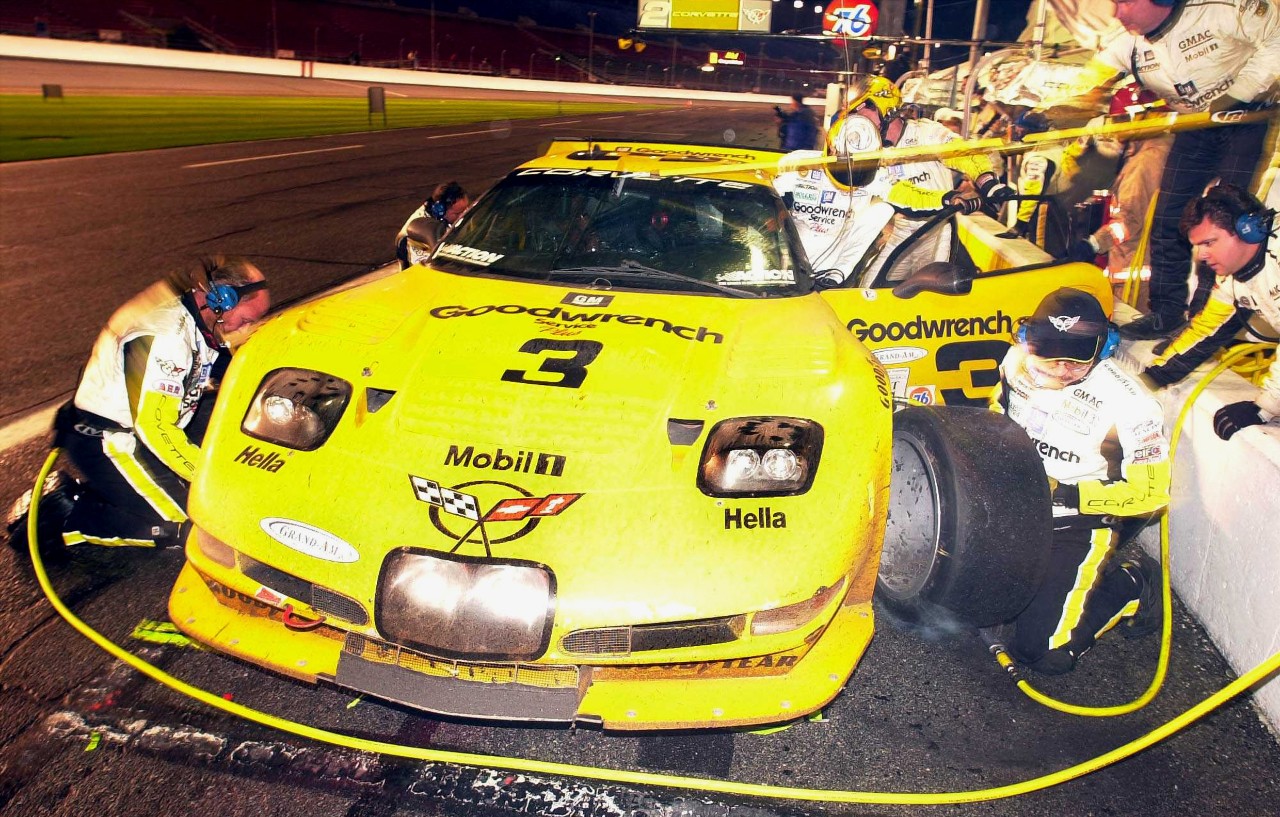
Corvette Racing crew working on the No. 3 C5-R during a pit stop at Daytona.
Together with engineering firm Pratt Miller Motorsports– which builds today’s Corvette Z06 GT3.R and operates the GTD PRO Covette Racing team in the IMSA WeatherTech SportsCar Championship – Chevrolet transformed the roadgoing C5 into the C5-R race car. Corvette Racing and the C5-R made their debut in 1999, proving their potential with two second-in-class finishes that year.
The 2000 season got off to a bittersweet start. At Daytona, after 24 hours of fighting, the No. 3 Corvette C5-R came within 30 seconds of winning the race outright.
“It was probably the most gut-wrenching race I've ever had,” says Bill DeLong, who served as crew chief for Corvette Racing in 2000 and recently retired as VP of manufacturing for Pratt Miller. “The day after that race, we set the goal of winning next year, at least in class.”
Throughout the 2000 season, Corvette Racing pored over the car in search of more performance and durability. The team also went to work on itself, practicing pit stops and optimizing other operations to maximize their potential. It all paid off later that year, when Corvette Racing had a breakthrough class victory at Texas Motor Speedway and a memorable class win at Petit Le Mans thanks to a once-in-a-lifetime pass by Andy Pilgrim in the No. 3 car.
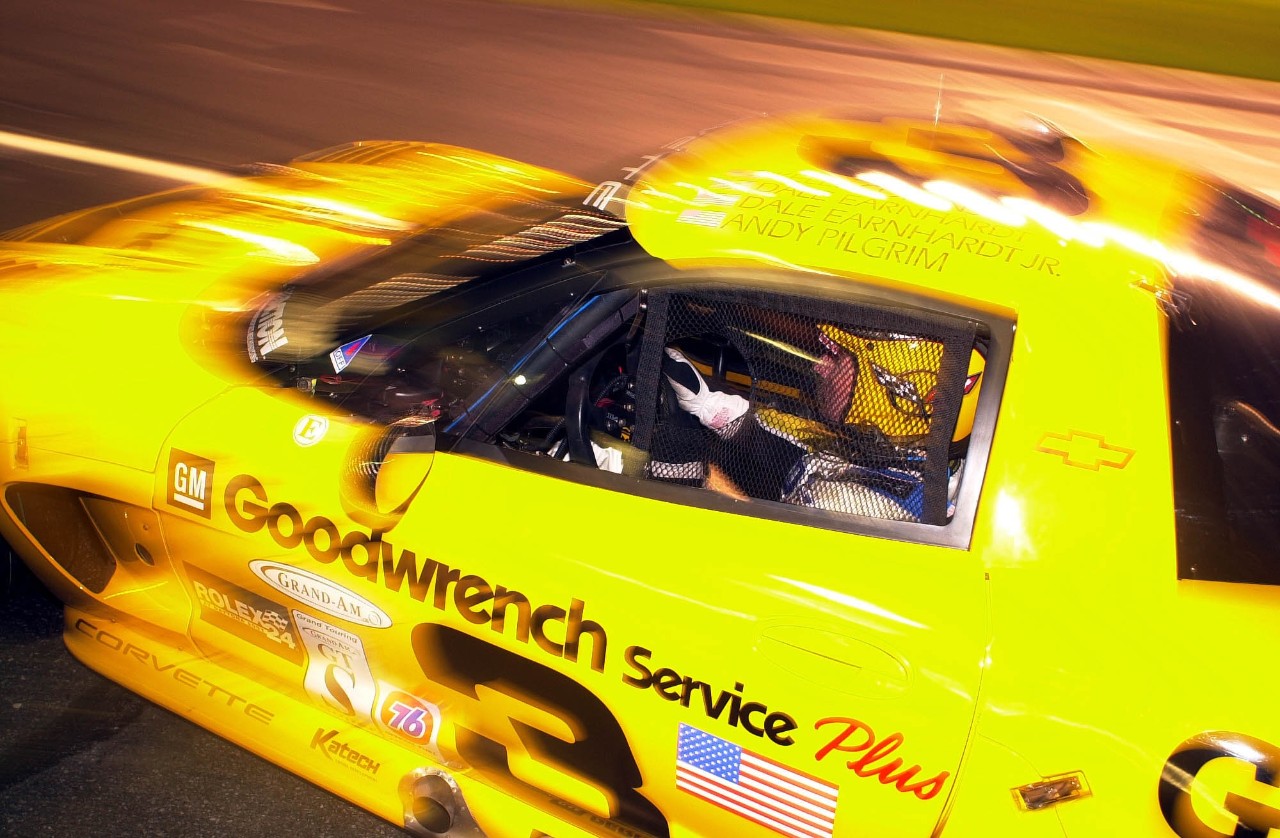
Dale Earnhardt driving the No. 3 Corvette Racing C5-R at Daytona.
Over the winter break between 2000 and 2001, everyone kept their heads down, working on car and team performance. Corvette Racing also brought on two additional drivers for the 2001 Rolex 24: NASCAR legends Dale Earnhardt Sr. and Dale Earnhardt Jr.
“As the race got closer, we got news that the Earnhardts were going to join the No. 3 car for the race, which was unbelievable,” DeLong recalls. The NASCAR stars brought additional attention to the program, but for all their fame, he says, they were true team players. “They were the most down-to-earth, genuine, kind, friendly people you ever met. It was refreshing to meet people that famous and have them treat you just like a buddy.”
In the No. 2 car, Fellows was joined by Chris Kneifel, Franck Freon, and newcomer Johnny O'Connell, who would go on to enjoy a long, fruitful tenure with Corvette Racing. Meanwhile, the Earnhardts would share the No. 3 with Andy Pilgrim and Kelly Collins, both Corvette veterans. It would be the only time the father-and-son duo raced in the same car.
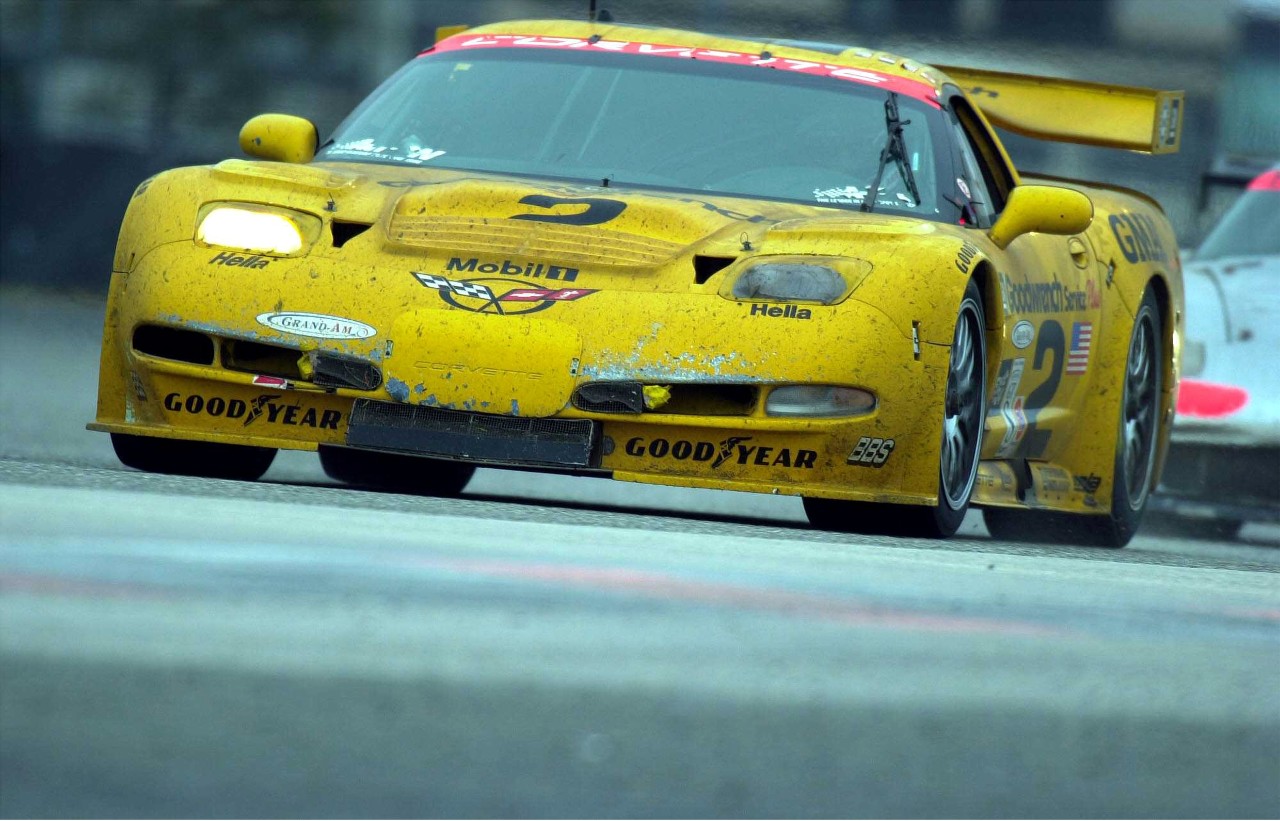
The No. 2 Corvette Racing C5-R at Daytona.
Fellows remembers sitting down to dinner with the team a few nights before the race. “We were looking at each other saying, ‘We feel ready. This is the best-prepared we’ve ever been for a long-distance race.’” The No. 2 qualified first in the GTS class, ahead of a number of prototype racecars that weren’t based on production vehicles, with the No. 3 right behind.
As anyone who’s been to the Rolex 24 at Daytona can tell you, Daytona Beach in the wintertime is not a tropical paradise. Biting cold and rain are frequent. The 2001 Rolex 24 was a wet one, which was something of a double-edged sword for the Corvette team.
The C5-Rs were fast in wet conditions, but the rain presents other problems. “There's just so many things that can be out of your control in the wet,” Fellows says. “Anything can happen.”
“We had so much rain, it was flooding the cockpit,” DeLong recalls. “During a pit stop, we actually had to take out a hand drill and drill a hole in the floor just to let the water run out. But that was the only issue we had.”
Johnny O’Connel, Chris Kniefel, Ron Fellows, and Franck Freon celebrating their Rolex 24 At Daytona victory.
The No. 2 Corvette kept pressing on. A huge part of success in motorsport is being prepared to take advantage of good luck. When the car leading the race broke down, the No. 2 Corvette was ready to pounce. Fellows held on all the way to the finish, racking up Corvette Racing’s first victory. The No. 3 Corvette finished not far behind, taking 4th place overall, 2nd in class.
“For a variety of reasons, it was just a really special event,” Fellows says. “Knowing how disappointed we were that we didn’t win in 2000 and then, with three or four hours to go, suddenly realizing we had a chance to do this again.” The rest of the 2001 racing season would bring more major achievements for Corvette Racing. The team earned a breakthrough class win at the 24 Hours of Le Mans and its first Teams’ and Manufacturers’ Championship in the American Le Mans Series.
“We loved the Corvette and so did Corvette owners, but there were a lot of people who didn’t think the car could compete on the world stage,” Campbell says. “By racing against competitors in that class and performing well, it substantiates and validates your performance credentials.”
It’s one thing to call yourself a “world beater.” It’s another matter entirely to go out and beat the world. The 2001 Rolex 24 at Daytona showed that Corvette Racing could do that – and the 20 years of success that followed proved it wasn’t just luck.
The Corvette Racing team celebrates the Rolex 24 At Daytona victory.
Corvette’s success at Daytona and beyond motivated the team to continue innovating. “In racing, you can never let your guard down,” DeLong says. “Because as soon as you do, a competitor is going to come and pass you.”
The racing success that began with the C5-R had other positive effects. “You hear this a lot in racing, but with Corvette, the truth is that technology transfer from racing makes your production cars better,” Campbell says. “It works the other way too – production cars making your race cars better.” That virtuous cycle ramped up with the C5.
The 2001 Rolex 24 victory did a lot for Corvette too. The Corvette was always a beloved sports car, but racing helped burnish its legacy with existing fans and create new Corvette enthusiasts around the world.
“Once you start winning like that and fans see it, you gain a cult following around you at every race,” DeLong says. “It was a pretty neat thing to see that grow.”