Everything you need to know about at-home EV charging
2026-07-16
You can charge your EV at home in two different ways. Level 1 charging uses a standard 120-volt outlet — the same one you plug your phone charger into. Level 2 is significantly faster, but requires professional installation on a 240-volt circuit, the same one your clothes dryer uses.
With terms like Level 1, Level 2, NACS, and J1772, at-home charging for your GM electric vehicle can feel overwhelming. Fortunately, it’s not as complicated as it seems.
A lot of attention is put on public charging and whether there’s enough of it, but the reality is that for many drivers, it’s a secondary, infrequent way to charge. The International Energy Agency estimates that in the U.S., more than 80% of EV charging is done right at home, meaning most EV owners don't have to deal with the time, energy, or cost of charging outside their home.
Here’s everything you need to know.
Benefits of at-home charging
Convenience: The average American drives around 30 miles each day, according to AAA. Some owners might only need to plug in once a week depending on their daily commuting needs.
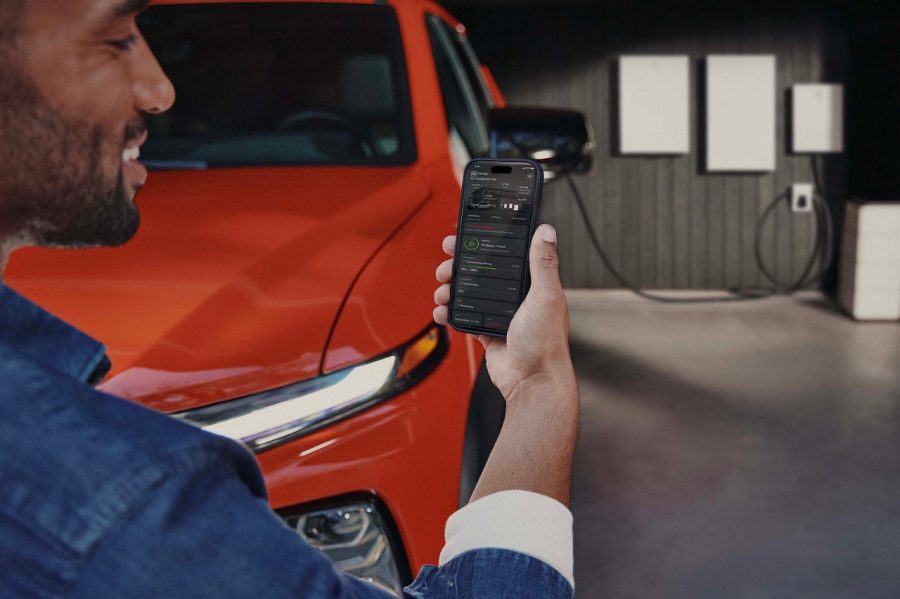
Comfort: With home charging, you don’t have to brave the elements like you would while pumping gas or using a public charger. You simply plug in and walk away. Smartphone apps like MyChevrolet, MyCadillac and MyGMC1 let you easily keep tabs on your vehicle’s current state of charge and estimated range. Charge while you sleep, and wake up to a vehicle ready to go – you can even program your GM EV to warm up or cool down while still connected to your home.
Savings: The U.S. Energy Information Administration puts the national average price per kWh of electricity at less than 18 cents, so a full recharge of the all-electric Chevrolet Equinox EV runs about $152. Charge during off-peak hours — when demand for electricity is lower — and you may be able to save even more. Many utility companies offer incentives to promote charging during off-peak hours. Check with your utility company for details.
Level 1 vs. Level 2 charging: Know the difference
Two types of charging are commonly available for home use.
Level 1 is the simplest way to charge at home. A Level 1 charger plugs into any standard 120-volt household outlet — the same one you use for your phone charger. These chargers don't require special installation. The tradeoff is speed: Level 1 may only get you 3 to 5 miles of range per hour of charging. That may be fine for folks who only travel short distances or who commit to plugging in every night, but many drivers will be better served by a Level 2 charger.
Level 2 chargers operate at 240 volts, using the type of outlet most clothes dryers use, allowing for much faster charging. Level 2 home chargers require professional installation. GM offers Level 2 home chargers that can deliver up to 44 miles of range per hour3. Many parking lots, garages, hotels, workplaces and businesses also offer public Level 2 chargers.
Level 3 (DC fast charging) is not available for home charging because of the voltage and infrastructure required. This is often what you'll find at public charging stations. Since Level 3 is outside the scope of home charging, we won't cover it further here.
Level 1
|
Any standard 120-volt household outlet
|
Level 2
|
A 240-volt outlet. Requires professional installation
|
Level 3
|
DC fast-charging. Public chargers only.
|
CCS1 vs. NACS: Which plug standard do you need?
You'll need to know which inlet type your vehicle has. There are two common standards:
NACS (North American Charging Standard) is found on newer GM electric vehicles, and GM expects all new 2027 model year EVs across Chevrolet, GMC, and Cadillac to launch with native NACS charge ports between now and December. The home chargers required for vehicles equipped with the NACS port are called NACS chargers.
CCS1 (Combined Charging Standard, technically known as J1772 Combo) was the original standard used on EVs for sale in North America, and can be found on past GM EV models. The home chargers required for vehicles equipped with a CCS1 port are called J1772 chargers.
Both charger types work the same way. The only practical difference is the shape of the plug and port, similar to how your smartphone might feature a USB-C charge port or something else.
If, for instance, you have a J1772 charger at home and just purchased a GM EV with a NACS port, this is no problem. GM offers adapters that convert between the two standards. This way, you can charge a NACS-equipped GM EV with a J1772 charger, or an older J1772 GM EV with a brand-new NACS charger.
How to install a home charger
Level 1 EV chargers plug right into any standard household power outlet. Remove your charger from the box, plug it in, and you’re ready to charge. Follow the instructions in your GM vehicle mobile app.
Level 2 chargers require professional installation. The cost of installation depends on a number of factors, including the distance to the main electrical panel, the age and condition of the home electrical system, and whether there’s enough capacity. Only a qualified electrician can install a Level 2 home charger. Once installed, follow the directions that came with your charger and refer to the GM vehicle mobile app for further instructions.
How to charge your car at home
Follow these simple steps to charge your EV at home4.
Park close enough to the charger that the cable can comfortably reach your vehicle’s inlet. You don’t want the cable to be taut, as this could damage the plug, socket, or even the charger, and it creates a tripping hazard.
Open the charging port door. The door often pops open with a slight push, but some are power-operated.
Firmly insert the charger connector (with adapter in place, if required) into the vehicle’s charge port, and make sure the fit is snug. There may be an audible click when the connection is made.
Wait a few seconds to ensure charging begins. This is often indicated by exterior lights, an audible confirmation, or may be displayed on the vehicle’s instrument cluster.
Optionally, monitor the charging process on your vehicle’s corresponding mobile app. You can keep tabs on the state of charge, estimated range, and much more.
For day-to-day use, it’s best to charge to 80% for long-term battery health. Charging to 100% is ideal for longer trips. You can set or change the maximum charge limit either in the vehicle infotainment screen or on the corresponding smartphone app.
There’s no need to unplug the vehicle when charging is finished. The charger will automatically shut off when the desired charge level is reached.
Smart charging features explained
In addition to comfort and convenience, charging your EV at home can provide another benefit: energy independence. With a bidirectional capable GM EV and the right equipment, like our GM Energy PowerShift Charger and V2H Energy Enablement Kit5, you can provide power from your vehicle's battery to your properly equipped home during a power outage. According to the U.S. Energy Information Administration, the average daily home energy appliance usage is around 30 kWh. For example: The 2026 Chevrolet Silverado EV Work Truck Max Range can help provide power to your properly equipped home in a blackout for up to 5 days6.
We also offer GM Energy PowerBanks. These are large battery banks that, when paired with the GM Energy Home Hub and Inverter, can send power to your home during outages or even store surplus energy from compatible solar panels to use when the sun is not shining. Our largest battery bank offering can deliver an estimated 20 hours’ worth of electricity7, potentially enough to run your home until grid service is restored.
Home EV charging is easier than you think
For an enjoyable and stress-free EV experience, having a professionally installed Level 2 charger at home is your best bet. Charging your GM electric vehicle at home is affordable and as simple as plugging in. If you want to take things to the next level, check out bidirectional charging or even energy storage systems.
FAQs
Do I need to upgrade my electrical panel for EV charging?
Whether you need to upgrade your electrical panel for EV charging depends on your existing setup. Older homes might not have enough power at the main electrical panel, but many newer houses frequently have 200-amp service, which is ideal for installing an EV charger. Consult an electrician before making your decision. There are a growing number of solutions to make Level 2 charging work without needing to fully upgrade a main panel.
What's the difference between hardwired and plug-in EV chargers?
Functionally, hardwired and plug-in EV chargers should be nearly identical; the difference is in the way electricity is fed into the unit and how much of the circuit capacity can be used. Some chargers will need to be hardwired, but others can plug into a standard 240-volt outlet.
Can I charge my EV with a regular household outlet?
Yes, you can charge your EV with a regular household outlet. This is called Level 1 charging. It’s simple and affordable, but very slow compared to more powerful Level 2 charging.
How do smart EV chargers reduce the cost of charging?
Smart EV chargers allow you to use your GM vehicle’s mobile app to schedule charging during off-peak hours, potentially saving you money. They can also manage current draw to prevent tripping a circuit breaker, and with the appropriate hardware, they can even enable bidirectional charging.
What permits are required for home EV charger installation?
Permits required for home EV charger installation will vary by location. A professional electrician familiar with the laws in your area can sort this out for you.
Do home EV chargers require special ventilation or safety measures?
No, using a professionally installed EV charger at home doesn't require special ventilation or safety measures. There are no fumes to worry about, so the garage door can stay closed while your EV is charging.
1 Available on select Apple and Android devices. Service availability, features and functionality vary by vehicle, device and the plan you are enrolled in. Terms apply. Device data connection required. Actual images and features may vary and are subject to change.
2 Based on nationwide average.
3 Level 2 charging requires professional installation. Actual rates will vary based on battery condition, output of charger, vehicle settings, and outside temperature. See vehicle's Owner's Manual for additional limitations. Up to 44.5 miles of range per charge hour based on 2026 Cadillac LYRIQ-V.
4 For more information, please consult your owners’ manual.
5 The GM Energy PowerShift Charger and GM Energy V2H Enablement Kit requires an adequately charged V2H-capable GM EV, a properly equipped home, and proper grid interconnection. Weather conditions, life of the battery, vehicle variation and usage, and other external factors may impact the capability and duration of power supply. Power supply may be interrupted. It is not recommended that the following devices be powered with the GM Energy PowerShift Charger and V2H Enablement Kit: Medical Devices.
6 The available GM Energy PowerShift Charger and GM Energy V2H Enablement Kit must be installed in accordance with the GM Energy installation manual and require an adequately charged EV with bidirectional charging capability, a properly equipped home and proper grid interconnection. 5-day power supply assumes household energy usage of up to 30 kWh per day and may require you to limit use of certain high-demand electronic appliances and devices to stay within the power limits of the system. This household energy usage assumption is based on data from the U.S. Energy Information Administration (EIA) regarding average residential electricity consumption. Actual capabilities and total duration will vary based on, among other things, battery state of charge, condition and temperature, vehicle settings, weather conditions, and home usage. Power output from the vehicle may be interrupted. The GM Energy PowerShift Charger and V2H Enablement Kit are not intended to power medical devices or life-support equipment.
7 The GM Energy Storage Bundle requires a fully charged and properly equipped PowerBank, and proper grid interconnection. The U.S. Energy Information Administration (EIA) estimates average daily home energy appliance usage to be 30 kWh. Weather conditions, life of the battery, PowerBank usage and other external factors may impact the duration of time. Power supply may be interrupted: not recommended for medical devices.
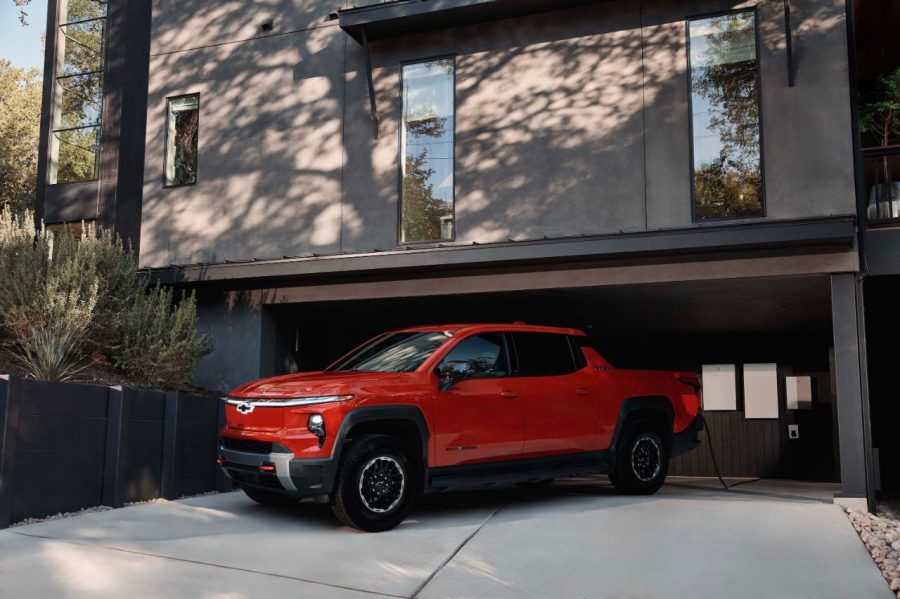
GM Energy V2H Bundle (includes PowerShift charger, V2H Enablement Kit) plugged into 2026 Silverado EV Trail Boss in Habanero Orange in garage.
You can charge your EV at home in two different ways. Level 1 charging uses a standard 120-volt outlet — the same one you plug your phone charger into. Level 2 is significantly faster, but requires professional installation on a 240-volt circuit, the same one your clothes dryer uses.
With terms like Level 1, Level 2, NACS, and J1772, at-home charging for your GM electric vehicle can feel overwhelming. Fortunately, it’s not as complicated as it seems.
A lot of attention is put on public charging and whether there’s enough of it, but the reality is that for many drivers, it’s a secondary, infrequent way to charge. The International Energy Agency estimates that in the U.S., more than 80% of EV charging is done right at home, meaning most EV owners don't have to deal with the time, energy, or cost of charging outside their home.
Here’s everything you need to know.
Benefits of at-home charging
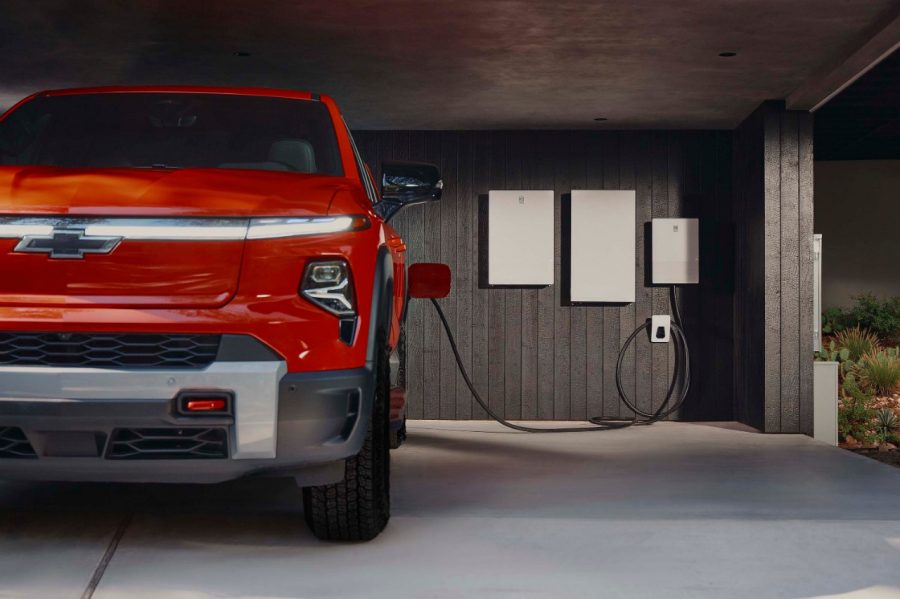
GM Energy V2H Bundle (includes PowerShift charger, V2H Enablement Kit) plugging into 2026 Silverado EV Trail Boss in Habanero Orange.
Convenience: The average American drives around 30 miles each day, according to AAA. Some owners might only need to plug in once a week depending on their daily commuting needs.
Comfort: With home charging, you don’t have to brave the elements like you would while pumping gas or using a public charger. You simply plug in and walk away. Smartphone apps like MyChevrolet, MyCadillac and MyGMC1 let you easily keep tabs on your vehicle’s current state of charge and estimated range. Charge while you sleep, and wake up to a vehicle ready to go – you can even program your GM EV to warm up or cool down while still connected to your home.
Savings: The U.S. Energy Information Administration puts the national average price per kWh of electricity at less than 18 cents, so a full recharge of the all-electric Chevrolet Equinox EV runs about $152. Charge during off-peak hours — when demand for electricity is lower — and you may be able to save even more. Many utility companies offer incentives to promote charging during off-peak hours. Check with your utility company for details.
Level 1 vs. Level 2 charging: Know the difference
Two types of charging are commonly available for home use.
Level 1 is the simplest way to charge at home. A Level 1 charger plugs into any standard 120-volt household outlet — the same one you use for your phone charger. These chargers don't require special installation. The tradeoff is speed: Level 1 may only get you 3 to 5 miles of range per hour of charging. That may be fine for folks who only travel short distances or who commit to plugging in every night, but many drivers will be better served by a Level 2 charger.
Level 2 chargers operate at 240 volts, using the type of outlet most clothes dryers use, allowing for much faster charging. Level 2 home chargers require professional installation. GM offers Level 2 home chargers that can deliver up to 44 miles of range per hour3. Many parking lots, garages, hotels, workplaces and businesses also offer public Level 2 chargers.
Level 3 (DC fast charging) is not available for home charging because of the voltage and infrastructure required. This is often what you'll find at public charging stations. Since Level 3 is outside the scope of home charging, we won't cover it further here.
Level 1
|
Any standard 120-volt household outlet
|
Level 2
|
A 240-volt outlet. Requires professional installation
|
Level 3
|
DC fast-charging. Public chargers only.
|
CCS1 vs. NACS: Which plug standard do you need?
GM Energy V2H Bundle (includes PowerShift charger, V2H Enablement Kit) shown plugged into 2026 Silverado EV Trail Boss in Habanero Orange.
You'll need to know which inlet type your vehicle has. There are two common standards:
- NACS (North American Charging Standard): GM expects all new 2027 model year EVs across Chevrolet, GMC, and Cadillac to launch with native NACS charge portsbetween now and December. The home chargers required for vehicles equipped with the NACS port are called NACS chargers.
- CCS1 (Combined Charging Standard, technically known as J1772 Combo) was the original standard used on EVs for sale in North America, and can be found on past GM EV models. The home chargers required for vehicles equipped with a CCS1 port are called J1772 chargers.
Both charger types work the same way. The only practical difference is the shape of the plug and port, similar to how your smartphone might feature a USB-C charge port or something else.
If, for instance, you have a J1772 charger at home and just purchased a GM EV with a NACS port, this is no problem. GM offers adapters that convert between the two standards. This way, you can charge a NACS-equipped GM EV with a J1772 charger, or an older J1772 GM EV with a brand-new NACS charger.
How to install a home charger
Level 1 EV chargers plug right into any standard household power outlet. Remove your charger from the box, plug it in, and you’re ready to charge. Follow the instructions in your GM vehicle mobile app.
Level 2 chargers require professional installation. The cost of installation depends on a number of factors, including the distance to the main electrical panel, the age and condition of the home electrical system, and whether there’s enough capacity. Only a qualified electrician can install a Level 2 home charger. Once installed, follow the directions that came with your charger and refer to the GM vehicle mobile app for further instructions.
How to charge your car at home
Follow these simple steps to charge your EV at home4.
- Park close enough to the charger that the cable can comfortably reach your vehicle’s inlet. You don’t want the cable to be taut, as this could damage the plug, socket, or even the charger, and it creates a tripping hazard.
- Open the charging port door. The door often pops open with a slight push, but some are power-operated.
- Firmly insert the charger connector (with adapter in place, if required) into the vehicle’s charge port, and make sure the fit is snug. There may be an audible click when the connection is made.
- Wait a few seconds to ensure charging begins. This is often indicated by exterior lights, an audible confirmation, or may be displayed on the vehicle’s instrument cluster.
- Optionally, monitor the charging process on your vehicle’s corresponding mobile app. You can keep tabs on the state of charge, estimated range, and much more.
- For day-to-day use, it’s best to charge to 80% for long-term battery health. Charging to 100% is ideal for longer trips. You can set or change the maximum charge limit either in the vehicle infotainment screen or on the corresponding smartphone app.
- There’s no need to unplug the vehicle when charging is finished. The charger will automatically shut off when the desired charge level is reached.
Smart charging features explained
In addition to comfort and convenience, charging your EV at home can provide another benefit: energy independence. With a bidirectional capable GM EV and the right equipment, like our GM Energy PowerShift Charger and V2H Energy Enablement Kit5, you can provide power from your vehicle's battery to your properly equipped home during a power outage. According to the U.S. Energy Information Administration, the average daily home energy appliance usage is around 30 kWh. For example: The 2026 Chevrolet Silverado EV Work Truck Max Range can help provide power to your properly equipped home in a blackout for up to 5 days6.
We also offer GM Energy PowerBanks. These are large battery banks that, when paired with the GM Energy Home Hub and Inverter, can send power to your home during outages or even store surplus energy from compatible solar panels to use when the sun is not shining. Our largest battery bank offering can deliver an estimated 20 hours’ worth of electricity7, potentially enough to run your home until grid service is restored.
Home EV charging is easier than you think
For an enjoyable and stress-free EV experience, having a professionally installed Level 2 charger at home is your best bet. Charging your GM electric vehicle at home is affordable and as simple as plugging in. If you want to take things to the next level, check out bidirectional charging or even energy storage systems.
FAQs
Do I need to upgrade my electrical panel for EV charging?
Whether you need to upgrade your electrical panel for EV charging depends on your existing setup. Older homes might not have enough power at the main electrical panel, but many newer houses frequently have 200-amp service, which is ideal for installing an EV charger. Consult an electrician before making your decision. There are a growing number of solutions to make Level 2 charging work without needing to fully upgrade a main panel.
What's the difference between hardwired and plug-in EV chargers?
Functionally, hardwired and plug-in EV chargers should be nearly identical; the difference is in the way electricity is fed into the unit and how much of the circuit capacity can be used. Some chargers will need to be hardwired, but others can plug into a standard 240-volt outlet.
Can I charge my EV with a regular household outlet?
Yes, you can charge your EV with a regular household outlet. This is called Level 1 charging. It’s simple and affordable, but very slow compared to more powerful Level 2 charging.
How do smart EV chargers reduce the cost of charging?
Smart EV chargers allow you to use your GM vehicle’s mobile app to schedule charging during off-peak hours, potentially saving you money. They can also manage current draw to prevent tripping a circuit breaker, and with the appropriate hardware, they can even enable bidirectional charging.
What permits are required for home EV charger installation?
Permits required for home EV charger installation will vary by location. A professional electrician familiar with the laws in your area can sort this out for you.
Do home EV chargers require special ventilation or safety measures?
No, using a professionally installed EV charger at home doesn't require special ventilation or safety measures. There are no fumes to worry about, so the garage door can stay closed while your EV is charging.
1Available on select Apple and Android devices. Service availability, features and functionality vary by vehicle, device and the plan you are enrolled in. Terms apply. Device data connection required. Actual images and features may vary and are subject to change.
2Based on nationwide average.
3Level 2 charging requires professional installation. Actual rates will vary based on battery condition, output of charger, vehicle settings, and outside temperature. See vehicle's Owner's Manual for additional limitations. Up to 44.5 miles of range per charge hour based on 2026 Cadillac LYRIQ-V.
4For more information, please consult your owners’ manual.
5The GM Energy PowerShift Charger and GM Energy V2H Enablement Kit requires an adequately charged V2H-capable GM EV, a properly equipped home, and proper grid interconnection. Weather conditions, life of the battery, vehicle variation and usage, and other external factors may impact the capability and duration of power supply. Power supply may be interrupted. It is not recommended that the following devices be powered with the GM Energy PowerShift Charger and V2H Enablement Kit: Medical Devices.
6The available GM Energy PowerShift Charger and GM Energy V2H Enablement Kit must be installed in accordance with the GM Energy installation manual and require an adequately charged EV with bidirectional charging capability, a properly equipped home and proper grid interconnection. 5-day power supply assumes household energy usage of up to 30 kWh per day and may require you to limit use of certain high-demand electronic appliances and devices to stay within the power limits of the system. This household energy usage assumption is based on data from the U.S. Energy Information Administration (EIA) regarding average residential electricity consumption. Actual capabilities and total duration will vary based on, among other things, battery state of charge, condition and temperature, vehicle settings, weather conditions, and home usage. Power output from the vehicle may be interrupted. The GM Energy PowerShift Charger and V2H Enablement Kit are not intended to power medical devices or life-support equipment.
7The GM Energy Storage Bundle requires a fully charged and properly equipped PowerBank, and proper grid interconnection. The U.S. Energy Information Administration (EIA) estimates average daily home energy appliance usage to be 30 kWh. Weather conditions, life of the battery, PowerBank usage and other external factors may impact the duration of time. Power supply may be interrupted: not recommended for medical devices.