
By Stephen Harber, content strategist, GM talent marketing
Inside Test Track presented by General Motors: How GM Design helped reimagine an EPCOT icon
2026-07-22
By Stephen Harber, content strategist, GM talent marketing
When John McDougall first rode Test Track as a kid, the ride did more than thrill him. It showed him that transportation could be designed, imagined and built by people shaping what comes next.
That spark led him to automotive design and, eventually, to General Motors.
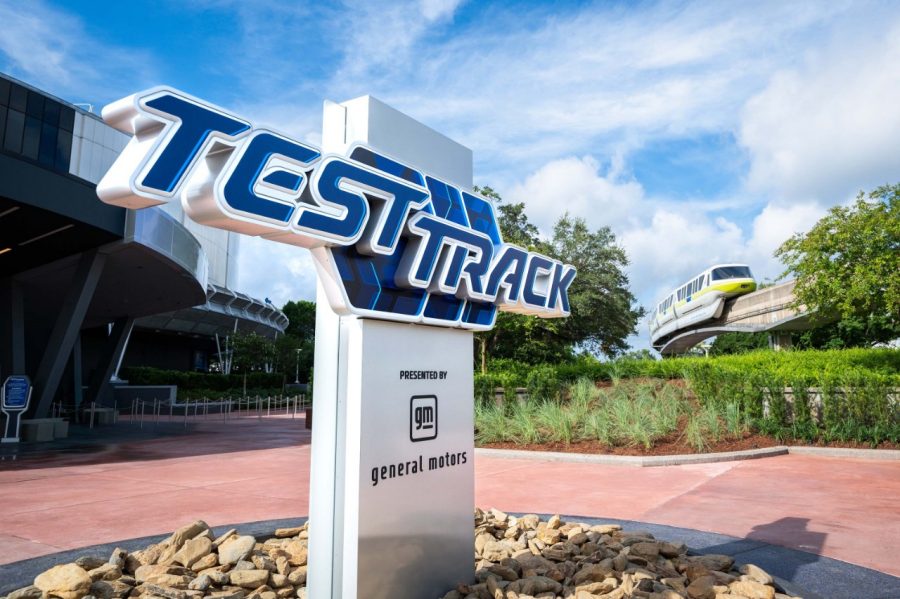
Today, McDougall has come full circle. As Manager of Product and Mobility on the GM Industrial Design team, he collaborated with Walt Disney Imagineering to help reimagine TestTrack presented by General Motors at EPCOT.
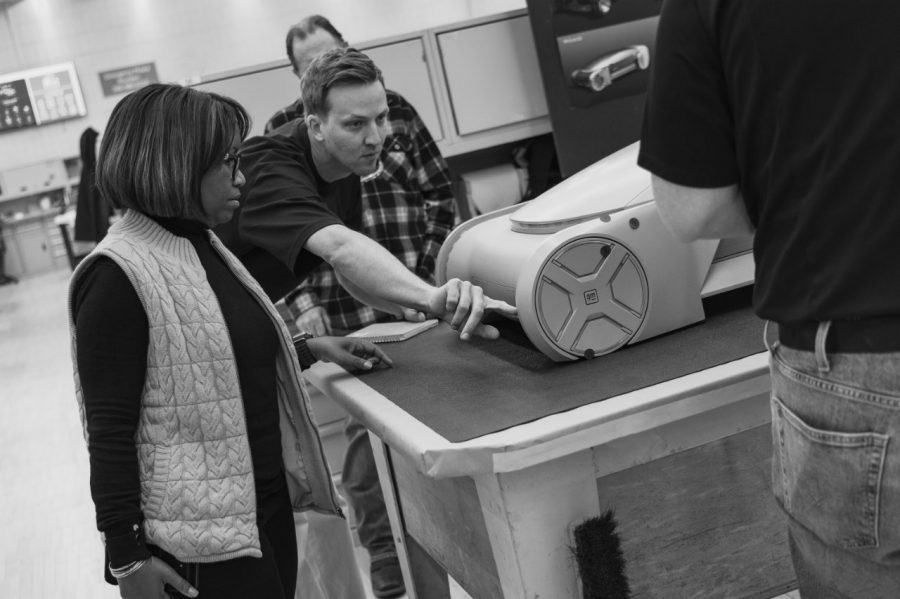
Photo caption: GM Design collaborated with Walt Disney Imagineering to help bring the reimagined Test Track at EPCOT to life.
GM Design’s role reached beyond concept vehicles. The project brought together industrial design, product experience, vehicle studios and Colors, Materials and Finishes (CMF).
Together, those teams helped shape the vehicles, show scenes and guest-facing moments throughout the attraction.
The project highlights how industrial designers can shape more than products at GM. They can help define how people encounter technology, understand mobility and connect with the company’s vision for the future.
That perspective shaped the guest experience.
“When we approached Test Track, we really tried to think about it as one continuous emotional journey, not just a ride,” he said.
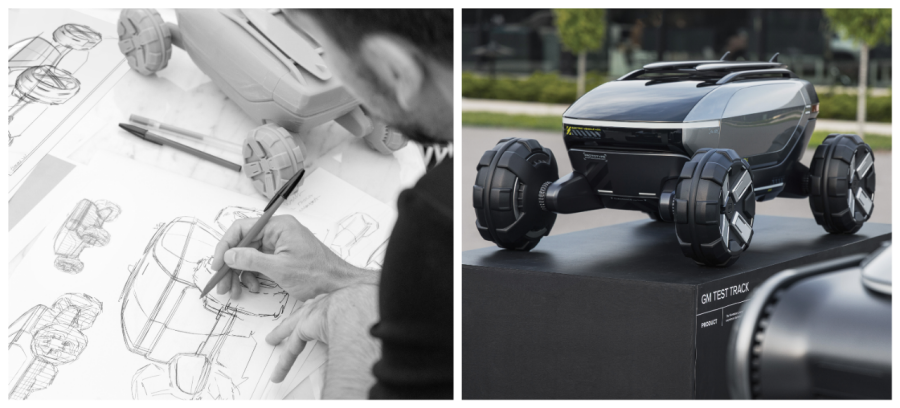
Photo caption: With sketches and scale models, GM Design helped develop the future-facing vehicle concepts in Test Track.
Guests begin with a timeline of GM concepts, then move into scenes where they become part of the story through media, lighting and projection. The shift is intentional.
What begins as a look back at GM’s history becomes an invitation to picture what mobility could become next.
“The future shouldn’t feel distant,” McDougall said. “It should feel personal.”
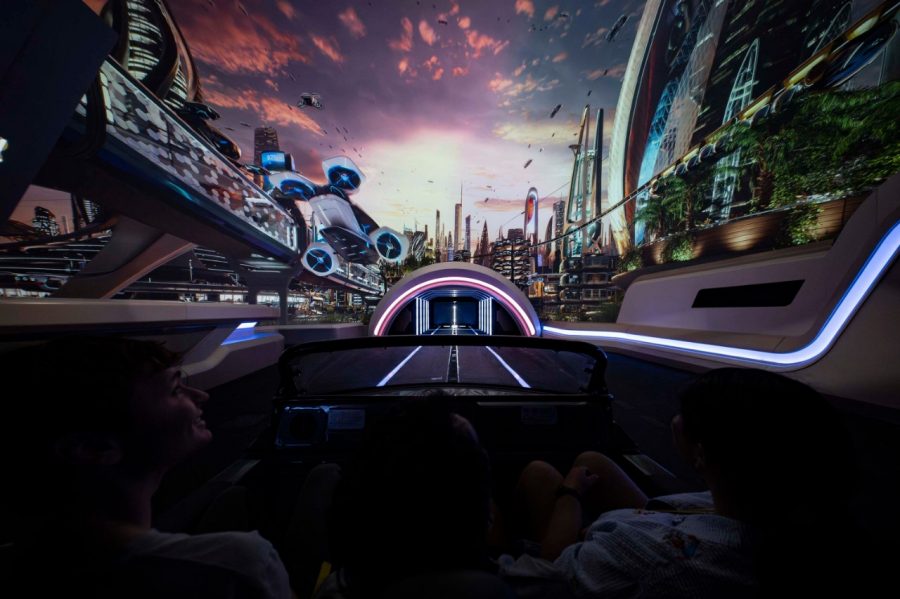
That idea comes through in the four concept vehicles guests see themselves inside, the flying vehicle featured in the “Progress City” finale and the “Garage of the Future” sequence.
For the “Garage of the Future,” GM and Walt Disney Imagineering teams reimagined Pepper’s Ghost, a special effect associated with classic Disney attractions. Paired with projection technology and new levels of detail, the effect places guests inside a future vehicle concept.
Photo caption: In the “Progress City” finale, guests enter a futuristic cityscape where GM Design’s vehicle concepts take off.
The attraction also makes advanced automotive technology easier to understand. In one sequence, LiDAR is visualized so guests can see how a vehicle interprets the world around it. The moment is theatrical, but it reflects real innovation happening inside GM vehicles today.
As for what McDougall hopes guests take away from the experience?
“I hope guests walk away feeling optimistic about the future of mobility and inspired to imagine their own role in shaping it.”
Go deeper into the design story behind the reimagined Test Track in the full interview with John McDougall on the GM Careers Blog.
When John McDougall first rode Test Track as a kid, the ride did more than thrill him. It showed him that transportation could be designed, imagined and built by people shaping what comes next.
That spark led him to automotive design and, eventually, to General Motors.
Today, McDougall has come full circle. As Manager of Product and Mobility on the GM Industrial Design team, he collaborated with Walt Disney Imagineering to help reimagine TestTrack presented by General Motors at EPCOT.
GM Design’s role reached beyond concept vehicles. The project brought together industrial design, product experience, vehicle studios and Colors, Materials and Finishes (CMF).
Together, those teams helped shape the vehicles, show scenes and guest-facing moments throughout the attraction.
The project highlights how industrial designers can shape more than products at GM. They can help define how people encounter technology, understand mobility and connect with the company’s vision for the future.
That perspective shaped the guest experience.
“When we approached Test Track, we really tried to think about it as one continuous emotional journey, not just a ride,” he said.
Guests begin with a timeline of GM concepts, then move into scenes where they become part of the story through media, lighting and projection. The shift is intentional.
What begins as a look back at GM’s history becomes an invitation to picture what mobility could become next.
“The future shouldn’t feel distant,” McDougall said. “It should feel personal.”
That idea comes through in the four concept vehicles guests see themselves inside, the flying vehicle featured in the “Progress City” finale and the “Garage of the Future” sequence.
For the “Garage of the Future,” GM and Walt Disney Imagineering teams reimagined Pepper’s Ghost, a special effect associated with classic Disney attractions. Paired with projection technology and new levels of detail, the effect places guests inside a future vehicle concept.
The attraction also makes advanced automotive technology easier to understand. In one sequence, LiDAR is visualized so guests can see how a vehicle interprets the world around it. The moment is theatrical, but it reflects real innovation happening inside GM vehicles today.
As for what McDougall hopes guests take away from the experience?
“I hope guests walk away feeling optimistic about the future of mobility and inspired to imagine their own role in shaping it.”

Go deeper into the design story behind the reimagined Test Track in the full interview with John McDougall on the GM Careers Blog.
Learn more about careers at GM by visiting Careers.GM.com.