
By Chris Perkins, Senior Writer and Editor, GM News
In 2017, General Motors launched something remarkable: Super Cruise1, the industry’s first true hands-free advanced driver assistance system, allowing drivers to take their hands off the wheel on mapped roads. In the years since, GM has continued to iterate on Super Cruise , and in 2022, it added hands-free trailering capability to the system. To this day, Hands-Free Trailering capability is exclusively available with Super Cruise.
Towing a trailer, whether it be a sub-1,000-pound rental trailer or a 10,000-pound camper, changes everything about the way you need to drive: Braking distances are longer, maneuverability is trickier, and acceleration is slower. Even for those who regularly do it, trailering can be stressful.
The whole idea behind Super Cruise was to create a system that makes every journey more convenient. That’s especially handy when towing, whether it’s across town or across the country.
Hands-Free Trailering debuted on the model-year 2022 Chevrolet Silverado 1500, GMC Sierra 1500, and GMC HUMMER EV Pickup. Today, a wide variety of GM vehicles offer Hands-Free Trailering capability when equipped with Super Cruise1:
Buick
Enclave
Cadillac
Escalade/Escalade ISV
ESCALADE IQ/ESCALADE IQL
OPTIQ
LYRIQ
VISTIQ
Chevrolet
Blazer EV
Equinox EV
Silverado 1500
Silverado EV
Suburban
Tahoe
Traverse
GMC
Acadia
HUMMER EV Pickup
HUMMER EV SUV
Sierra 1500
Sierra EV
Yukon/Yukon XL
The system is ready to go as soon as the driver plugs in the electrical connector for the trailer. If the trailer doesn’t have an electrical connection, the vehicle’s sensors can detect the trailer's presence and adjust Super Cruise accordingly.
Caption: Safety or driver assistance features are no substitute for the driver’s responsibility to operate the vehicle in a safe manner. Read the vehicle Owner’s Manual for important feature limitations and information.
At the heart of making the system work is a very simple equation: force equals mass times acceleration.
“When the vehicle starts pulling away, we have an algorithm that starts running F=MA equations,” explains Matt Kempeinen, one of the engineers who made Hands-Free Trailering with Super Cruise a reality. “If you calculate the drive force and observe the acceleration, you can determine the mass of the object you’re moving.”
Without any specific driver input, the vehicle learns the weight of the trailer behind it. This is essential, as trailer weight affects overall vehicle acceleration, braking, and handling. If the trailer is heavier, for example, the propulsion system will need to provide more torque to the wheels, and the braking distances will become longer. Kempeinen says that the vehicle quickly comes up with an estimate of the trailer’s weight and constantly refines its figures over time.
Not only does Super Cruise need to determine the correct adjustments to acceleration and braking when a trailer is hitched, it also needs to figure out how the trailer affects the way the vehicle navigates corners.
Kempeinen is part of a team that developed functionality within Super Cruise 1 that accounts for road, tire, and environmental conditions in judging just how much the steering wheel needs to turn at any given time. With a trailer hitched, vehicle handling changes dramatically, so Super Cruise 1 needs to adjust the way it steers the vehicle.
“The algorithm has to be capable of detecting changes in vehicle and trailer dynamics so that it can adapt to keep control consistent.”
A GM vehicle capable of Hands-Free Trailering will store specific Super Cruise settings with and without a trailer. If a customer hooks up a trailer they’ve towed before, the system doesn’t have to start from scratch to adapt, though it is always adjusting for an optimal driving experience.
It’s a lot of effort on GM’s end to make life easier for the customer.
“I have a coworker with a camper trailer she and her husband haul around with their light-duty pickup in the summertime,” Kempeinen says. “She absolutely despised trailering before, but now she has Super Cruise, she loves it.”
Even though Hands-Free Trailering remains a GM exclusive, for Kempeinen and all the other engineers working on the system, their work isn’t done.
“It’s been an evolution of continuously raising the bar on the performance side while also expanding availability, map coverage, and getting it out to the world across different regions,” Kempeinen says. “It’s nonstop.”
1 Turn Signal Activated Lane Change and Automatic Lane Change not available while trailering. Always pay attention while driving and when using Super Cruise. Always use Super Cruise in accordance with local laws. Do not use a hand-held device. Requires active Super Cruise plan or trial. Terms apply. Visit OnStar.com for compatible roads and full details.
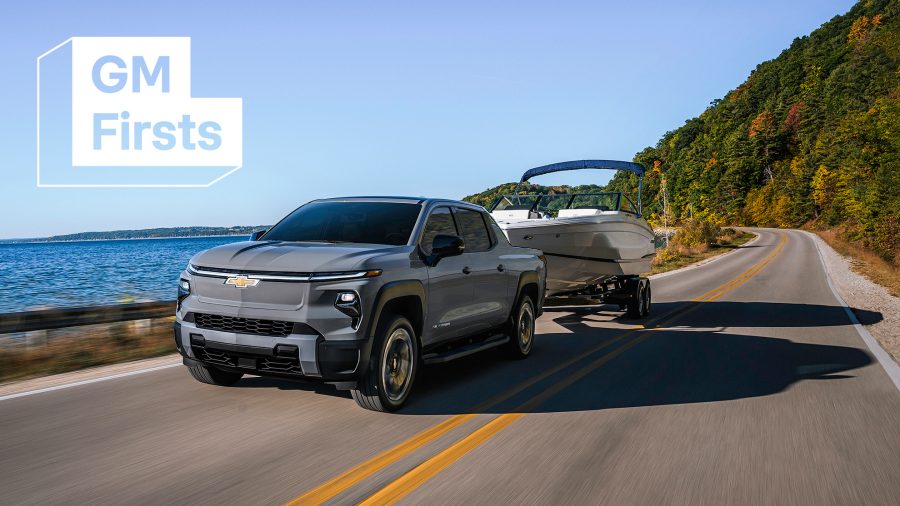
In 2017, General Motors launched something remarkable: Super Cruise1, the industry’s first true hands-free advanced driver assistance system, allowing drivers to take their hands off the wheel on mapped roads. In the years since, GM has continued to iterate on Super Cruise, and in 2022, it added hands-free trailering capability to the system. To this day, Hands-Free Trailering capability is exclusively available with Super Cruise.
Towing a trailer, whether it be a sub-1,000-pound rental trailer or a 10,000-pound camper, changes everything about the way you need to drive: Braking distances are longer, maneuverability is trickier, and acceleration is slower. Even for those who regularly do it, trailering can be stressful.
The whole idea behind Super Cruise was to create a system that makes every journey more convenient. That’s especially handy when towing, whether it’s across town or across the country.
Hands-Free Trailering debuted on the model-year 2022 Chevrolet Silverado 1500, GMC Sierra 1500, and GMC HUMMER EV Pickup. Today, a wide variety of GM vehicles offer Hands-Free Trailering capability when equipped with Super Cruise1:
Buick
- Enclave
Cadillac
- Escalade/Escalade ESV
- ESCALADE IQ/ESCALADE IQL
- OPTIQ
- LYRIQ
- VISTIQ
Chevrolet
- Blazer EV
- Equinox EV
- Silverado 1500
- Silverado EV
- Suburban
- Tahoe
- Traverse
GMC
- Acadia
- HUMMER EV Pickup
- HUMMER EV SUV
- Sierra 1500
- Sierra EV
- Yukon/Yukon XL
The system is ready to go as soon as the driver plugs in the electrical connector for the trailer. If the trailer doesn’t have an electrical connection, the vehicle’s sensors can detect the trailer's presence and adjust Super Cruise accordingly.
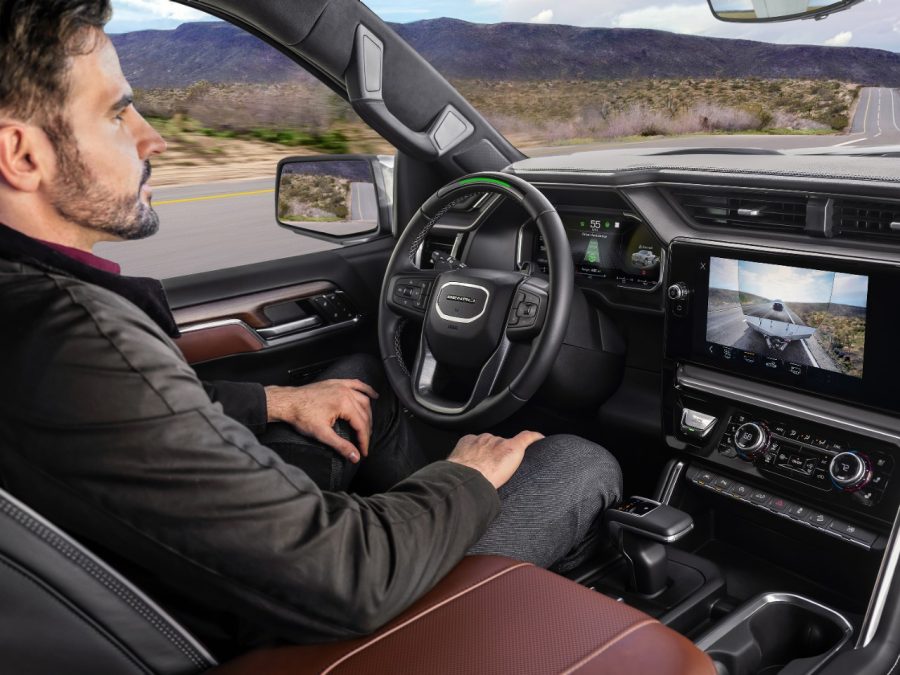
At the heart of making the system work is a very simple equation: force equals mass times acceleration.
“When the vehicle starts pulling away, we have an algorithm that starts running F=MA equations,” explains Matt Kempeinen, one of the engineers who made Hands-Free Trailering with Super Cruise a reality. “If you calculate the drive force and observe the acceleration, you can determine the mass of the object you’re moving.”
Without any specific driver input, the vehicle learns the weight of the trailer behind it. This is essential, as trailer weight affects overall vehicle acceleration, braking, and handling. If the trailer is heavier, for example, the propulsion system will need to provide more torque to the wheels, and the braking distances will become longer. Kempeinen says that the vehicle quickly comes up with an estimate of the trailer’s weight and constantly refines its figures over time.
Not only does Super Cruise need to determine the correct adjustments to acceleration and braking when a trailer is hitched, it also needs to figure out how the trailer affects the way the vehicle navigates corners.
Kempeinen is part of a team that developed functionality within Super Cruise1 that accounts for road, tire, and environmental conditions in judging just how much the steering wheel needs to turn at any given time. With a trailer hitched, vehicle handling changes dramatically, so Super Cruise1 needs to adjust the way it steers the vehicle.
“The algorithm has to be capable of detecting changes in vehicle and trailer dynamics so that it can adapt to keep control consistent.”
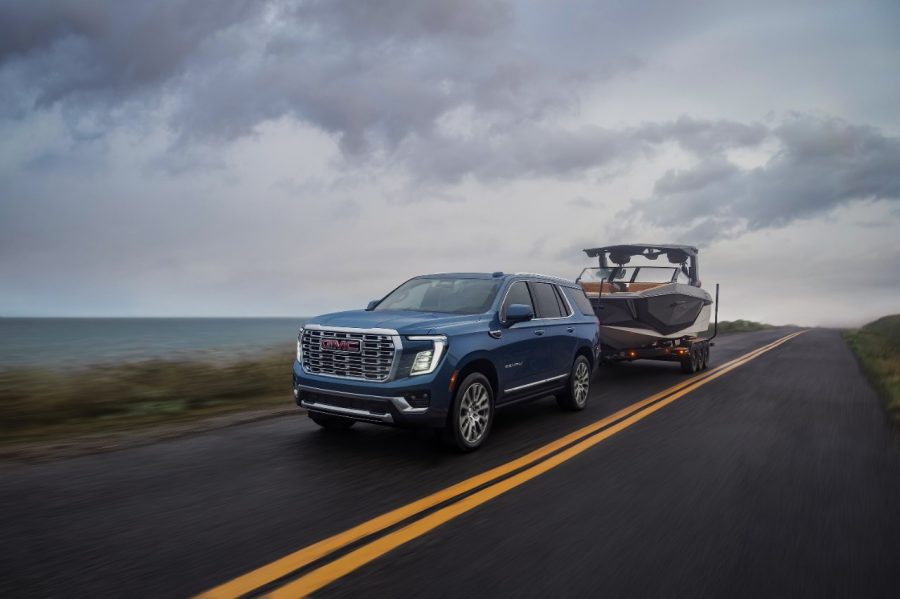
A GM vehicle capable of Hands-Free Trailering will store specific Super Cruise settings with and without a trailer. If a customer hooks up a trailer they’ve towed before, the system doesn’t have to start from scratch to adapt, though it is always adjusting for an optimal driving experience.
It’s a lot of effort on GM’s end to make life easier for the customer.
“I have a coworker with a camper trailer she and her husband haul around with their light-duty pickup in the summertime,” Kempeinen says. “She absolutely despised trailering before, but now she has Super Cruise, she loves it.”
Even though Hands-Free Trailering remains a GM exclusive, for Kempeinen and all the other engineers working on the system, their work isn’t done.
“It’s been an evolution of continuously raising the bar on the performance side while also expanding availability, map coverage, and getting it out to the world across different regions,” Kempeinen says. “It’s nonstop.”
1Turn Signal Activated Lane Change and Automatic Lane Change not available while trailering. Always pay attention while driving and when using Super Cruise. Always use Super Cruise in accordance with local laws. Do not use a hand-held device. Requires active Super Cruise plan or trial. Terms apply. Visit OnStar.com for compatible roads and full details.