
By Sarah Foss and Mariana Reyes Hernandez
By Sarah Foss and Mariana Reyes Hernandez
Manufacturing requires precision. From casting parts to stamping metal, each step in the manufacturing process is set up to not only be scalable, but customizable for each assembly site.
As vehicles travel through GM’s manufacturing plants, they’re subject to a wide range of checks and touch points. GM’s plant teams use emerging tech like machine learning models and AI-driven analysis to supercharge quality checks, making those checks faster and more efficient. Advanced technology and AI analytics on the line not only enable quicker decision making and increased accuracy, but also help GM deliver better quality for its customers.
Here are some examples of how GM is reimagining manufacturing through technology and innovation. Some of these processes have already received well-earned recognition through the Boss Kettering Award, which recognizes projects that help shape the future of GM.
Device Level Analytics (DLA)
DLA is a system of sensors that serve as eyes across the plant, monitoring and analyzing how the plant physically operates – think capturing vibration data, electrical current, and information from other sources. The collected information has been used to schedule proactive preventive maintenance, eliminating unexpected shutdowns and downtime.
As DLA continues to expand through manufacturing, it will leverage machine learning models and AI systems to flag issues faster with increased accuracy.
One example:
At Fort Wayne, the team harnessed plant data to identify and narrow down a warranty issue when a routine quality check revealed a missed weld in a batch of vehicles.
In the past, team members would have manually checked all the vehicles in that group – totaling 5,600.
Thanks to data captured from DLA, the team found where the welds were missed and quickly identified which vehicles were impacted, narrowing down the suspects from thousands to less than 10.
By leveraging all the available data and resources, they made the right call in hours instead of days – and kept the nine affected vehicles from leaving the building.
CAPTION: DLA sensors monitor conveyors that carry vehicles through the plant. Data is then sent to the command center and compiled into reports that flag anything outside the normal range, signaling the potential need for repair.
WeldBrAIn™
Welding is a critical step during vehicle assembly — welds hold the skeleton of your vehicle together. Quality checkpoints in the Body Shop typically involve a single employee physically checking weld sturdiness. Now there are technologies that help workers see things the human eye alone can’t.
At Factory ZERO, GM is piloting WeldBrAIn™: a proprietary technology that monitors quality on the production line. This AI-powered system has expanded quality check capabilities from manual inspection of four parts per shift to checking every single weld, on every single body, in real time.
CAPTION: Workers access the WeldBrAIn™ dashboard to confirm quality of welds for an entire vehicle. On the plant floor, they use the same dashboard to further inspect the vehicle in person.
Vision systems at Paint Repair
In GM’s plant paint shops, team members physically check for defects and use their hands to feel surface imperfections that need to be buffed out. While GM’s paint process works to eliminate issues with the final coat, there’s the potential for quality issues that are difficult to see.
One example:
At Spring Hill and Flint, GM paint shops have added Finesse Paint Repair vision cameras to detect issues with paint quality as vehicles move down the line.
These ‘superhuman eyes’ can see imperfections at a microlevel, resulting in quicker, more confident decisions and a better paint finish for customers.
This tool also provides the defect data to GM Paint Process Engineers, offering valuable real-time feedback to help them improve and dial in the paint process to prevent defects in the first place.
CAPTION: Vision systems inspect paint quality as vehicles move through the shop, detecting and correcting issues the human eye can't see.
Smarter tools like Device Level Analytics, WeldBrAIn™ and vision systems help GM workers spot issues early, protect quality and make quick, confident calls, helping GM consistently deliver high-quality products to customers and bringing a culture of safety, ownership and continuous improvement to life on every shift.
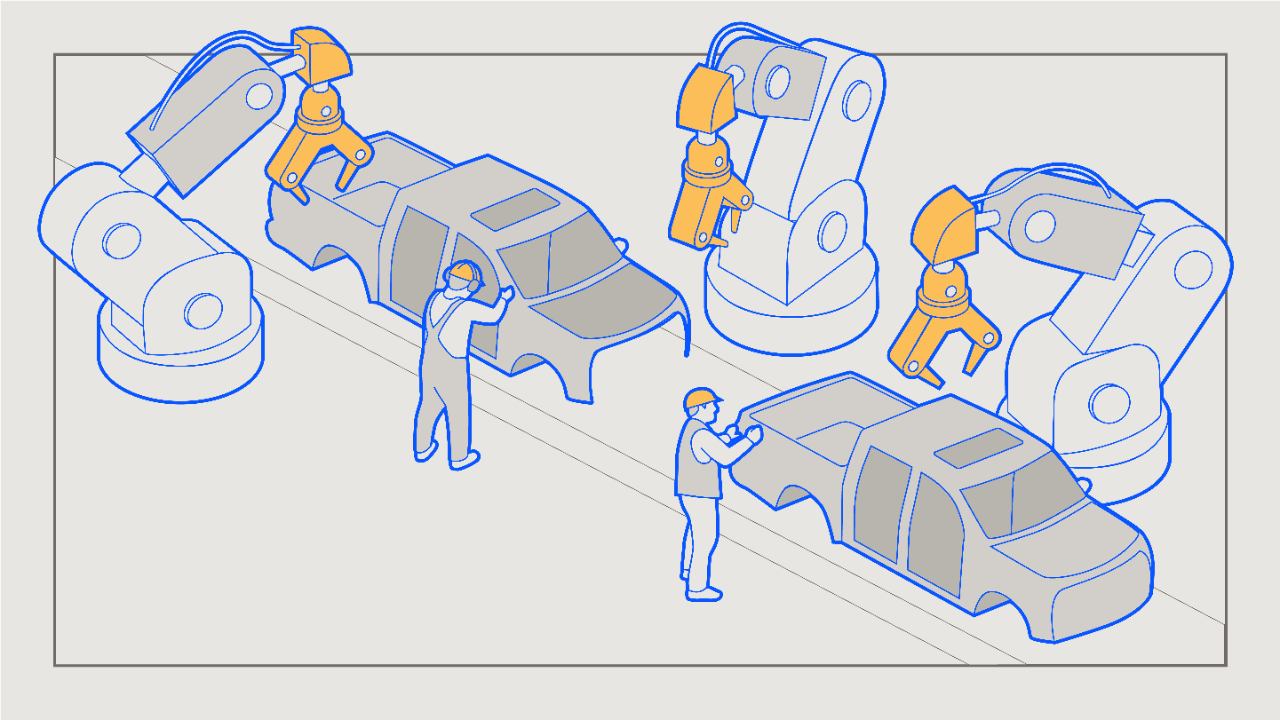
Manufacturing requires precision. From casting parts to stamping metal, each step in the manufacturing process is set up to not only be scalable, but customizable for each assembly site.
As vehicles travel through GM’s manufacturing plants, they’re subject to a wide range of checks and touch points. GM’s plant teams use emerging tech like machine learning models and AI-driven analysis to supercharge quality checks, making those checks faster and more efficient. Advanced technology and AI analytics on the line not only enable quicker decision making and increased accuracy, but also help GM deliver better quality for its customers.
Here are some examples of how GM is reimagining manufacturing through technology and innovation. Some of these processes have already received well-earned recognition through the Boss Kettering Award, which recognizes projects that help shape the future of GM.
Device Level Analytics (DLA)
DLA is a system of sensors that serve as eyes across the plant, monitoring and analyzing how the plant physically operates – think capturing vibration data, electrical current, and information from other sources. The collected information has been used to schedule proactive preventive maintenance, eliminating unexpected shutdowns and downtime.
As DLA continues to expand through manufacturing, it will leverage machine learning models and AI systems to flag issues faster with increased accuracy.
One example:
- At Fort Wayne, the team harnessed plant data to identify and narrow down a warranty issue when a routine quality check revealed a missed weld in a batch of vehicles.
- In the past, team members would have manually checked all the vehicles in that group – totaling 5,600.
- Thanks to data captured from DLA, the team found where the welds were missed and quickly identified which vehicles were impacted, narrowing down the suspects from thousands to less than 10.
- By leveraging all the available data and resources, they made the right call in hours instead of days – and kept the nine affected vehicles from leaving the building.

DLA sensors monitor conveyors that carry vehicles through the plant. Data is then sent to the command center and compiled into reports that flag anything outside the normal range, signaling the potential need for repair.
WeldBrAIn™
Welding is a critical step during vehicle assembly — welds hold the skeleton of your vehicle together. Quality checkpoints in the Body Shop typically involve a single employee physically checking weld sturdiness. Now there are technologies that help workers see things the human eye alone can’t.
At Factory ZERO, GM is piloting WeldBrAIn™: a proprietary technology that monitors quality on the production line. This AI-powered system has expanded quality check capabilities from manual inspection of four parts per shift to checking every single weld, on every single body, in real time.

Workers access the WeldBrAIn™ dashboard to confirm quality of welds for an entire vehicle. On the plant floor, they use the same dashboard to further inspect the vehicle in person.
Vision systems at Paint Repair
In GM’s plant paint shops, team members physically check for defects and use their hands to feel surface imperfections that need to be buffed out. While GM’s paint process works to eliminate issues with the final coat, there’s the potential for quality issues that are difficult to see.
One example:
- At Spring Hill and Flint, GM paint shops have added Finesse Paint Repair vision cameras to detect issues with paint quality as vehicles move down the line.
- These ‘superhuman eyes’ can see imperfections at a microlevel, resulting in quicker, more confident decisions and a better paint finish for customers.
- This tool also provides the defect data to GM Paint Process Engineers, offering valuable real-time feedback to help them improve and dial in the paint process to prevent defects in the first place.

Vision systems inspect paint quality as vehicles move through the shop, detecting and correcting issues the human eye can't see.
Smarter tools like Device Level Analytics, WeldBrAIn™ and vision systems help GM workers spot issues early, protect quality and make quick, confident calls, helping GM consistently deliver high-quality products to customers and bringing a culture of safety, ownership and continuous improvement to life on every shift.