
By: Chris Perkins, Senior Writer and Editor, GM News
By: Chris Perkins, Senior Writer and Editor, GM News
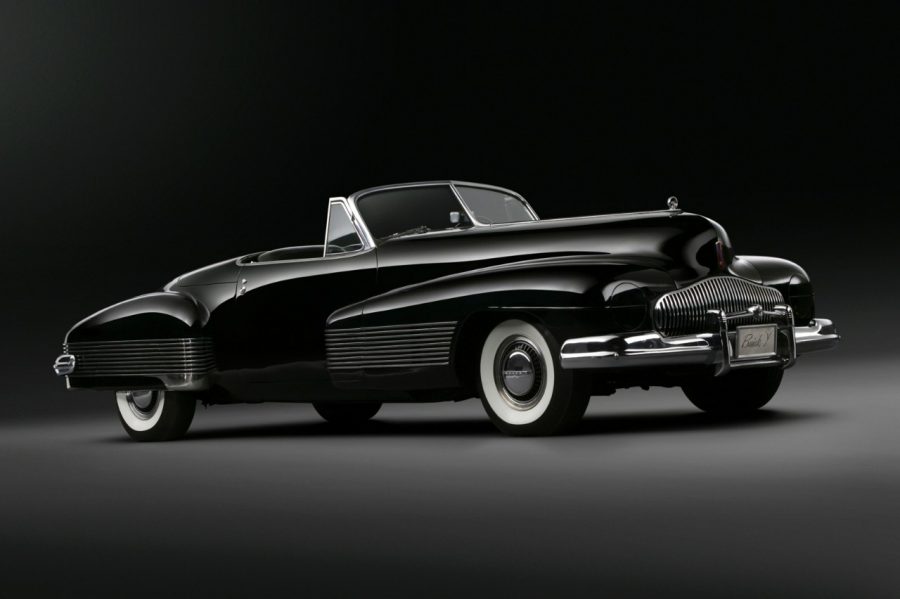
If you didn’t know, you’d never guess the Buick Y-Job was unveiled in 1938. With its curvaceous integrated fenders, hidden headlights, waterfall grille, and long, low, wide proportions, the Y-Job looks like a car born two decades later.
That was exactly the point. Today, The Y-Job is what we recognize as the industry’s very first example of a concept car, a prototype vehicle created by automotive designers to showcase their vision of the future.
“Born in 1938 to give the stylist a tool for advanced research comparable to the laboratory and the proving ground used by the scientist and engineer, the dream car has become a world famous symbol of the American public’s ever growing fascination with the life it can expect in the future,” GM noted in a 1956 press release.
IMAGE CAPTION: Harley Earl with the Buick Y-Job.
“It was the first concept car ever,” says Andrew Smith, GM Executive Director of Design, Global Advanced Design. “It was developed very much as a testbed for new design technologies and features.”
The Y-Job started a practice that has become nearly universal in the auto industry. Carmakers all over the globe continue to create concept cars to showcase their visions of future designs and technologies – and to show customers what they might be able to look forward to in tomorrow’s showrooms.
The Y-Job, and the concept car tradition that it began, could only have come from GM. In 1927, Alfred Sloan, then president of GM, hired a Californian named Harley Earl to create the first dedicated design division within a major automaker. (Up until that point, mainstream cars wore bodywork designed simply to cover up passengers and mechanical components.) Earl had made a name for himself as the go-to designer of custom automobiles for the Hollywood elite. Earl established the Art and Colour section at GM (yes, with “colour” spelled the British way), which evolved into today’s GM Design.
IMAGE CAPTION: One of Harley Earl’s pre-GM design drawings.
Earl and the team at Art and Colour developed the first standardized automotive design process, with stylists working alongside engineers. They pioneered the use of clay models to quite literally sculpt vehicles before they reach production, ensuring every GM car looks just right. It’s a practice GM, and much of the auto industry, still use to this day.
It was George Snyder who penned the Y-Job under Earl’s guidance. The swoopy roadster bodywork sat on the chassis of a 1937 Buick Century, a mainstream model. Looking at the two, you understand just how radical the Y-Job was in its day.
“The Y-Job was very simple, a very clean execution,” Smith says. “The concealed headlights and all these features were so futuristic. The team basically said, let’s get everything happening around the company and put it on one vehicle. It was a way to push engineering and design forward: Here’s what we want to do.”
The Y-Job arrived at a precarious moment in American history, as the country emerged from the Depression with the specter of war looming. It was a thing of elegance and wonder that offered the public a chance to daydream during a time of austerity. Buick showed the Y-Job at New York event in 1940, where it made a huge splash. Earl later used the car as his personal vehicle, but it wasn’t until after World War II that the Y-Job's impact on car design was truly recognized.
IMAGE CAPTION: Harley Earl behind the wheel of the 1951 General Motors Le Sabre.
As America entered the postwar age of prosperity and optimism, concept cars entered their first golden age. Earl followed up the Y-Job with the spectacular 1951 General Motors Le Sabre, a fighter-jet-inspired phenomenon that set the template for over a decade of space-age concept cars to come. Soon, GM Design was putting out concepts cars at a breakneck pace, drawing audiences at auto shows, world’s fairs, and GM’s own Motorama traveling technology show. The rest of the auto industry took note, adopting concept cars as a way for designers to express their loftiest dreams and present them to the public.
Concept cars play a major role in today’s design process at General Motors. Smith explains how GM’s modern concept cars fall into four broad categories:
Previews: Vehicles in close-to-production form, showing the world what’s coming in the immediate future.
Precursors: Concept cars tied to a specific future production model, giving the public an idea of what to expect, both from design and technology perspectives, a year or more in advance of a new car’s debut in showrooms.
Vision Entries: Concept cars that preview potential new vehicle segments for a brand to enter. These let designers imagine what a brand could offer in a new area of the market, and gauge customer interest.
True Concepts: Purely hypothetical designs created with no specific production-vehicle intent. These aim to tell a story about the brand and envision new technologies or styling directions.
“Each of those has its own reason for why we do it,” Smith says. Some concepts blur the line between these categories, while some start life in one niche and grow into another. Smith cites the Cadillac CELESTIQ as an example. He and his design colleagues initially created the CELESTIQ as a pure tool for inspiration, but when GM President Mark Reuss saw the full-scale model, he decided it should go into production. Thus began a close collaboration between design and engineering to turn vision into reality.
The CELESTIQ’s journey demonstrates an important function of concept cars: bridging design and engineering to inspire collaboration across disciplines.
“Advanced Design is there to put out a vision we can aim towards, a north star,” Smith says. “You need something to demonstrate what we’re trying to achieve, and to get people on board. That’s what a concept car does really well: it brings the whole story together. If everyone’s behind it, pushing in the same direction, we can deliver the future faster.”
IMAGE CAPTION: The GMC HUMMER X SUV concept.
This week, at the opening of the GM Advanced Design Center Pasadena, the GM Design team unveiled the latest concept cars in this 88-year legacy: The GMC HUMMER X SUV and pickup truck design studies1.
The guiding mantra behind these vehicles is “take nothing but pictures, leave nothing but footprints.” The GMC HUMMER X concepts are mid-sized vehicles, designed with rock-crawling ability and modularity of construction in mind.
“There are all these people out there who are interested in off-roading, but who are conscious of their impact and want to tread lightly,” Smith says. The GMC HUMMER X concepts envision a vehicle for them.
At GM’s newly established Advanced Design Studio in Pasadena, designers collaborated with the Advanced Engineering and Advanced manufacturing teams to use the GMC HUMMER X concepts to show off a new additive manufacturing process, FLEX FAB. “It was put together as a vision of what we could do with advanced manufacturing, and a different viewpoint on things like the circular economy,” Smith says.
The way concept cars are showcased has evolved significantly over time. Where the Y-Job and its successors were shown to the public at large-scale gala events, today’s concept cars are often consumed digitally. The Buick Electra Orbit concept1 is a purely digital creation, a vision of the vehicular future that only exists virtually.
The point, however, remains the same as it was back in 1938.
“A concept car needs to stimulate conversation about the brand,” Smith says.
1 Not available for sale
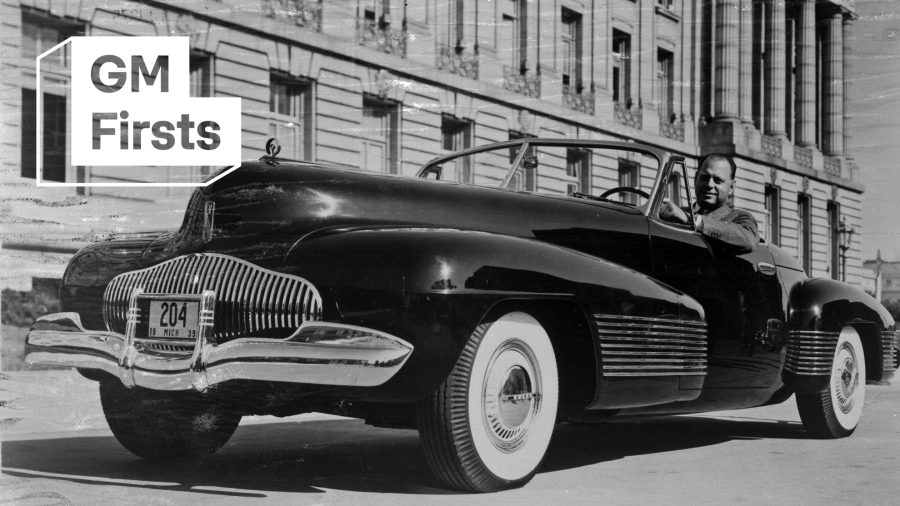
If you didn’t know, you’d never guess the Buick Y-Job was unveiled in 1938. With its curvaceous integrated fenders, hidden headlights, waterfall grille, and long, low, wide proportions, the Y-Job looks like a car born two decades later.
That was exactly the point. Today, the Y-Job is what we recognize as the industry’s very first example of a concept car, a prototype vehicle created by automotive designers to showcase their vision of the future.
“Born in 1938 to give the stylist a tool for advanced research comparable to the laboratory and the proving ground used by the scientist and engineer, the dream car has become a world famous symbol of the American public’s ever growing fascination with the life it can expect in the future,” GM noted in a 1956 press release.
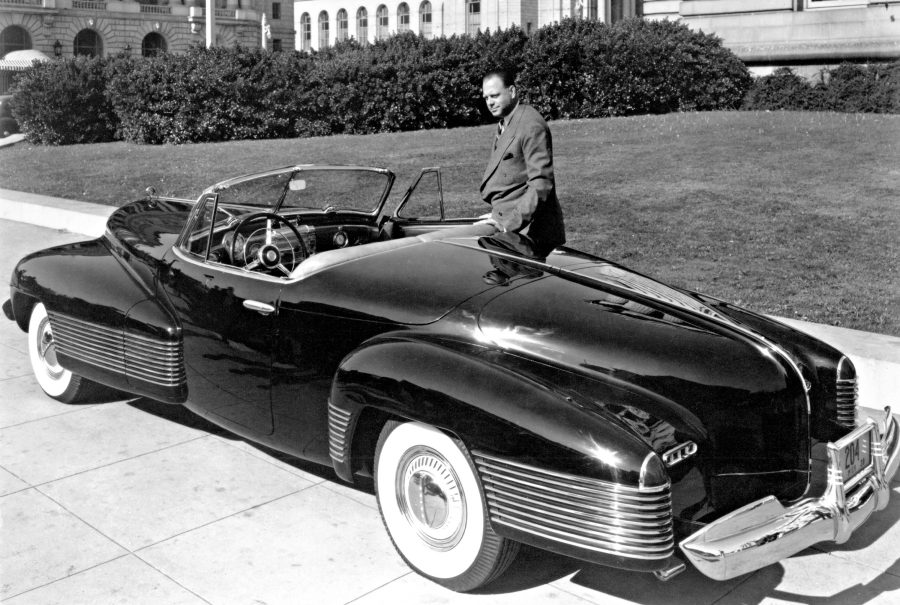
“It was the first concept car ever,” says Andrew Smith, GM Executive Director of Global Advanced Design. “It was developed very much as a testbed for new design technologies and features.”
The Y-Job started a practice that has become nearly universal in the auto industry. Carmakers all over the globe continue to create concept cars to showcase their visions of future designs and technologies – and to show customers what they might be able to look forward to in tomorrow’s showrooms.
The Y-Job, and the concept car tradition that it began, could only have come from GM. In 1927, Alfred Sloan, then president of GM, hired a Californian named Harley Earl to create the first dedicated design division within a major automaker. (Up until that point, mainstream cars wore bodywork designed simply to cover up passengers and mechanical components.) Earl had made a name for himself as the go-to designer of custom automobiles for the Hollywood elite. Earl established the Art and Colour section at GM (yes, with “colour” spelled the British way), which evolved into today’s GM Design.
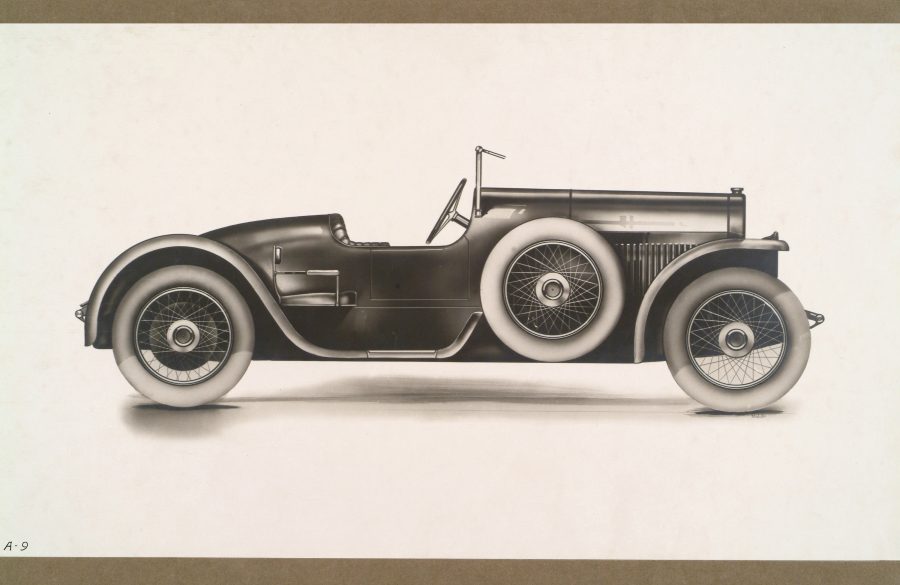
Earl and the team at Art and Colour developed the first standardized automotive design process, with stylists working alongside engineers. They pioneered the use of clay models to quite literally sculpt vehicles before they reach production, ensuring every GM car looks just right. It’s a practice GM, and much of the auto industry, still uses to this day.
It was George Snyder who penned the Y-Job under Earl’s guidance. The swoopy roadster bodywork sat on the chassis of a 1937 Buick Century, a mainstream model. Looking at the two, you understand just how radical the Y-Job was in its day.
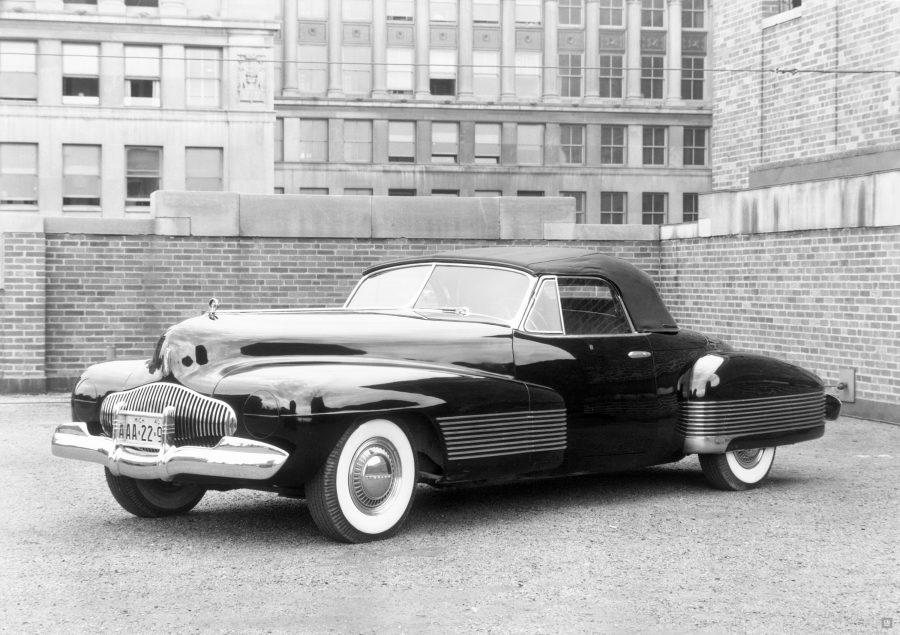
“The Y-Job was very simple, a very clean execution,” Smith says. “The concealed headlights and all these features were so futuristic. The team basically said, let’s get everything happening around the company and put it on one vehicle. It was a way to push engineering and design forward: Here’s what we want to do.”
The Y-Job arrived at a precarious moment in American history, as the country emerged from the Depression with the specter of war looming. It was a thing of elegance and wonder that offered the public a chance to daydream during a time of austerity. Buick showed the Y-Job at a New York event in 1940, where it made a huge splash. Earl later used the car as his personal vehicle, but it wasn’t until after World War II that the Y-Job's impact on car design was truly recognized.
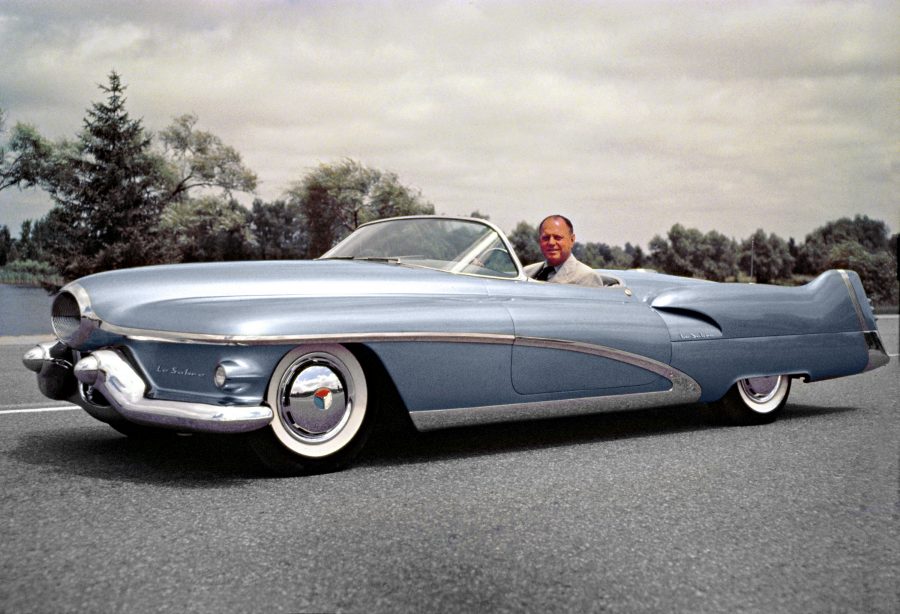
As America entered the postwar age of prosperity and optimism, concept cars entered their first golden age. Earl followed up the Y-Job with the spectacular 1951 General Motors Le Sabre, a fighter-jet-inspired phenomenon that set the template for over a decade of space-age concept cars to come. Soon, GM Design was putting out concept cars at a breakneck pace, drawing audiences at auto shows, world’s fairs, and GM’s own Motorama traveling technology show. The rest of the auto industry took note, adopting concept cars as a way for designers to express their loftiest dreams and present them to the public.
Concept cars play a major role in today’s design process at General Motors. Smith explains how GM’s modern concept cars fall into four broad categories:
- Previews: Vehicles in close-to-production form, showing the world what’s coming in the immediate future.
- Precursors: Concept cars tied to a specific future production model, giving the public an idea of what to expect, both from design and technology perspectives, a year or more in advance of a new car’s debut in showrooms.
- Vision Entries: Concept cars that preview potential new vehicle segments for a brand to enter. These let designers imagine what a brand could offer in a new area of the market, and gauge customer interest.
- True Concepts: Purely hypothetical designs created with no specific production-vehicle intent. These aim to tell a story about the brand and envision new technologies or styling directions.
“Each of those has its own reason for why we do it,” Smith says. Some concepts blur the line between these categories, while some start life in one niche and grow into another. Smith cites the Cadillac CELESTIQ as an example. He and his design colleagues initially created the CELESTIQ as a pure tool for inspiration, but when GM President Mark Reuss saw a scale model, he decided it should go into production. Thus began a close collaboration between design and engineering to turn vision into reality.
The CELESTIQ’s journey demonstrates an important function of concept cars: bridging design and engineering to inspire collaboration across disciplines.
“Advanced Design is there to put out a vision we can aim towards, a guiding light,” Smith says. “You need something to demonstrate what we’re trying to achieve, and to get people on board. That’s what a concept car does really well: it brings the whole story together. If everyone’s behind it, pushing in the same direction, we can deliver the future faster.”
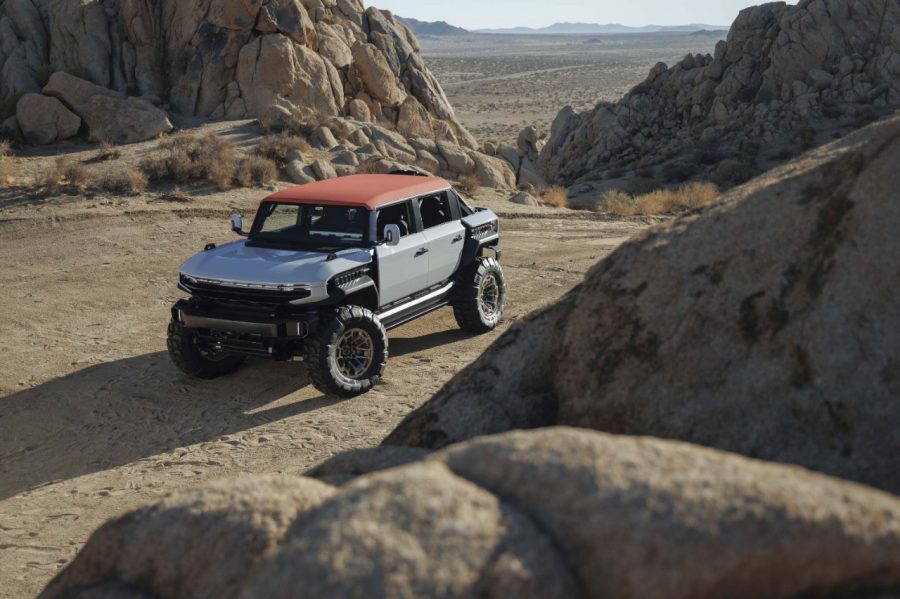
This week, at the opening of the GM Advanced Design Center Pasadena, the GM Design team unveiled the latest concept cars in this 88-year legacy: The GMC HUMMER X SUV and pickup truck design studies1.
The guiding mantra behind these vehicles is “take nothing but pictures, leave nothing but footprints.” The GMC HUMMER X concepts are mid-sized vehicles, designed with rock-crawling ability and modularity of construction in mind.
“There are all these people out there who are interested in off-roading, but who are conscious of their impact and want to tread lightly,” Smith says. The GMC HUMMER X concepts envision a vehicle for them.
At GM’s newly established Advanced Design Studio in Pasadena, designers collaborated with the Advanced Engineering and Advanced Manufacturing teams to use the GMC HUMMER X concepts to show off a new additive manufacturing process, FLEX FAB. “It was put together as a vision of what we could do with Advanced Manufacturing, and a different viewpoint on things like the circular economy,” Smith says.
The way concept cars are showcased has evolved significantly over time. Where the Y-Job and its successors were shown to the public at large-scale gala events, today’s concept cars are often consumed digitally. The Buick Electra Orbit concept1 is a purely digital creation, a vision of the vehicular future that only exists virtually.
The point, however, remains the same as it was back in 1938.
“A concept car needs to stimulate conversation about the brand,” Smith says.
1Not available for sale