
By Stephen Harber, content strategist, GM Talent Marketing
by Stephen Harber, content strategist, GM Talent Marketing
Years of military experience can prepare you for almost anything, except knowing exactly what comes next.
You may know what you’re capable of and still need time to see how that experience carries into civilian work. The titles are different. The terminology is different. Even knowing who to turn to can take time.
But that doesn’t make your hard-earned experience any less valuable. At GM, some of what you carried out of service may matter in ways you can’t see yet.
Sometimes the next chapter begins before the last one has fully ended.
You don’t have to find the next step alone
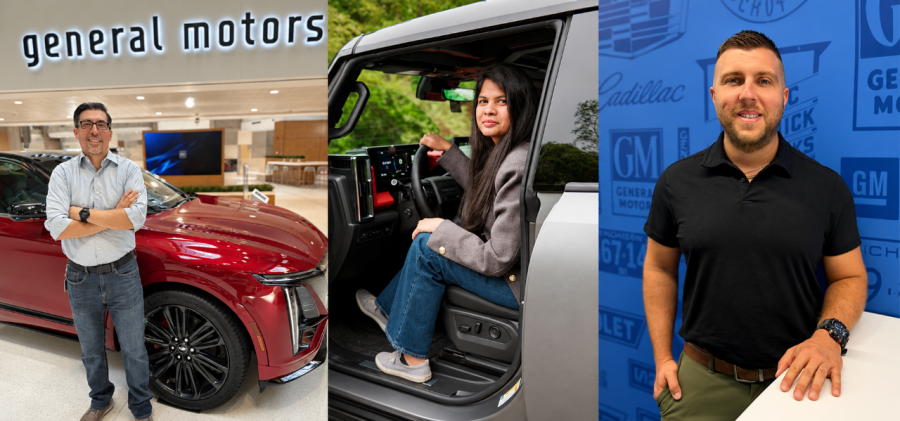
Jhansi Nalla continues to serve in the U.S. Army Reserve while leading Product Systems Engineering teams at GM working on software-defined vehicles.
When she joined GM, the Veterans Employee Resource Group gave her people she could turn to. Regular forums and peer mentoring connect veterans and service members with others who already know the terrain.
“Even on tough days, I know I have battle buddies here,” Jhansi says.
Federal law provides reemployment protections for eligible service members. Support can go further than that.
Brandon Gifford wondered what would happen to his civilian career before deploying with the Michigan Air National Guard. GM supported him financially during deployment and helped him return to a role when he came back. Today, he works as a Certified Service Activation Lead.
Service members preparing to leave the military can also meet GM before their first civilian job. Shifting Gears is a 12-week automotive technician training program offered through a partnership between GM, the U.S. Army and V2X. Across the program, more than 1,000 service members have received automotive training and job placement opportunities.
Your first civilian role can be one chapter, not the whole story.
Three branches. Three paths forward. From left: Marine Corps veteran John Gillmer, Army veteran Jhansi Nalla, and Air Force veteran Brandon Gifford continue to carry their experience into new missions at GM.
The path may make sense later
After serving in the Marine Corps, John Gillmer built a career at GM that’s taken him through finance, data and business-intelligence work. Today, he serves as a Build Lead in GM Finance while continuing to support fellow veterans inside the company.
Life after the Marine Corps didn’t narrow John’s options. It opened the door to more than one career.
“You can have multiple careers without leaving GM,” John says.
And sometimes the next chapter brings you back to something you thought you’d left behind.
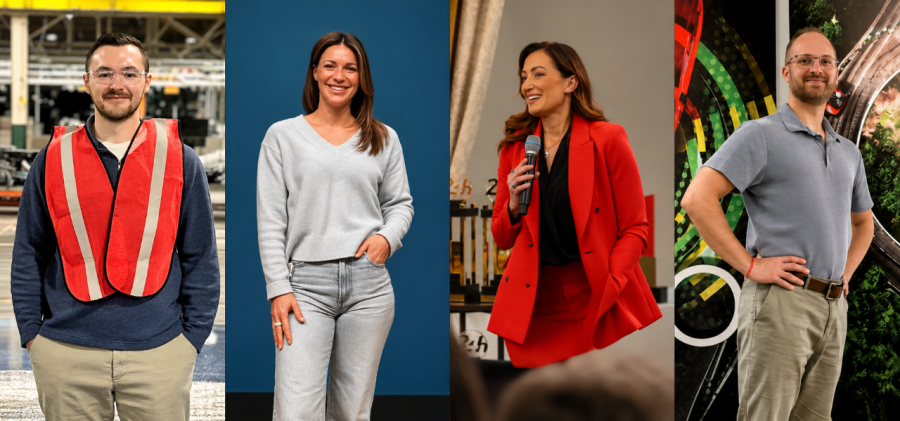
Keely Bosn grew up around racing and once interned with Corvette Racing before spending seven years in the Navy Supply Corps. Her work there meant keeping people, equipment and supplies moving wherever the mission took them.
Navy service put racing in the rearview mirror for a while. Years later, she found her way back to the track.
Today, as Cadillac Racing Program Manager, Bosn helps keep a global racing operation ready to compete. Specialized equipment has to cross borders. Tight timelines have to hold. Backup plans have to be ready before anyone needs them.
She’d spent years learning how to do exactly that under very different circumstances.
“I’m glad everything curved around this way,” Keely says.
Sometimes service points you somewhere new instead.
Taylor Searcy saw firsthand how much communities can depend on reliable energy and transportation during his Navy career. Today, as GM’s Clean Energy Strategy Lead, he brings that perspective to the systems behind vehicle manufacturing.
“Careers in clean energy and sustainability are as varied as they come,” Taylor says. “There is something for everyone in this space.”
Finding that “something” can still take time.
CAPTION: Military service may be one chapter, but its lessons can surface in unexpected places. From left: Marine Corps veteran Brett Munster and Navy veterans Rain Thompson, Keely Bosn, and Taylor Searcy.
You may become the person others count on
After four years in the Navy aboard USS Abraham Lincoln, Rain Thompson remembers wishing she’d had more guidance as she moved into civilian life. Today, she’s a Talent Acquisition Partner at GM, helping others navigate career moves of their own.
Sometimes that means looking at a résumé. Sometimes it’s answering a question or simply talking with someone who isn’t sure what comes next.
“Ask for help,” Rain says. “You don’t have to figure it out alone.”
That spirit of service can keep moving forward, whether it means helping another veteran find their footing or making sure the mission is ready when it counts.
Brett Munster learned in the Marine Corps that readiness often comes down to knowing the details before something goes wrong. At 19, he was already briefing senior officers on whether his unit was prepared.
Today, he’s an Intercontinental Operations Logistics Coordinator at GM, monitoring material flow from the Asia Pacific region and working to keep supplier problems from reaching production.
During one potential constraint, he helped build a plan that avoided a week-long plant shutdown.
His advice is simple: “Stay calm, know your material, and take ownership.”
Maybe that’s the useful thing about not knowing exactly what comes next.
The next mission doesn’t always arrive with orders. Sometimes you find it by moving forward.
You bring the rest with you.
Bring your experience to what moves us forward
Veterans bring experience and mission focus to roles across GM. Explore GM’s veteran resources and read how Brett Munster applies Marine Corps experience to global logistics.
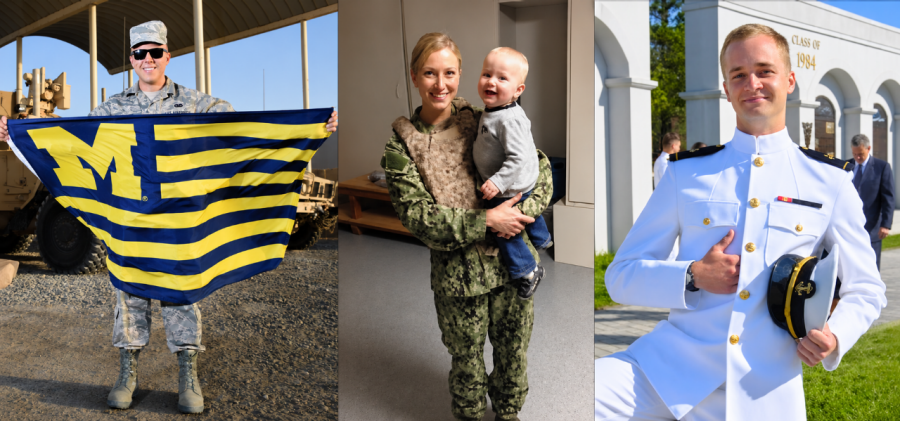
Years of military experience can prepare you for almost anything, except knowing exactly what comes next. You may know what you’re capable of and still need time to see how that experience carries into civilian work. The titles are different. The terminology is different. Even knowing who to turn to can take time.
But that doesn’t make your hard-earned experience any less valuable. At GM, some of what you carried out of service may matter in ways you can’t see yet. Sometimes the next chapter begins before the last one has fully ended.
You don’t have to find the next step alone
Jhansi Nalla continues to serve in the U.S. Army Reserve while leading Product Systems Engineering teams at GM working on software-defined vehicles.
When she joined GM, the Veterans Employee Resource Group gave her people she could turn to. Regular forums and peer mentoring connect veterans and service members with others who already know the terrain.
“Even on tough days, I know I have battle buddies here,” Jhansi says. Federal law provides reemployment protections for eligible service members. Support can go further than that.
Brandon Gifford wondered what would happen to his civilian career before deploying with the Michigan Air National Guard. GM supported him financially during deployment and helped him return to a role when he came back. Today, he works as a Certified Service Activation Lead.
Service members preparing to leave the military can also meet GM before their first civilian job. Shifting Gears is a 12-week automotive technician training program offered through a partnership between GM, the U.S. Army and V2X. Across the program, more than 1,000 service members have received automotive training and job placement opportunities.
Your first civilian role can be one chapter, not the whole story.
The path may make sense later
After serving in the Marine Corps, John Gillmer built a career at GM that’s taken him through finance, data and business-intelligence work. Today, he serves as a Build Lead in GM Finance while continuing to support fellow veterans inside the company.
Life after the Marine Corps didn’t narrow John’s options. It opened the door to more than one career. “You can have multiple careers without leaving GM,” John says. And sometimes the next chapter brings you back to something you thought you’d left behind.
Keely Bosn grew up around racing and once interned with Corvette Racing before spending seven years in the Navy Supply Corps. Her work there meant keeping people, equipment and supplies moving wherever the mission took them. Navy service put racing in the rearview mirror for a while. Years later, she found her way back to the track.
Today, as Cadillac Racing Program Manager, Bosn helps keep a global racing operation ready to compete. Specialized equipment has to cross borders. Tight timelines have to hold. Backup plans have to be ready before anyone needs them.
She’d spent years learning how to do exactly that under very different circumstances. “I’m glad everything curved around this way,” Keely says. Sometimes service points you somewhere new instead.
Taylor Searcy saw firsthand how much communities can depend on reliable energy and transportation during his Navy career. Today, as GM’s Clean Energy Strategy Lead, he brings that perspective to the systems behind vehicle manufacturing.
“Careers in clean energy and sustainability are as varied as they come,” Taylor says. “There is something for everyone in this space.” Finding that “something” can still take time.
You may become the person others count on
After four years in the Navy aboard USS Abraham Lincoln, Rain Thompson remembers wishing she’d had more guidance as she moved into civilian life. Today, she’s a Talent Acquisition Partner at GM, helping others navigate career moves of their own.
Sometimes that means looking at a résumé. Sometimes it’s answering a question or simply talking with someone who isn’t sure what comes next. “Ask for help,” Rain says. “You don’t have to figure it out alone.” That spirit of service can keep moving forward, whether it means helping another veteran find their footing or making sure the mission is ready when it counts.
Brett Munster learned in the Marine Corps that readiness often comes down to knowing the details before something goes wrong. At 19, he was already briefing senior officers on whether his unit was prepared.
Today, he’s an Intercontinental Operations Logistics Coordinator at GM, monitoring material flow from the Asia Pacific region and working to keep supplier problems from reaching production. During one potential constraint, he helped build a plan that avoided a week-long plant shutdown. His advice is simple: “Stay calm, know your material, and take ownership.”
Maybe that’s the useful thing about not knowing exactly what comes next. The next mission doesn’t always arrive with orders. Sometimes you find it by moving forward. You bring the rest with you.
Bring your experience to what moves us forward
Veterans bring experience and mission focus to roles across GM. Explore GM’s veteran resources and read how Brett Munster applies Marine Corps experience to global logistics.
Learn more about careers at GM by visiting Careers.GM.com.