
By Shilpan Amin, Global Chief Procurement and Supply Chain Officer
From mine to magnet to motor: How GM is building critical supply chains for the long term
2026-10-02
By Shilpan Amin, Global Chief Procurement and Supply Chain Officer
Copy:
Long before electric vehicles became a familiar sight on American roads, General Motors engineers were developing technologies that help make today’s EVs possible.
One example sits at the heart of a modern electric motor: the permanent magnet. In the early 1980s, GM researchers helped pioneer a process for producing powerful neodymium-based permanent magnets. That work was an early demonstration of something GM has done throughout its history: bringing materials science, engineering and manufacturing together to solve difficult problems at scale in ways few other companies can.
GM’s experience does not stop with magnets. Our history with electric motors also runs deep.
The first-generation Chevrolet Volt advanced permanent-magnet motor performance in a hybrid-vehicle application. Its successor introduced a dual-V magnet arrangement designed to increase torque and reduce noise and vibration. Later, the first-generation Chevrolet Bolt EV helped bring permanent-magnet motor technology to a long-range, mass-market EV.
Each generation taught us something new. Today, those lessons are reflected in a family of electric motors engineered for a broad portfolio of vehicles and customer needs.
Why magnets matter
An EV motor has a straightforward job: turn electrical energy into motion. But delivering the performance and durability customers expect is anything but simple.
Most GM EV motors today use interior permanent magnets. The motor’s stator creates a rotating magnetic field, which interacts with magnets inside the rotor to produce torque. Permanent-magnet motors generally provide excellent efficiency and power density—valuable characteristics when engineers are working to maximize range, performance and space. To earn the label “automotive grade,” the magnets in these motors must withstand extreme heat, vibration and mechanical stress while continuing to deliver consistent performance.
CAPTION: Detail of GM EV motor components showing dual-V arrangement of permanent magnets from MP Materials.
We have continued to refine the technology. In our current motor family, for example, GM engineers have moved from solid to segmented magnets to reduce heat buildup and energy loss, helping improve efficiency.
That experience gives us a clear view of what an automotive-grade magnet must deliver inside an EV motor—and an appreciation for how difficult it is to produce those magnets reliably at scale.
A partnership built for scale
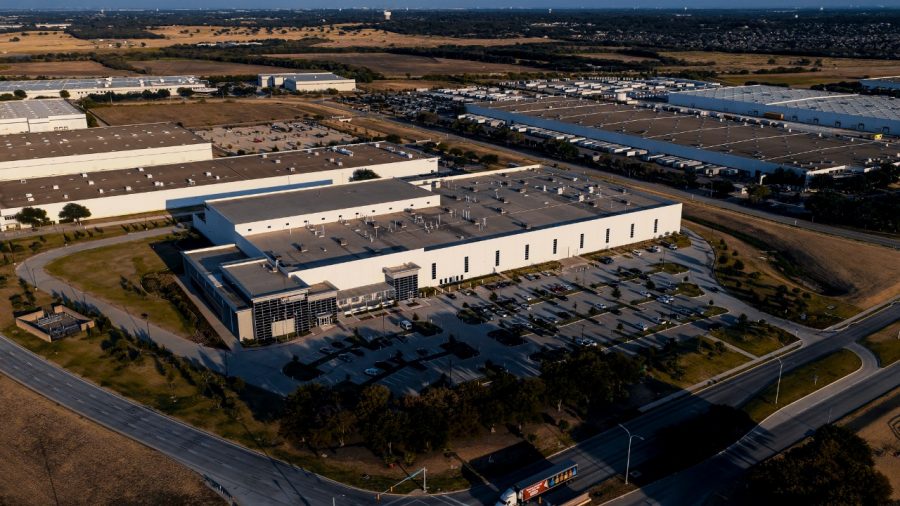
In 2021, GM entered into a long-term agreement with MP Materials as part of its broader effort to develop a U.S. supply of automotive-grade permanent magnets. At the time, MP Materials was operating Mountain Pass, North America’s only active, large-scale rare earth mining and refining site, and working to build a fully integrated magnetics business. GM became the foundational automotive customer for MP’s Independence facility in Fort Worth, Texas.
CAPTION: MP Materials’ Independence manufacturing facility, Fort Worth, Texas
Being a foundational customer means creating early certainty around demand, aligning long-term plans and bringing technical teams together to work through the details required to move from investment to industrialization and scale. We knew it would be a multiyear journey before the first magnet could be produced. We also knew the supply chain was critical, and we had confidence in the strategy and technical expertise of the MP Materials team.
Our commitment supported MP Materials’ development of a new manufacturing capability and a path to scale; GM gained a strategic supplier with the potential to provide greater resilience, competitiveness and flexibility. That is the shared value a strong supplier relationship should create.
Five years later, the progress is clear. MP Materials is producing automotive magnets at Independence, while GM teams are testing and validating them in electric motors at our labs in Pontiac, Michigan.
The collaboration connects rare earth materials mined and refined in California with magnet manufacturing in Texas and GM motor development and validation in Michigan. It is a real-world example of our “buy where we build” approach—and of how supply chains can become more resilient.
Long-term thinking, made tangible
Supply chains are often discussed in terms of transactions, costs and networks. These fundamentals matter, of course, but when it comes to strengthening supply chains and standing up new ones, the most important elements are relationships and the willingness to take immediate action.
In order to ensure your plans make it off the page and into reality, you need capable suppliers, aligned goals and teams willing to work together over many years. You also need the confidence to invest before every answer is known. GM and MP Materials began this work in 2021 because we shared a view of what the future would demand. The factory floor in Fort Worth—and the magnets now being tested in GM EV-motors—show what that long-term thinking can make possible.
I am especially proud of the GM and MP Materials teams who have brought the project to its current stage. Their work connects more than three decades of GM electric-motor development with an even longer history of magnet innovation.
The result is a supply chain taking shape from mine, to magnet, to motor—and a stronger foundation for the vehicles our customers will choose for years to come.
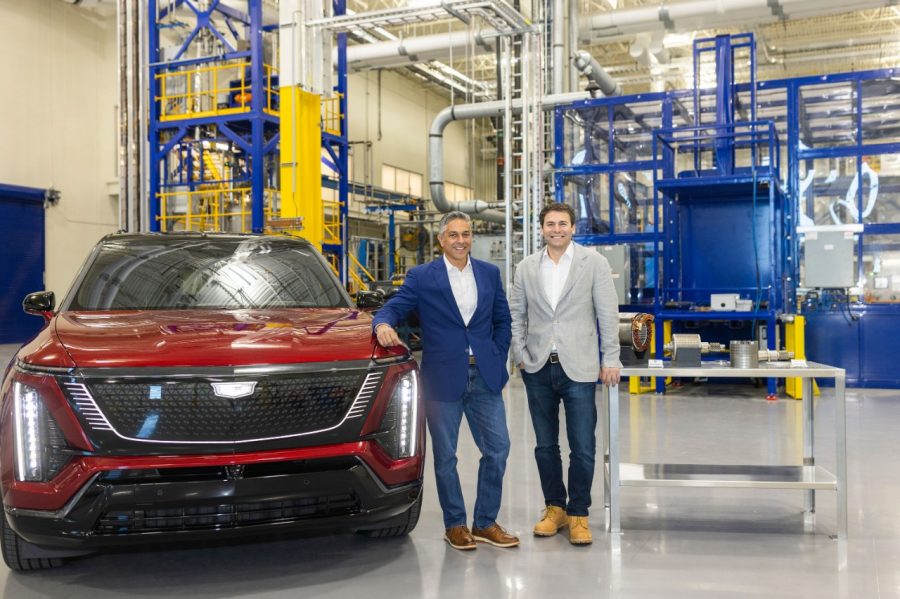
Long before electric vehicles became a familiar sight on American roads, General Motors engineers were developing technologies that help make today’s EVs possible.
One example sits at the heart of a modern electric motor: the permanent magnet. In the early 1980s, GM researchers helped pioneer a process for producing powerful neodymium-based permanent magnets. That work was an early demonstration of something GM has done throughout its history: bringing materials science, engineering and manufacturing together to solve difficult problems at scale in ways few other companies can.
GM’s experience does not stop with magnets. Our history with electric motors also runs deep.
The first-generation Chevrolet Volt advanced permanent-magnet motor performance in a hybrid-vehicle application. Its successor introduced a dual-V magnet arrangement designed to increase torque and reduce noise and vibration. Later, the first-generation Chevrolet Bolt EV helped bring permanent-magnet motor technology to a long-range, mass-market EV.
Each generation taught us something new. Today, those lessons are reflected in a family of electric motors engineered for a broad portfolio of vehicles and customer needs.
Why magnets matter
An EV motor has a straightforward job: turn electrical energy into motion. But delivering the performance and durability customers expect is anything but simple.
Most GM EV motors today use interior permanent magnets. The motor’s stator creates a rotating magnetic field, which interacts with magnets inside the rotor to produce torque. Permanent-magnet motors generally provide excellent efficiency and power density—valuable characteristics when engineers are working to maximize range, performance and space. To earn the label “automotive grade,” the magnets in these motors must withstand extreme heat, vibration and mechanical stress while continuing to deliver consistent performance.
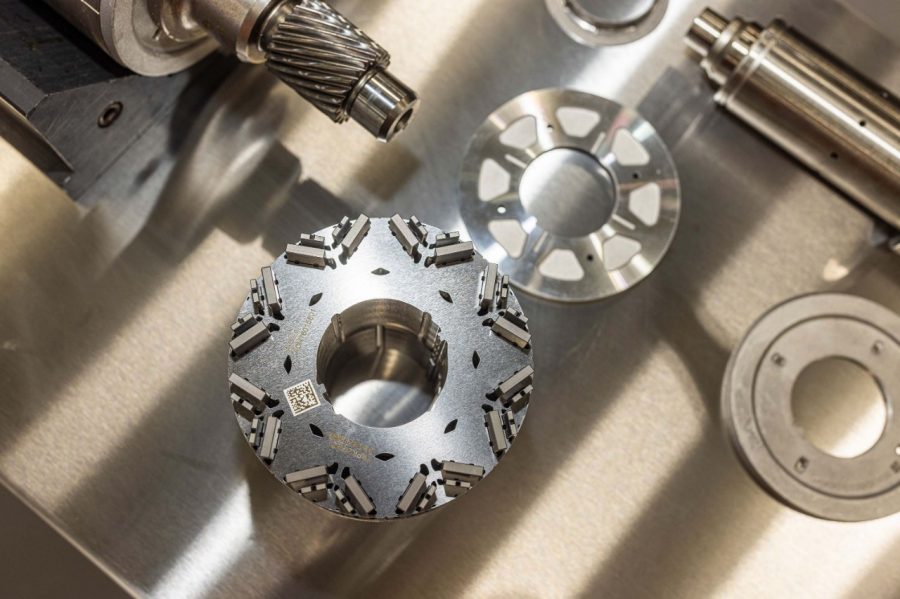
We have continued to refine the technology. In our current motor family, for example, GM engineers have moved from solid to segmented magnets to reduce heat buildup and energy loss, helping improve efficiency.
That experience gives us a clear view of what an automotive-grade magnet must deliver inside an EV motor—and an appreciation for how difficult it is to produce those magnets reliably at scale.
A partnership built for scale
In 2021, GM entered into a long-term agreement with MP Materials as part of its broader effort to develop a U.S. supply of automotive-grade permanent magnets. At the time, MP Materials was operating Mountain Pass, North America’s only active, large-scale rare earth mining and refining site, and working to build a fully integrated magnetics business. GM became the foundational automotive customer for MP’s Independence facility in Fort Worth, Texas.
Being a foundational customer means creating early certainty around demand, aligning long-term plans and bringing technical teams together to work through the details required to move from investment to industrialization and scale. We knew it would be a multiyear journey before the first magnet could be produced. We also knew the supply chain was critical, and we had confidence in the strategy and technical expertise of the MP Materials team.
Our commitment supported MP Materials’ development of a new manufacturing capability and a path to scale; GM gained a strategic supplier with the potential to provide greater resilience, competitiveness and flexibility. That is the shared value a strong supplier relationship should create.
Five years later, the progress is clear. MP Materials is producing automotive magnets at Independence, while GM teams are testing and validating them in electric motors at our labs in Pontiac, Michigan.
The collaboration connects rare earth materials mined and refined in California with magnet manufacturing in Texas and GM motor development and validation in Michigan. It is a real-world example of our “buy where we build” approach—and of how supply chains can become more resilient.
Long-term thinking, made tangible
Supply chains are often discussed in terms of transactions, costs and networks. These fundamentals matter, of course, but when it comes to strengthening supply chains and standing up new ones, the most important elements are relationships and the willingness to take immediate action.
In order to ensure your plans make it off the page and into reality, you need capable suppliers, aligned goals and teams willing to work together over many years. You also need the confidence to invest before every answer is known. GM and MP Materials began this work in 2021 because we shared a view of what the future would demand. The factory floor in Fort Worth—and the magnets now being tested in GM EV-motors—show what that long-term thinking can make possible.
I am especially proud of the GM and MP Materials teams who have brought the project to its current stage. Their work connects more than three decades of GM electric-motor development with an even longer history of magnet innovation.
The result is a supply chain taking shape from mine, to magnet, to motor—and a stronger foundation for the vehicles our customers will choose for years to come.