
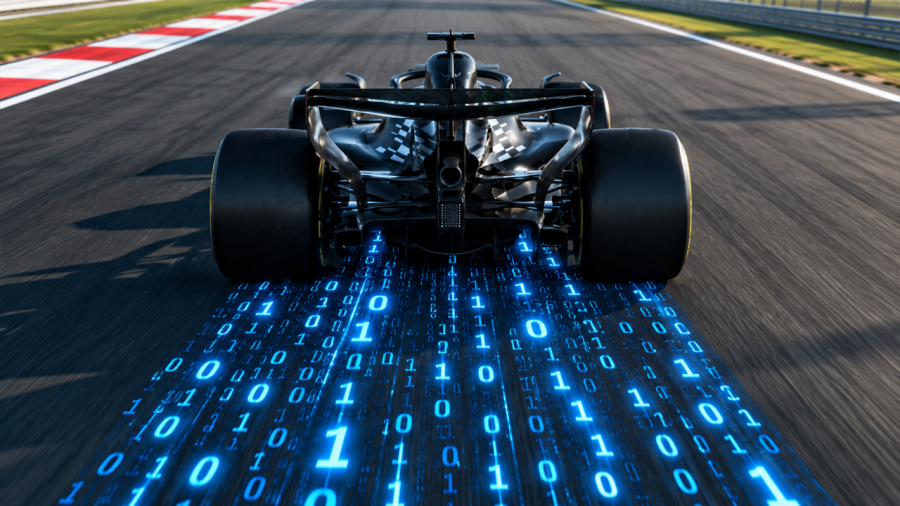
The cars that compete in Formula 1® are unlike any other race cars on earth. They’re like a supercomputer on wheels, gathering massive amounts of data in real time – and sending it to engineers around the world. Those experts use that information to fine-tune the car in pursuit of every last iota of speed and performance.
On the latest episode of GM’s YouTube Series “What Makes Fast,” we get an inside look into exactly how that data is collected, and how it’s shared with engineers around the globe as the car is competing on the track.
The physical side of this is astounding. One expert estimates there could be more than 10 miles of wiring contained inside the Cadillac Formula 1® Team MAC-26 race car, all of it tasked with measuring and communicating the performance of each vehicle component down to the millisecond. Sensors measure the engine’s power output, the tire pressures, even the speed of the air moving around the vehicle as it streaks down the track. The tiniest change in direction is measured, recorded, and broadcast to experts at the track and between the engineering headquarters in Silverstone, England and Charlotte, North Carolina.
This data doesn’t just tell the racing engineers how the car is performing in the moment. It also guides them as they decide to make adjustments to the car – either in real-time during the race, or in preparation for the next competition. That data is also fed into the highly-accurate GM “Driver In Loop” simulator in Charlotte that the team uses to practice and prepare for the next race.
It’s a high-pressure job. “It’s definitely a weight on our shoulders,” says Ryan Tincher, IT Operations Manager at GM Motorsports. “But it’s not anything the team shies away from… it’s part of what brings everybody back every weekend.”
Check out the full episode below: