By: Sterling Anderson, Chief Product Officer, General Motors
Editor’s note: Below are the core, high-level narratives and announcements delivered by GM Chief Product Officer Sterling Anderson at GM Empower, adapted to focus more on what was announced on stage during the event. See all the announcements in our collection:
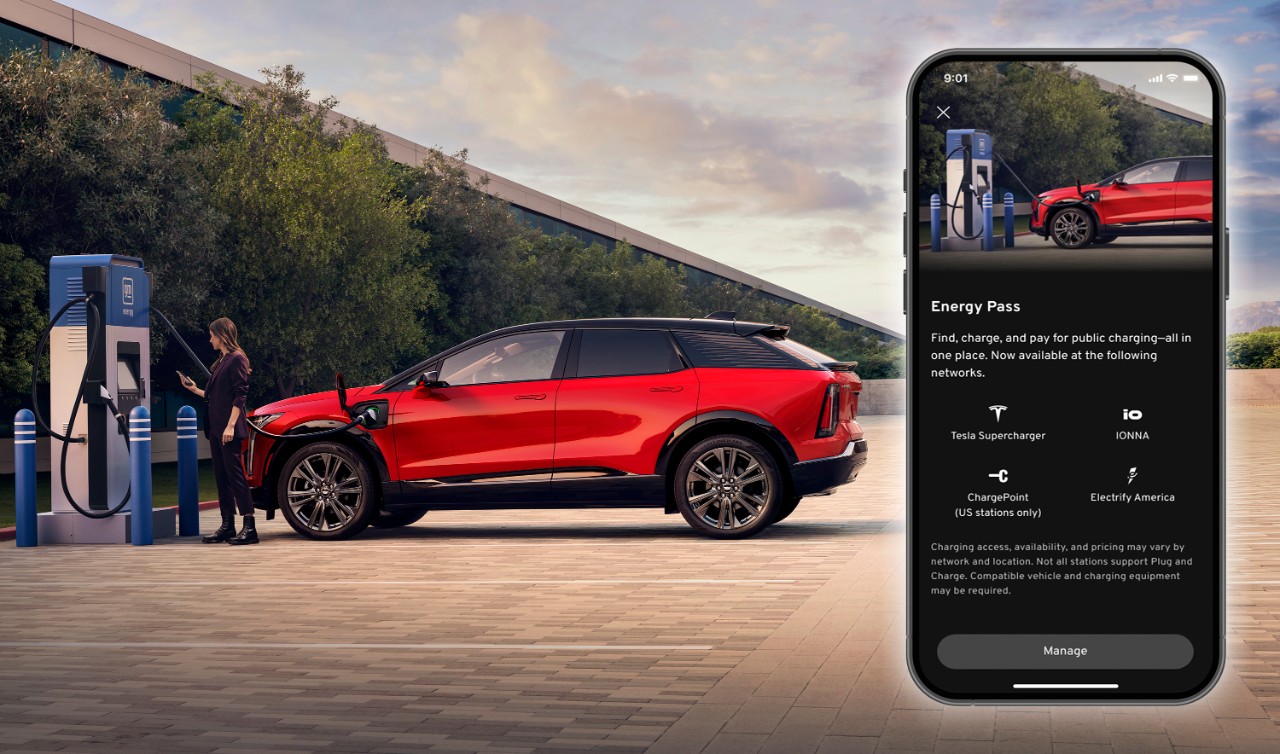
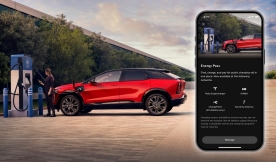
Meet Energy Pass: an easier way to charge on the go
Why sodium-ion will reshape grid-scale energy storage
An Open Letter to America’s Utilities and Regulators:
Bidirectional EVs are here. Let’s Invest in Them Together
We see a future where electric vehicles, batteries that power them, and the country's power grids work together.
In the past, major technology shifts were limited by slow processors or internet speeds. Today, the real bottleneck is energy. The global demand for electricity is skyrocketing, putting an incredible amount of strain on our traditional power grids.
At GM, we want to help relieve this pressure. Because we already manufacture batteries and EVs at scale, we are uniquely positioned to turn these into a real advantage for everyday people. We are developing batteries for large-scale, energy storage systems for utilities and major power users, while leveraging our connected electric vehicles to feed power back into the local, residential grids.
EVs as distributed energy resource
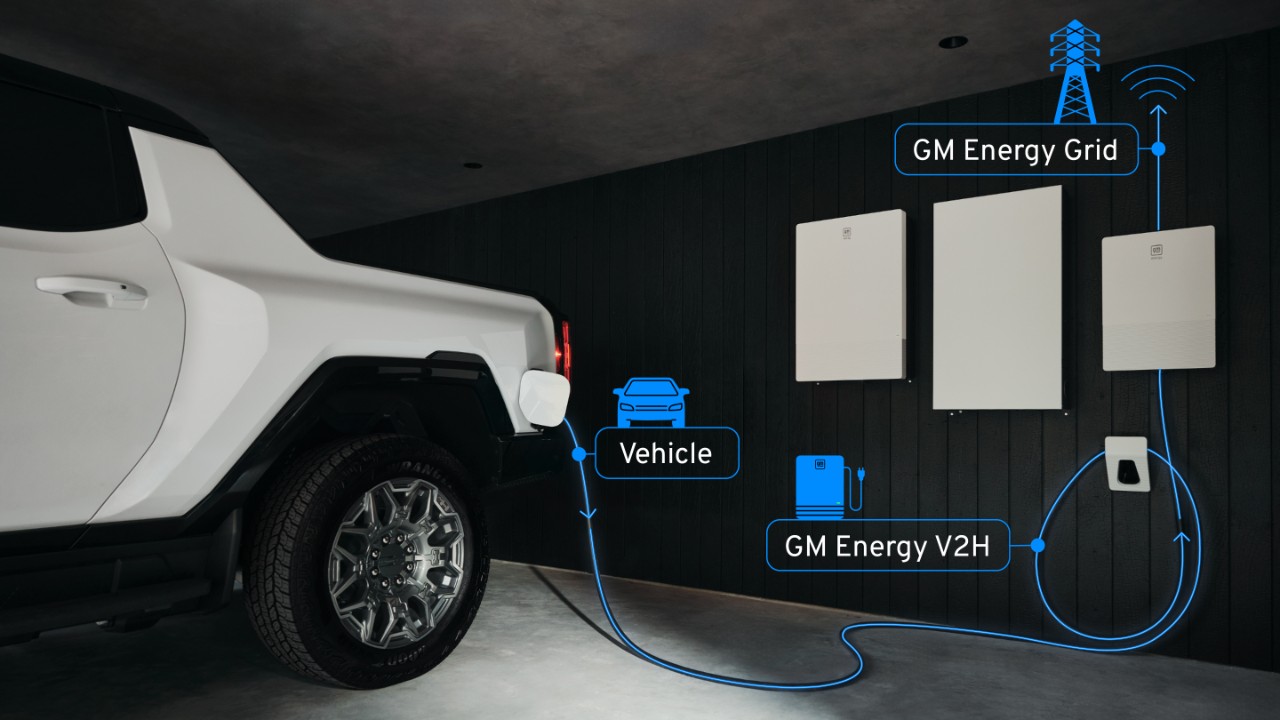
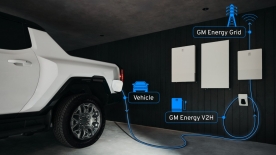
There are more than a quarter-million bidirectional-capable GM EVs on our roads today. When paired with GM’s home energy systems1, these EVs can become a residential power resource capable of sustaining a home for days during localized grid failures. These EVs and energy systems are also engineered to support vehicle-to-grid (V2G) power flow without requiring additional hardware iterations.
We are integrating bidirectional capability as a foundational standard across our entire portfolio, democratizing access from high-volume platforms like the Chevy Equinox EV to flagship vehicles like the Cadillac Escalade IQ.
By injecting flexibility into a historically rigid system, V2G technology simultaneously can lower aggregate energy costs, create a potential financial return for the consumer, and enhance the systemic reliability of the broader grid.
The current focus of our V2G technology is on the software layer: finalizing utility partnerships and grid protocols to make this interaction frictionless for the end user. We’re inviting utilities companies across the country to understand the power and potential of this technology.
To successfully execute a vision of this scale we have started localized testing working alongside major utility partners:
In Northern California: In collaboration with Pacific Gas and Electric Company (PG&E), we project that by 2030, a localized fleet of 130,000 GM EVs will be operational, with over 52,000 systematically participating in grid-balancing protocols.
In Michigan: We are testing with DTE Energy under real-world conditions to refine the experience.
Achieving the full potential of a decentralized energy network requires complete vertical integration. For GM, this means controlling the entire journey, from the chemistry of the battery cells to the intuitive tools right in our customers' hands.
With GM’s mobile app, we're working toward a single interface to help people manage vehicle charging, home energy use, and, eventually, your relationship with the grid. All in one place.
The industrial anchor: Expanding into grid-scale storage
To fix a power grid stressed by power-hungry AI data centers and unpredictable renewable energy, we can't just rely on a mix of home batteries and electric vehicles. While individual setups help, protecting the main power grid requires heavy-duty, industrial-scale storage that can handle massive spikes in demand and keep the whole network stable.
This is why we are going deeper into energy storage systems.
This expansion builds on our fundamental battery development philosophy: applying the right battery architecture to the right application, on the road and on the grid. The chemistries that drive electric vehicles demand high energy density and low weight to maximize range. Conversely, stationary energy storage demands longevity, high cycle and calendar life, and intense cost-efficiency.
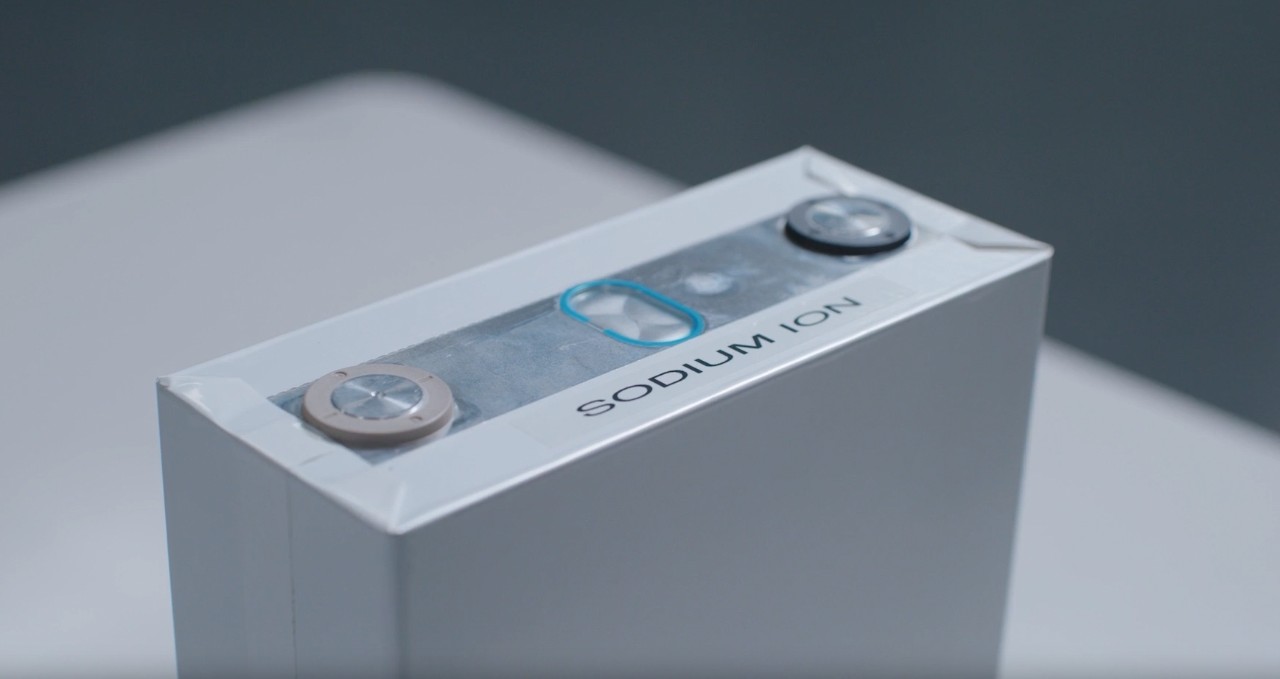
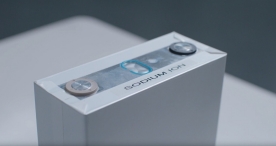
We are solving this by developing and deploying built-for-purpose sodium ion chemistry. Our dedicated battery labs are optimizing this chemistry for stationary applications that prioritize long-term chemical endurance and thermal dynamics over spatial limits.
By executing on this dual strategy of grid-scale storage and vehicle-to-grid integration, we are addressing the immediate energy constraints of today while establishing the architectural foundation for tomorrow.
Batteries, whether for EVs or ESS, are engineered for cycle lives and longevity expected by customers. Still, the battery manufacturing process creates scrap, damaged batteries can be recycled, and second-life opportunities exist for batteries used for internal testing and development and high-mileage older EVs. GM is now the first and only automaker working with Redwood Materials to create circularity across the entire battery lifecycle.
That circularity includes resources for GM’s own facilities. Redwood plans to deploy ~100 repurposed battery packs at one of our operating plants in Michigan to provide 1.5 MW/6 MWh of dispatchable energy to the site. The installation is expected to save more than $3 million on local electricity bills at the plant over the lifetime of the installation.
1 The GM Energy PowerShift Charger and GM Energy V2H Enablement Kit requires an adequately charged V2H-capable GM EV, a properly equipped home, and proper grid interconnection. Weather conditions, life of the battery, vehicle variation and usage, and other external factors may impact the capability and duration of power supply. Power supply may be interrupted. It is not recommended that the following devices be powered with the GM Energy PowerShift Charger and V2H Enablement Kit: Medical Devices.
By: the GM News editorial team
Editor’s note: Below are the core, high-level narratives and announcements delivered by GM Chief Product Officer Sterling Anderson at GM Empower, adapted to focus more on what was announced on stage during the event. See all the announcements in our collection:
We see a future where electric vehicles, batteries that power them, and the country's power grids work together.
In the past, major technology shifts were limited by slow processors or internet speeds. Today, the real bottleneck is energy. The global demand for electricity is skyrocketing, putting an incredible amount of strain on our traditional power grids.
At GM, we want to help relieve this pressure. We are developing batteries for large-scale, energy storage systems for utilities and major power users, while leveraging our connected electric vehicles to feed power back into the local, residential grids. Because we already manufacture batteries and EVs at scale, we are uniquely positioned to turn these into a real advantage for everyday people.
EVs as distributed energy resource
There are more than a quarter-million bidirectional-capable GM EVs on our roads today. When paired with GM’s home energy systems1, these EVs can become a residential power resource capable of sustaining a home for days during localized grid failures. These EVs and energy systems are also engineered to support vehicle-to-grid (V2G) power flow without requiring additional hardware iterations.
We are integrating bidirectional capability as a foundational standard across our entire portfolio, democratizing access from high-volume platforms like the Chevy Equinox EV to flagship vehicles like the Cadillac ESCALADE IQ.
By injecting flexibility into a historically rigid system, V2G technology simultaneously can lower aggregate energy costs, create a potential financial return for the consumer, and enhance the systemic reliability of the broader grid.
The current focus of our V2G technology is on the software layer: finalizing utility partnerships and grid protocols to make this interaction frictionless for the end user. We’re inviting utility companies across the country to collaborate on the potential of this technology.
To successfully execute a vision of this scale we have started localized testing working alongside major utility partners:
In Northern California: In collaboration with Pacific Gas and Electric Company (PG&E), we project that by 2030, a localized fleet of 130,000 GM EVs will be operational, with over 52,000 systematically participating in grid-balancing protocols.
In Michigan: We are testing with DTE Energy under real-world conditions to refine the experience.
Achieving the full potential of a decentralized energy network requires complete vertical integration. For GM, this means controlling the entire journey, from the chemistry of the battery cells to the intuitive tools right in our customers' hands.
With GM’s mobile app, we're working toward a single interface to help people manage vehicle charging, home energy use, and, eventually, their relationship with the grid. All in one place.
The industrial anchor: Powering the future of grid-scale storage
To fix a power grid stressed by power-hungry AI data centers, we are also partnering with Peak Energy to develop and deploy built-for-purpose sodium ion chemistry for grid-scale storage systems. GM’s dedicated battery labs are optimizing this chemistry for stationary applications that prioritize long-term chemical endurance and thermal dynamics. This underscores our core philosophy in battery development: applying the right battery architecture to the right application, on the road and on the grid.
The chemistries that drive electric vehicles demand high energy density and low weight to maximize range. Conversely, stationary energy storage demands longevity, high cycle and calendar life, and intense cost-efficiency.
This is not the first instance of GM participating in the energy storage space.
Redwood plans to deploy roughly 100 of these repurposed battery packs at one of our operating plants in Michigan, providing 1.5 megawatts and 7.2 megawatt-hours of dispatchable energy directly to the site. This single installation is expected to save more than $3 million on local electricity bills over its lifetime.
By executing on this dual strategy of grid-scale storage and vehicle-to-grid integration, we are addressing the immediate energy constraints of today while establishing the architectural foundation for tomorrow.
1 The GM Energy PowerShift Charger and GM Energy V2H Enablement Kit requires an adequately charged V2H-capable GM EV, a properly equipped home, and proper grid interconnection. Weather conditions, life of the battery, vehicle variation and usage, and other external factors may impact the capability and duration of power supply. Power supply may be interrupted. It is not recommended that the following devices be powered with the GM Energy PowerShift Charger and V2H Enablement Kit: Medical Devices.
This is a div used for identification purpose on the lightbox.
Oops, Your lightbox has reached it's max.
Please view your lighbox to modify the assets. It is recommended that you download your current lightbox contents and clear its assets to add more.