
By Laryssa Hulcio and Stephen Harber, Talent Marketing
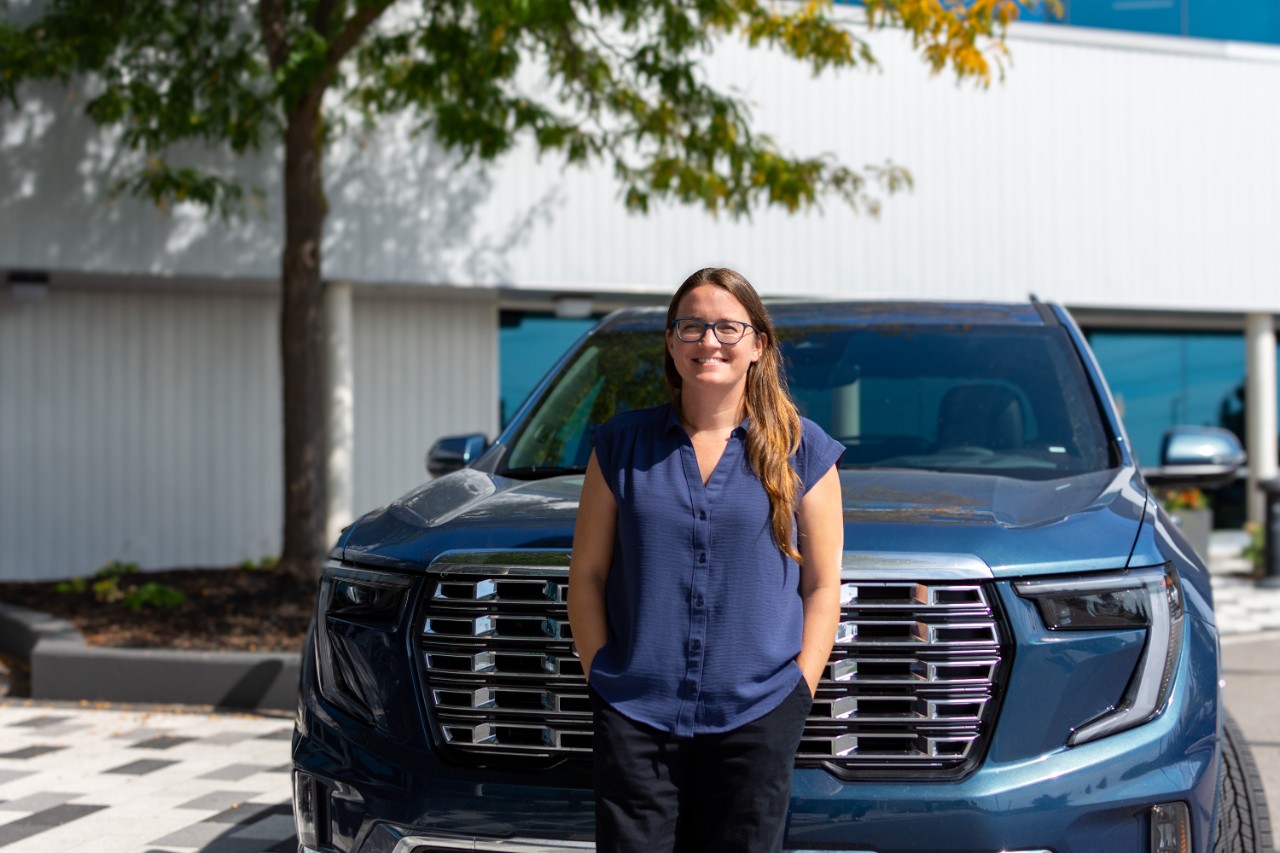
When GM began shifting toward software-defined vehicle (SDV) engineering, Laura Barlow wasn’t waiting for the ignition. She was already turning the early gears of transformation.
Her career tracks the evolution of GM itself: start with focus, grow fast, and keep driving into the frontier long before it becomes mainstream.
Early Foundations
Barlow didn’t begin in autonomy: she started in Electrification, running diagnostics on the Volt program and learning how complex systems behave under real conditions. Within a few years, she moved into Hardware-in-the-Loop (HiL) and algorithm engineering, deepening the technical instincts that would eventually anchor her work in advanced controls.
Those foundational skills launched Barlow into a Controls Specialist role at the Canadian Technical Centre, just as AV development was gaining momentum. The team was small, their scope wide, and the challenges tightly interwoven.
With only one other engineer, Barlow mapped system behavior, surfaced issues earlier in the cycle, and shaped the processes that would later scale across GM’s vehicle lines. It was quiet, precise groundwork — the kind that doesn’t make noise, but makes progress possible. And it set the stage for everything that came next.
Scaling the System
As GM’s ambitions grew, the work multiplied. What began as a two-person effort expanded into six focused groups which supported diagnostics, mapping, lateral controls, and AV infrastructure.
The pace was fast, with a special kind of creative momentum. Building capability piece by piece was rewarding — and technically demanding. For Barlow, that steady rise mattered. Every new engineer, refined toolchain, and workflow that ran smoother than the iteration before pointed toward a stronger system with more scalability.
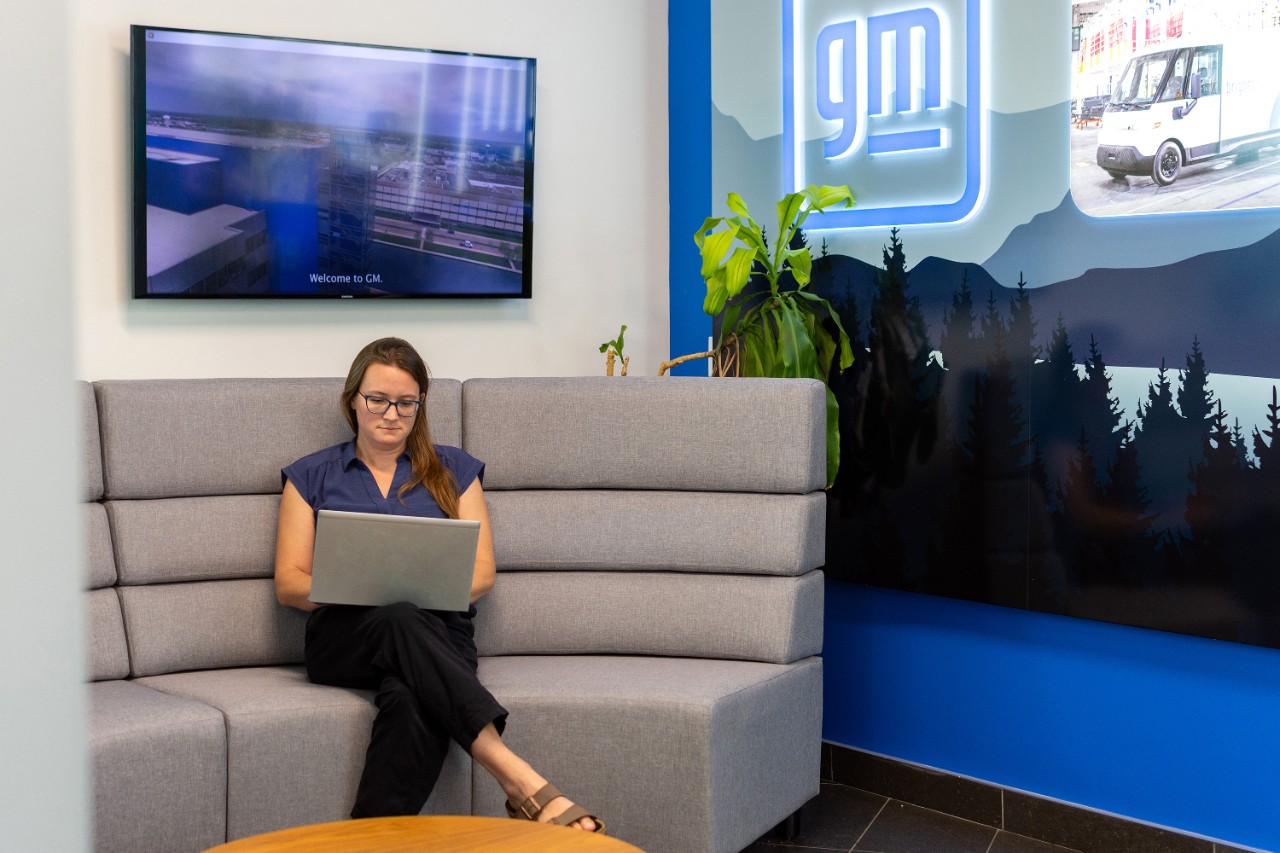
CAPTION: Barlow takes a time out from work at GM’s Oshawa Elevation Centre in Ontario, Canada.
Building Virtual Thermal Vehicles
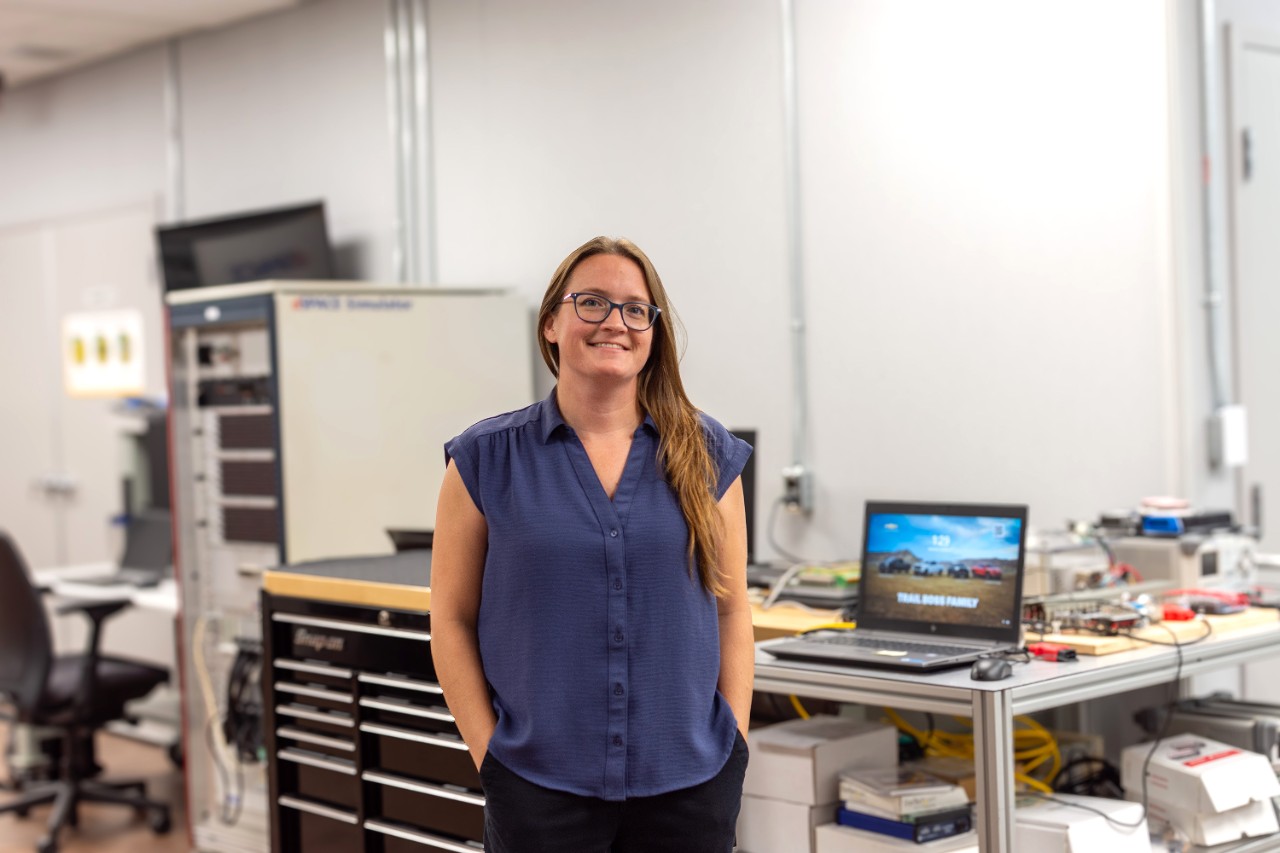
That mindset led Barlow to her next chapter: advanced controls and virtual development. Here, GM began leaning more heavily on model-based design, model-in-the-loop verification, and simulation to find issues earlier to recreate them more predictably for debugging.
On paper, the goal was simple: catch failures before they reached hardware. In practice, it demanded precision, cross-team alignment, and a different way of thinking altogether.
Barlow embraced this approach. She helped evolve GM’s thermal simulation and early-verification tools, enabling software to be tested on virtual Electronic Control Units (ECUs) within thermal vehicle models long before hardware came online.
This wasn’t just a technical transformation — it marked a cultural shift toward development cycles that felt less like traditional automotive timelines and more like continuous delivery.
Engineering the Future
Today, Barlow works within GM’s Data Engineering organization, building embedded systems that turn vehicle data into actionable insight. Whether she’s tuning algorithms or shaping thermal strategy, the throughline stays the same: build systems that scale, expose issues early, and help engineers work with clarity and speed.
She sees SDV as a pivotal moment — not just for technology, but for how engineering happens inside GM. Diagnostics, modeling, virtual testing, continuous integration and delivery (CI/CD) tooling, cross-domain collaboration: the systems she’s helped build form a backbone the company now depends on.
And more is coming as automation deepens and virtual and embedded systems pull closer together. In that future, software and hardware aren’t separate lanes. They’re one coordinated engine.
CAPTION: Barlow brings leadership presence and technical insight at every corner of GM.
What Drives Her?
Barlow’s work isn’t defined solely by technology — it’s shaped by people. As her scope widened, she leaned even harder into leading with curiosity and shared responsibility. She seeks engineers who probe problems, challenge norms, and work without ego.
This shapes her philosophy behind leadership. Barlow seeks to create environments where engineers move quickly yet thoughtfully, understanding not only their task but their role in the larger system. Where ownership extends beyond code or controls to the performance of the entire feature.
For Barlow, engineering at GM has never been static: it’s been a steady move toward what comes next. As GM accelerates deeper into software-defined development, her impact is woven through that momentum.
She isn’t just adapting to the future of automotive engineering — she’s helping build the system that will define it.
Continue Laura’s story in her own words on the GM Careers blog.
Discover related stories:
When GM began shifting toward software-defined vehicle (SDV) engineering, Laura Barlow wasn’t waiting for the ignition. She was already turning the early gears of transformation.
Her career tracks the evolution of GM itself: start with focus, grow fast, and keep driving into the frontier long before it becomes mainstream.
Early Foundations
Barlow didn’t begin in autonomy: she started in Electrification, running diagnostics on the Volt program and learning how complex systems behave under real conditions. Within a few years, she moved into Hardware-in-the-Loop (HiL) and algorithm engineering, deepening the technical instincts that would eventually anchor her work in advanced controls.
Those foundational skills launched Barlow into a Controls Specialist role at the Canadian Technical Centre, just as AV development was gaining momentum. The team was small, their scope wide, and the challenges tightly interwoven.
With only one other engineer, Barlow mapped system behavior, surfaced issues earlier in the cycle, and shaped the processes that would later scale across GM’s vehicle lines. It was quiet, precise groundwork — the kind that doesn’t make noise, but makes progress possible. And it set the stage for everything that came next.
Scaling the System
As GM’s ambitions grew, the work multiplied. What began as a two-person effort expanded into six focused groups which supported diagnostics, mapping, lateral controls, and AV infrastructure.
The pace was fast, with a special kind of creative momentum. Building capability piece by piece was rewarding — and technically demanding. For Barlow, that steady rise mattered. Every new engineer, refined toolchain, and workflow that ran smoother than the iteration before pointed toward a stronger system with more scalability.
Building Virtual Thermal Vehicles
That mindset led Barlow to her next chapter: advanced controls and virtual development. Here, GM began leaning more heavily on model-based design, model-in-the-loop verification, and simulation to find issues earlier to recreate them more predictably for debugging.
On paper, the goal was simple: catch failures before they reached hardware. In practice, it demanded precision, cross-team alignment, and a different way of thinking altogether.
Barlow embraced this approach. She helped evolve GM’s thermal simulation and early verification tools, enabling software to be tested on virtual Electronic Control Units (ECUs) within thermal vehicle models long before hardware came online.
This wasn’t just a technical transformation — it marked a cultural shift toward development cycles that felt less like traditional automotive timelines and more like continuous delivery.
Engineering the Future
Today, Barlow works within GM’s Data Engineering organization, building embedded systems that turn vehicle data into actionable insight. Whether she’s tuning algorithms or shaping thermal strategy, the throughline stays the same: build systems that scale, expose issues early, and help engineers work with clarity and speed.
She sees SDV as a pivotal moment — not just for technology, but for how engineering happens inside GM. Diagnostics, modeling, virtual testing, continuous integration and delivery (CI/CD) tooling, cross-domain collaboration: the systems she’s helped build form a backbone the company now depends on.
And more is coming as automation deepens and virtual and embedded systems pull closer together. In that future, software and hardware aren’t separate lanes. They’re one coordinated engine.
What Drives Her?
Barlow’s work isn’t defined solely by technology — it’s shaped by people. As her scope widened, she leaned even harder into leading with curiosity and shared responsibility. She seeks engineers who probe problems, challenge norms, and work without ego.
This shapes her philosophy behind leadership. Barlow seeks to create environments where engineers move quickly yet thoughtfully, understanding not only their task but their role in the larger system. Where ownership extends beyond code or controls to the performance of the entire feature.
For Barlow, engineering at GM has never been static: it’s been a steady move toward what comes next. As GM accelerates deeper into software-defined development, her impact is woven through that momentum.
She isn’t just adapting to the future of automotive engineering — she’s helping build the system that will define it.
Continue Laura’s story in her own words on the GM Careers blog.
Discover related stories:
- A few minutes with Philip Asante: building smarter vehicles for GM
- A few minutes with Ben Beacock: driving the next era of simulation at GM
- The diagnostic architecture powering GM’s next-gen software platform