
By: Craig Hover, GM Manufacturing Communications
By: Craig Hover, GM Manufacturing Communications
At General Motors’ Fairfax Assembly & Stamping in Kansas City, “Winning with Simplicity” is taking shape 30 vehicles at a time. At its core, Winning with Simplicity is GM’s strategy for reducing complexity so teams can work more efficiently, protect quality and lower the cost of building new vehicles. It’s a philosophy you can see with every 2027 Chevrolet Bolt that comes down the assembly line at Fairfax1.
Batch Building the Bolt
Instead of building a constantly changing mix of vehicles, Fairfax is using a process called “batch build” for the 2027 Chevrolet Bolt. With batch build, groups of 30 similarly-equipped vehicles go through the complete production process together. The approach simplifies work for team members and suppliers, improves quality, saves space and time, and creates a more predictable manufacturing process.
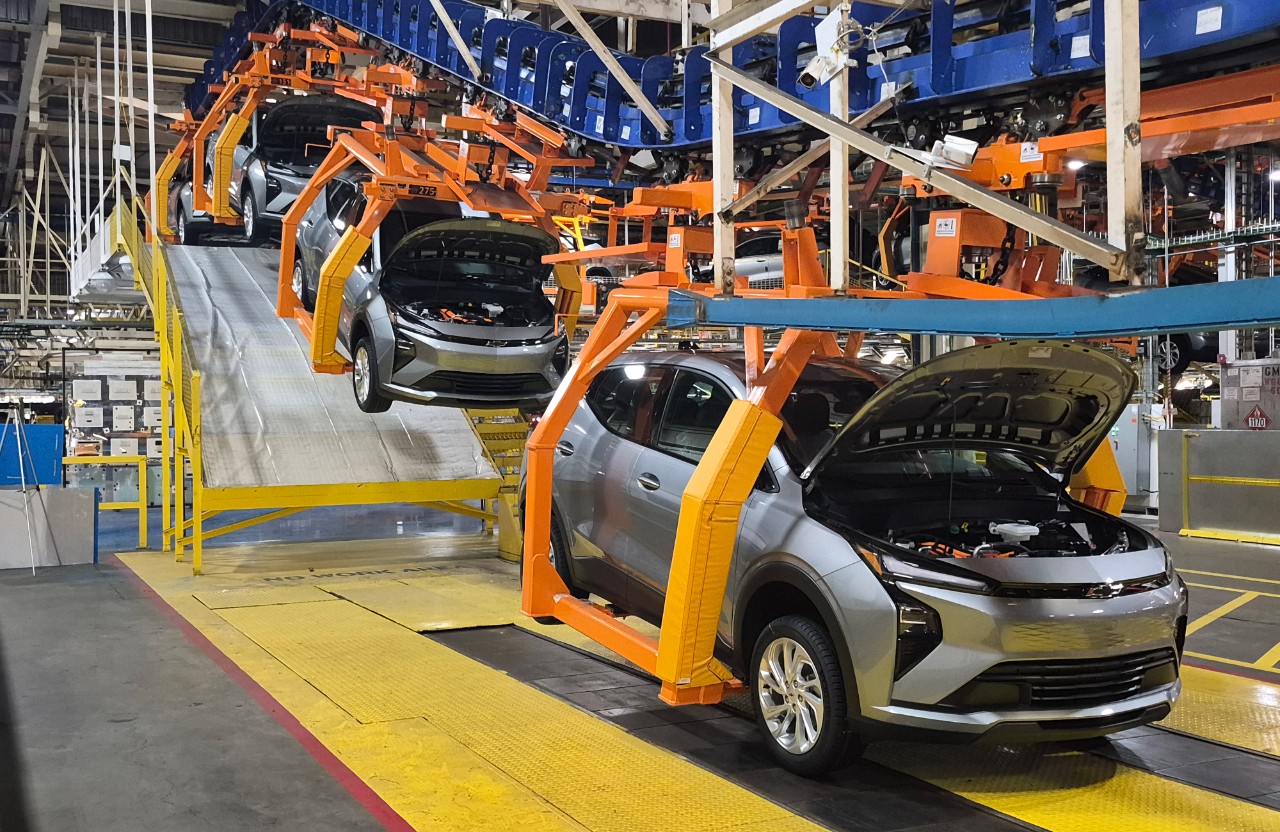
On the plant floor, that simplicity is striking to see: 30 identical Bolt LT or RS models, all in the same color, rolling down the line in one unbroken sequence. Behind that visual is a smarter system designed to reduce variation and help the team focus on building each vehicle right the first time.
“This is all about winning with simplicity,” said Dieu Nguyen, batch manager, Fairfax Body & Paint Shop. “It helps us with scheduling requirements and suppliers, and it ensures that our employees are working on the right things.”
Building better in batches
The batch-build approach simplifies the complex process of assembling modern high-tech vehicles. And while the vision of dozens of carbon-copy Bolts running through the facility in a copy-paste conga line might be unexpected, it reiterates the core achievement of batch build.
“What you’re really getting out of this is quality,” said Tony Prettejohn, global supply chain manager, Fairfax Material & Production Control. “The continuity of seeing the same vehicle 30-in-a-row has a direct correlation to quality.”
A victory for quality
At Fairfax, consistency is already paying off. One metric used to measure quality at GM manufacturing facilities is “electrical first-time quality,” or EFTQ, tracking the number of vehicles that pass a key electrical-system check. Achieving EFTQ target pass rate means vehicles are being built right the first time. Three months after launch, the team is continuing to consistently meet their monthly EFTQ targets.
Here are some other ways batch build is delivering benefits across the operation:
Supply chain: Suppliers can plan deliveries to Fairfax on a fixed seven-day schedule, helping parts and components arrive with greater consistency.
Floor space: Delivering parts in batches of 30 reduces the need for specialized racks and storage equipment, saving valuable space.
Paint operations: Switching between paint colors requires purging and cleaning of equipment. Grouping vehicles together by exterior color reduces the number of times equipment must be purged and cleaned, saving both time and money.
Controlling quality with clones
A core aspect of batch build is the “clone” process, used to keep production moving if a vehicle has to be pulled off the assembly line to address a possible defect. As the 2027 Bolt can be built with three roof configurations and seven colors, the plant holds back two bodies for every configuration. If a vehicle is removed from the assembly line for a quality concern, its matching “clone” can take its place on the line and production can continue on schedule.
Batch building the future
The lessons learned on the 2027 Chevrolet Bolt will continue on other GM products. Fairfax is preparing to start assembling the Chevrolet Equinox next year, followed by a new Buick compact SUV. The experience gained now will help make future batch build applications possible.
“We’re proud to be the first GM plant in North America to adopt batch build,” said Michael Youngs, Fairfax plant director. “It’s paying off with quality and efficiency. The lessons we are learning here will carry over to the next products we build here, and we believe it will also carry on to other GM plants in the future.”
Batch build is helping Fairfax create a repeatable playbook for future products – one that supports GM’s broader focus on building with more simplicity, consistency and efficiency.
1. Assembled in Kansas City, KS of US and globally sourced parts.

At General Motors’ Fairfax Assembly & Stamping in Kansas City, “Winning with Simplicity” is taking shape 30 vehicles at a time. At its core, Winning with Simplicity is GM’s strategy for reducing complexity so teams can work more efficiently, protect quality and lower the cost of building new vehicles. It’s a philosophy you can see with every 2027 Chevrolet Bolt that comes down the assembly line at Fairfax1.
Batch Building the Bolt
Instead of building a constantly changing mix of vehicles, Fairfax is using a process called “batch build” for the 2027 Chevrolet Bolt. With batch build, groups of 30 similarly equipped vehicles go through the complete production process together. The approach simplifies work for team members and suppliers, ensures quality, saves space and time, and creates a more predictable manufacturing process.
On the plant floor, that simplicity is striking to see: 30 similar Bolt LT or RS models, all in the same color, rolling down the line in one unbroken sequence. Behind that visual is a smarter system designed to reduce variation and help the team focus on building each vehicle right the first time.
“This is all about winning with simplicity,” said Dieu Nguyen, batch manager, Fairfax Body & Paint Shop. “It helps us with scheduling requirements and suppliers, and it ensures that our employees are working on the right things.”
Building better in batches
The batch-build approach simplifies the complex process of assembling modern high-tech vehicles. And while the vision of dozens of carbon-copy Bolts running through the facility in a conga line might be unexpected, it reiterates the core achievement of batch build.
“What you’re really getting out of this is quality,” said Tony Prettejohn, global supply chain manager, Fairfax Material & Production Control. “The continuity of seeing the same vehicle 30-in-a-row has a direct correlation to quality.”
A victory for quality
At Fairfax, consistency is already paying off. One metric used to measure quality at GM manufacturing facilities is “electrical first-time quality,” or EFTQ, tracking the number of vehicles that pass a key electrical-system check. Achieving EFTQ target pass rate means vehicles are being built right the first time. Three months after launch, the team is continuing to consistently meet their monthly EFTQ targets.
Here are some other ways batch build is delivering benefits across the operation:
- Supply chain: Suppliers can plan deliveries to Fairfax on a fixed seven-day schedule, helping parts and components arrive with greater consistency.
- Floor space: Delivering parts in batches of 30 reduces the need for specialized racks and storage equipment, saving valuable space.
- Paint operations: Switching between paint colors requires purging and cleaning of equipment. Grouping vehicles together by exterior color reduces the number of times equipment must be purged and cleaned, saving both time and money.
Controlling quality with clones
A core aspect of batch build is the “clone” process, used to keep production moving if a vehicle has to be pulled off the assembly line to address a possible defect. As the 2027 Bolt can be built with three roof configurations and seven colors, the plant holds back two bodies for every configuration. If a vehicle is removed from the assembly line for a quality concern, its matching “clone” can take its place on the line and production can continue on schedule.
Batch building the future
The lessons learned on the 2027 Chevrolet Bolt will continue on other GM products. Fairfax is preparing to start assembling the Chevrolet Equinox next year, followed by a new Buick compact SUV. The experience gained now will help make future batch build applications possible.
“We’re proud to be the first GM plant in North America to adopt batch build,” said Michael Youngs, Fairfax plant director. “It’s paying off with quality and efficiency. The lessons we are learning here will carry over to the next products we build here, and we believe it will also carry on to other GM plants in the future.”
Batch build is helping Fairfax create a repeatable playbook for future products – one that supports GM’s broader focus on building with more simplicity, consistency and efficiency.
1Assembled in Kansas City, KS of US and globally sourced parts.