
By: Chris Perkins, Senior Writer and Editor, GM News
Visionary leadership: GM engineer John Capp recognized for lifelong dedication to automotive safety
2026-05-15
By: Chris Perkins, Senior Writer and Editor, GM News
John Capp’s first assignment for General Motors, as an intern with the safety department during the summer of 1983, set the tone for a distinguished career of over 40 years.
“An area of focus at the time was seatbelt usage in the U.S., which was under 20 percent,” Capp, now Director of Global Safety Technology and Strategies at GM, recalls. “We all knew that seat belts save lives, but we needed to get customers to use them."
The idea was to start small by changing behaviors among GM employees. At the GM Global Technical Center in Warren, Michigan, the safety team installed signs and even displayed crashed cars around the campus, all to encourage employees to buckle up.
“Over several weeks, I had the very technical job of standing out by the Tech Center gates in the mornings, even in the rain, with a clipboard, counting the number of drivers who wore their seatbelts,” Capp says. “We wanted to know if this type of campaign had an effect on behavior, and over the summer, we found it did. Some of that data was used to help other belt-use campaigns and to promote seatbelt-use laws.”
It was an auspicious beginning to a lifelong career in automotive safety, and one that reinforced a key tenet of GM’s approach to improving safety: Changing driver behavior to support better outcomes.
This week, Capp was honored with a Safety Engineering Excellence Award by the National Highway Traffic Safety Administration (NHTSA) at the 28th International Technical Conference on the Enhanced Safety of Vehicles in Toronto.
“I’ve worked with the folks at NHTSA a lot over the years. They’re great safety engineers who, like us at GM, have the best interests of the motoring public at heart,” Capp says. “It means a lot to be recognized in this capacity.”
The Safety Engineering Excellence Award recognizes John for “his visionary leadership in automotive safety, development of advanced vehicle technologies, and monumental impacts on occupant protection and behavioral safety.”
“John is one of the most respected safety experts not just at GM, but in the automotive industry as a whole,” says Ken Morris, GM Senior Vice President of Product Programs, Product Safety and Motorsports. “His work with our regulators has helped shape the safety performance of our nation’s vehicles.”
Capp didn't initially set out to become an automotive safety expert, but that summer internship sparked a lifelong fascination with the subject. He got his bachelor's degree in mechanical engineering from Kettering University – then called the GM Institute – and joined GM full-time after graduation.
“I’ve worked on multiple programs as a lead safety engineer developing crashworthiness and restraint system performance, and also spent several years on collision-avoidance technologies. Every assignment I’ve had has been tied to safety,” he says. “I’ve never had a desire to leave the field because there were always more interesting things to learn and contribute to.”
Capp was involved in bringing GM’s first generation of Automated Driver-Assistance Systems (ADAS)1 to market, including technologies like Automatic Emergency Braking (AEB), Rear Cross Traffic Alert, and Rear Automatic Braking. He was also a key part of the team that negotiated an industry commitment with NHTSA and the Insurance Institute for Highway Safety (IIHS) that led to making AEB standard equipment today.
Modern safety features are helping drivers and have a measurable real-world impact. A recent GM-sponsored study from the University of Michigan Transportation Research Institute (UMTRI), for example, found that GM vehicles equipped with AEB technology are showing a 41-to-51-percent reduction in police-reported rear-end crashes.
Capp’s learnings as a summer intern still influence his work at the intersection of human decision-making and safety engineering. “The design of our ADAS features include extensive behavioral studies because driver responses and reactions are critical to achieving the safety results we want,” he says.
For Capp, it’s a point of pride that ADAS features – including AEB, Front Pedestrian Braking, Lane Keep Assist with Lane Departure Warning, Forward Collision Alert, and IntelliBeam automatic high beams – are standard in new GM vehicles, including those with an MSRP under $30,000.
“If you think back, it wasn’t that long ago that power windows, air-conditioning, and anti-lock brakes were optional features,” he says. “Now, those things are standard, as well as all these important driver-assist systems. It’s been fun over the years not just developing these features but working with people across the company to introduce these to different vehicle segments.”
One of Capp’s biggest and most satisfying projects was introducing Super Cruise Driver Assistance Technology2, GM’s award-winning hands-free driver-assistance feature, the first system of its kind at GM. “It was close to a 10-year period from the time we started developing Super Cruise at GM R&D to launching it in 2017,” Capp says. “My team developed the driver attention management system – the alert and escalation process that is designed to help keep the driver attentive while enjoying hands-free driving.”
Now, GM customers have driven over 1 billion miles with Super Cruise, with over 750,000 Super Cruise-enabled vehicles across many segments driving on North American roads. “We had some sense that this feature was going to be a breakthrough technology, but I don’t think any of us working on the project initially could have predicted the impact that it's having today,” Capp says. The team’s work, and those billion miles and counting, helped lay the foundation for future ADAS features, like the next-generation version of Super Cruise, which will launch in 2028 on the Cadillac ESCALADE IQ.
Capp currently leads the team that manages and sets vehicle safety requirements, consumer metric targets, as well as regulations for new vehicle programs at GM, something he describes as a “hugely satisfying” process.
Over his career, Capp has seen enormous transformations in vehicle safety and the automotive industry at large. He and his colleagues have developed systems and technologies that help make vehicles safer – but his work, and that of the overall GM safety team, isn’t finished, as the company aims for a future with zero crashes.
“Safety is foundational to what we do,” Capp says. “We get a lot of letters from customers who’ve experienced crashes who are appreciative of what our vehicles can do for them. But there are still too many crashes, and that's what keeps us going. Our work to improve safety for drivers, passengers and others who share the road is never done.”
1. Safety or driver assistance features are no substitute for the driver’s responsibility to operate the vehicle in a safe manner. The driver should remain attentive to traffic, surroundings, and road conditions at all times. Visibility, weather, and road conditions may affect feature performance. Read the vehicle’s owner’s manual for more important feature limitations and information.
2. Always pay attention while driving and when using Super Cruise. Always use Super Cruise in accordance with local laws. Do not use a hand-held device. Requires active Super Cruise plan or trial. Terms apply. for compatible roads and full details.
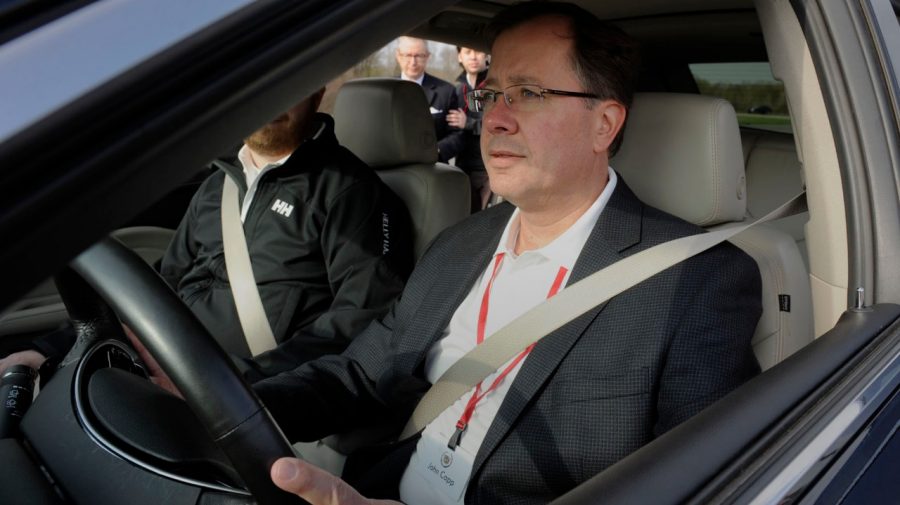
John Capp’s first assignment for General Motors, as an intern with the safety department during the summer of 1983, set the tone for a distinguished career of over 40 years.
“An area of focus at the time was seatbelt usage in the U.S., which was under 20 percent,” Capp, now Director of Global Safety Technology and Strategies at GM, recalls. “We all knew that seat belts save lives, but we needed to get customers to use them."
The idea was to start small by changing behaviors among GM employees. At the GM Global Technical Center in Warren, Michigan, the safety team installed signs and even displayed crashed cars around the campus, all to encourage employees to buckle up.
“Over several weeks, I had the very technical job of standing out by the Tech Center gates in the mornings, even in the rain, with a clipboard, counting the number of drivers who wore their seatbelts,” Capp says. “We wanted to know if this type of campaign had an effect on behavior, and over the summer, we found it did. Some of that data was used to help other belt-use campaigns and to promote seatbelt-use laws.”
It was an auspicious beginning to a lifelong career in automotive safety, and one that reinforced a key tenet of GM’s approach to improving safety: Changing driver behavior to support better outcomes.
This week, Capp was honored with a Safety Engineering Excellence Award by the National Highway Traffic Safety Administration (NHTSA) at the 28th International Technical Conference on the Enhanced Safety of Vehicles in Toronto.
“I’ve worked with the folks at NHTSA a lot over the years. They’re great safety engineers who, like us at GM, have the best interests of the motoring public at heart,” Capp says. “It means a lot to be recognized in this capacity.”
The Safety Engineering Excellence Award recognizes John for “his visionary leadership in automotive safety, development of advanced vehicle technologies, and monumental impacts on occupant protection and behavioral safety.”
“John is one of the most respected safety experts not just at GM, but in the automotive industry as a whole,” says Ken Morris, GM Senior Vice President of Product Programs, Product Safety and Motorsports. “His work with our regulators has helped shape the safety performance of our nation’s vehicles.”
Capp didn't initially set out to become an automotive safety expert, but that summer internship sparked a lifelong fascination with the subject. He got his bachelor's degree in mechanical engineering from Kettering University – then called the GM Institute – and joined GM full-time after graduation.
“I’ve worked on multiple programs as a lead safety engineer developing crashworthiness and restraint system performance, and also spent several years on collision-avoidance technologies. Every assignment I’ve had has been tied to safety,” he says. “I’ve never had a desire to leave the field because there were always more interesting things to learn and contribute to.”
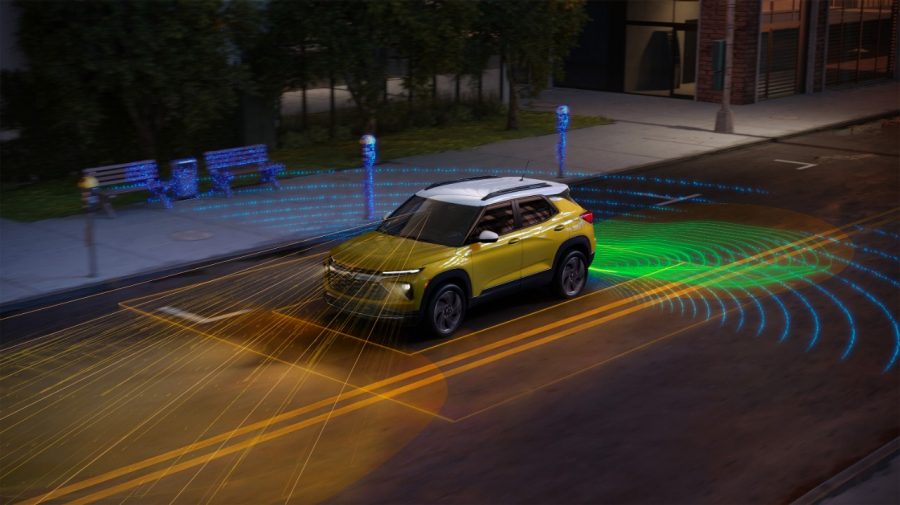
Capp was involved in bringing GM’s first generation of Automated Driver-Assistance Systems (ADAS)1 to market, including technologies like Automatic Emergency Braking (AEB), Rear Cross Traffic Alert, and Rear Automatic Braking. He was also a key part of the team that negotiated an industry commitment with NHTSA and the Insurance Institute for Highway Safety (IIHS) that led to making AEB standard equipment today.
Modern safety features are helping drivers and have a measurable real-world impact. A recent GM-sponsored study from the University of Michigan Transportation Research Institute (UMTRI), for example, found that GM vehicles equipped with AEB technology are showing a 41-to-51-percent reduction in police-reported rear-end crashes.
Capp’s learnings as a summer intern still influence his work at the intersection of human decision-making and safety engineering. “The design of our ADAS features include extensive behavioral studies because driver responses and reactions are critical to achieving the safety results we want,” he says.
For Capp, it’s a point of pride that ADAS features – including AEB, Front Pedestrian Braking, Lane Keep Assist with Lane Departure Warning, Forward Collision Alert, and IntelliBeam automatic high beams – are standard in new GM vehicles, including those with an MSRP under $30,000.
“If you think back, it wasn’t that long ago that power windows, air-conditioning, and anti-lock brakes were optional features,” he says. “Now, those things are standard, as well as all these important driver-assist systems. It’s been fun over the years not just developing these features but working with people across the company to introduce these to different vehicle segments.”
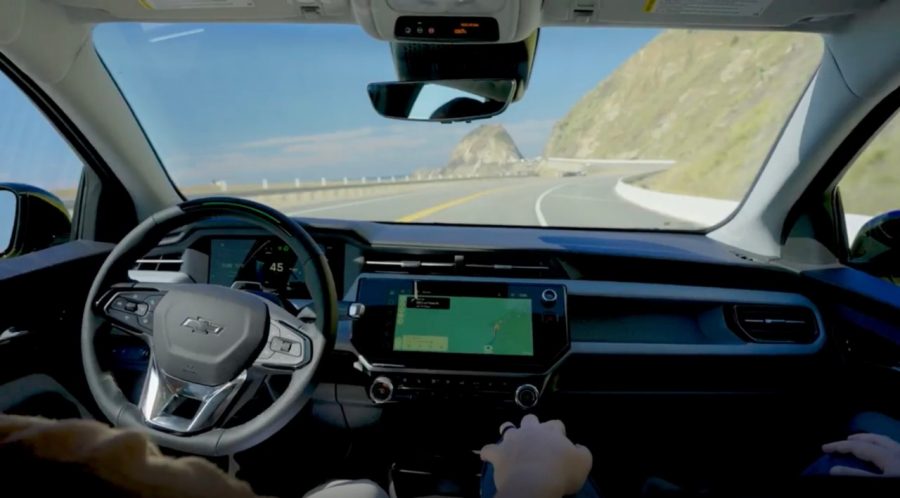
One of Capp’s biggest and most satisfying projects was introducing Super Cruise Driver Assistance Technology2, GM’s award-winning hands-free driver-assistance feature, the first system of its kind at GM. “It was close to a 10-year period from the time we started developing Super Cruise at GM R&D to launching it in 2017,” Capp says. “My team developed the driver attention management system – the alert and escalation process that is designed to help keep the driver attentive while enjoying hands-free driving.”
Now, GM customers have driven over 1 billion miles with Super Cruise, with over 750,000 Super Cruise-enabled vehicles across many segments driving on North American roads. “We had some sense that this feature was going to be a breakthrough technology, but I don’t think any of us working on the project initially could have predicted the impact that it's having today,” Capp says. The team’s work, and those billion miles and counting, helped lay the foundation for future ADAS features, like the next-generation version of Super Cruise, which will launch in 2028 on the Cadillac ESCALADE IQ.
Capp currently leads the team that manages and sets vehicle safety requirements, consumer metric targets, as well as regulations for new vehicle programs at GM, something he describes as a “hugely satisfying” process.
Over his career, Capp has seen enormous transformations in vehicle safety and the automotive industry at large. He and his colleagues have developed systems and technologies that help make vehicles safer – but his work, and that of the overall GM safety team, isn’t finished, as the company aims for a future with zero crashes.
“Safety is foundational to what we do,” Capp says. “We get a lot of letters from customers who’ve experienced crashes who are appreciative of what our vehicles can do for them. But there are still too many crashes, and that's what keeps us going. Our work to improve safety for drivers, passengers and others who share the road is never done.”
1Safety or driver assistance features are no substitute for the driver’s responsibility to operate the vehicle in a safe manner. The driver should remain attentive to traffic, surroundings, and road conditions at all times. Visibility, weather, and road conditions may affect feature performance. Read the vehicle’s owner’s manual for more important feature limitations and information.
2Always pay attention while driving and when using Super Cruise. Always use Super Cruise in accordance with local laws. Do not use a hand-held device. Requires active Super Cruise plan or trial. Terms apply. Visit OnStar.com for compatible roads and full details.