
By: Chris Perkins, Senior Writer and Editor, GM News
By: Chris Perkins, Senior Writer and Editor, GM News
Hero Image:
Engineers love to chase efficiency, maximizing the potential of what’s in front of them. With the pioneering GM EV1 – the first modern electric vehicle from General Motors – they looked in an unexpected place: The brakes.
To meaningfully boost the EV1’s driving range, getting the most out of mid-1990s battery technology, GM engineers and designers left no stone unturned, creating a lightweight car with bodywork meant to slip through the air. They also reinvented the automotive braking system, setting a template for so many vehicles to come.
A typical automotive braking system uses friction to convert kinetic (rolling) energy into thermal (heat) energy. When the driver pushes the brake pedal in a modern car, hydraulic fluid flows to brake pads that squeeze against a rotating disc attached to each wheel. It’s a very effective method for slowing a car down, but all that heat energy is wasted, lost into the atmosphere.
EVs, however, offer another way of slowing a car down: Regenerative braking. The same electric motor that propels the vehicle forward can also act as an electricity generator, resisting the car’s momentum and putting energy back into the battery as the car slows down. By harnessing regenerative braking, the EV1 team could generate electricity to boost driving range.
Caption: A cutaway illustration of the GM EV1 highlighting many of its novel tech features.
The EV1 team wanted both regenerative and friction braking, and they wanted to keep things simple for drivers, controlling both with the conventional brake pedal. To do so, they created a new and revolutionary kind of braking system: Brake-by-wire, where the brake pedal activates an electronic system that controls regenerative braking and the conventional brakes simultaneously.
In a conventional automotive braking system, the brake pedal is connected directly to the hydraulics. Brake-by-wire adds an electric intermediary, which unlocks regenerative capability. When the driver presses the brake pedal, the system generates an electrical signal that goes to a computer. The computer determines how much braking force the driver wants and how to achieve it.
In the EV1, the computer is called the Brake Torque Control Module (BTCM), and it translates the brake-pedal signal into a mix of friction and regenerative braking. (For safety, the brake pedal is also connected to a fully mechanical backup system.)
At the time, GM described this as “the world’s most efficient and intelligent stopping system ever fitted to a production automobile.”
Conceptually, the EV1’s braking system operates exactly like the braking systems in GM’s modern EVs. Press the brake pedal, and the car’s computers decide how much friction and regenerative braking to actuate. Should the electronic system fail, it’s connected to a mechanical backup, just as in the EV1.
Brandon Vivian, today Executive Chief Engineer for GM Defense and Cadillac V-Series, worked on the EV1 starting in 1995 as his first project at General Motors. He was also responsible for braking system improvements made for the 1999 model-year EV1.
“On the EV1, we had a friction-first strategy,” Vivian explains. Essentially, when the driver pressed the brake pedal, the EV1 would immediately engage the friction brakes, then blend in regenerative braking as needed, based on how much deceleration the driver wanted and how much charge the battery could accept.
For the updated 1999 EV1, regenerative braking did around 90% of the work of slowing the EV1 down at low speeds, which translated into a range boost of roughly 10 miles. That doesn’t sound like much until you consider that the EV1 offered around 90 miles on a charge.
Caption: The 2000 GM Precept Concept, a diesel-electric hybrid.
Vivian’s next project was the GM Precept concept, a diesel-electric hybrid that built on much of the technology pioneered with the EV1, including its braking system. The Precept used a “regen-first” braking strategy, which actuated regenerative braking when the driver pressed the brake pedal, then added in friction braking as necessary. Vivian says this basic control strategy is used in GM vehicles to this day. “We were able to apply the lessons we learned with the EV1 and the Precept as brake systems got more and more sophisticated,” Vivian says.
Modern GM EVs gives drivers the option of actuating regenerative braking simply by lifting off the accelerator pedal, with different levels of regenerative braking force available. One-Pedal Driving1 allows drivers to use regenerative braking alone to bring their EVs to a complete stop in many driving scenarios. Regen on Demand2 also lets drivers dial up even more regenerative braking for specific driving scenarios, like descending a long hill.
GM also incorporated a lot of the learnings from the EV1’s braking system into internal-combustion cars. Its modern brake-by-wire system, eBoost, allows for very precise tuning of the way the brake pedal feels when the driver presses on it. In Cadillac V-Series models and the Corvette, the brake pedal “feel” changes according to the drive mode selected, giving the driver tailored response for race-track driving. The eBoost system also allows for better implementation of driver-assistance features, like Super Cruise, automatic emergency braking and pedestrian braking.
“What started as a small project has come full circle and is being applied ubiquitously across the fleet,” Vivian says. “That’s why you do these things, right? You have to develop the technology and the ecosystem around it.”
GM is revisiting the legacy of the EV1 supporting a restoration by YouTube channel The Questionable Garage. It’s the perfect opportunity to look back at the pioneering car, and its connections to today and tomorrow.
Like the rest of the EV1, the braking system wasn’t just technology for its own sake. “The definition of innovation is when you take technology and make someone’s life simpler or provide real value,” Vivian says. “Technology is just technology. Until it has value, it doesn’t become innovation.”
YOUTUBE EMBED FOR QUESTIONABLE GARAGE VIDEO: https://www.youtube.com/watch?v=GY5UOOR7iZs
Check out our past installments of GM Firsts:
How computers have kept GM vehicles stable in slippery conditions for more than 50 years
How GM invented the concept car and changed automotive design forever
Hands-free towing, a GM Super Cruise exclusive
1 Feature may be limited when the battery temperatures are extremely cold or hot or when battery is near full charge. See Owner’s Manual for details.
2 Feature may be limited when the battery temperatures are extremely cold or hot or when battery is near full charge. Always use the brake pedal when you need to stop immediately. See Owner’s Manual for details.
NOTE: Please embed any photos where you would like them embedded on GM News. If you have video to embed, please make a note where you would like it embedded and ping Steve Woznicki and/or Seth Hay to call this out.
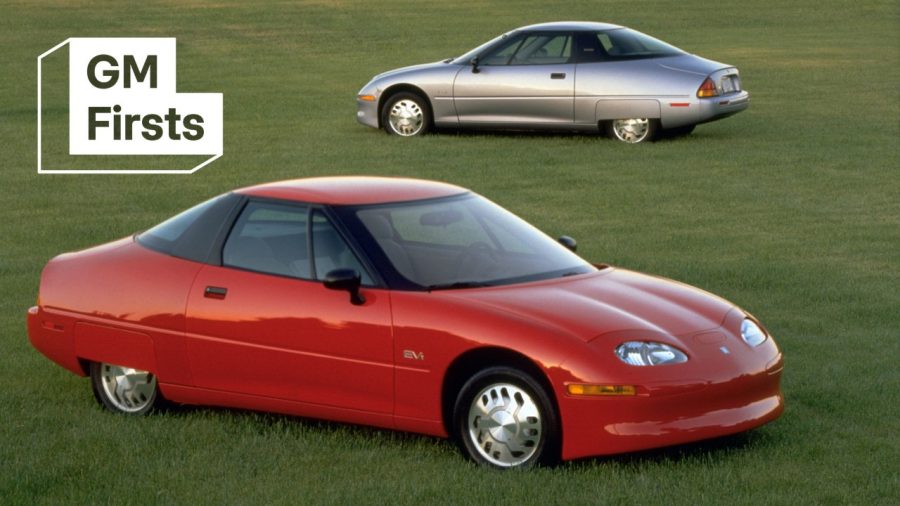
Engineers love to chase efficiency, maximizing the potential of what’s in front of them. With the pioneering GM EV1 – the first modern electric vehicle from General Motors – they looked in an unexpected place: The brakes.
To meaningfully boost the EV1’s driving range, getting the most out of mid-1990s battery technology, GM engineers and designers left no stone unturned, creating a lightweight car with bodywork meant to slip through the air. They also reinvented the automotive braking system, setting a template for so many vehicles to come.
A typical automotive braking system uses friction to convert kinetic (rolling) energy into thermal (heat) energy. When the driver pushes the brake pedal in a modern car, hydraulic fluid flows to brake pads that squeeze against a rotating disc attached to each wheel. It’s a very effective method for slowing a car down, but all that heat energy is wasted, lost into the atmosphere.
EVs, however, offer another way of slowing a car down: Regenerative braking. The same electric motor that propels the vehicle forward can also act as an electricity generator, resisting the car’s momentum and putting energy back into the battery as the car slows down. By harnessing regenerative braking, the EV1 team could generate electricity to boost driving range.
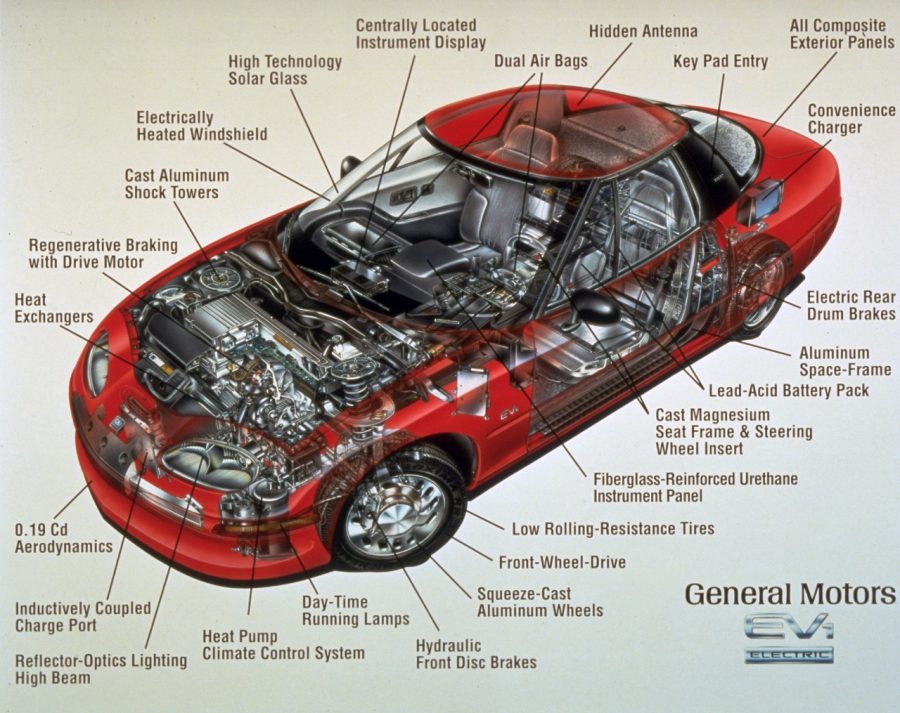
The EV1 team wanted both regenerative and friction braking, and they wanted to keep things simple for drivers, controlling both with the conventional brake pedal. To do so, they created a new and revolutionary kind of braking system: Brake-by-wire, where the brake pedal activates an electronic system that controls regenerative braking and the conventional brakes simultaneously.
In a conventional automotive braking system, the brake pedal is connected directly to the hydraulics. Brake-by-wire adds an electric intermediary, which unlocks regenerative capability. When the driver presses the brake pedal, the system generates an electrical signal that goes to a computer. The computer determines how much braking force the driver wants and how to achieve it.
In the EV1, the computer is called the Brake Torque Control Module (BTCM), and it translates the brake-pedal signal into a mix of friction and regenerative braking. (For safety, the brake pedal is also connected to a fully mechanical backup system.)
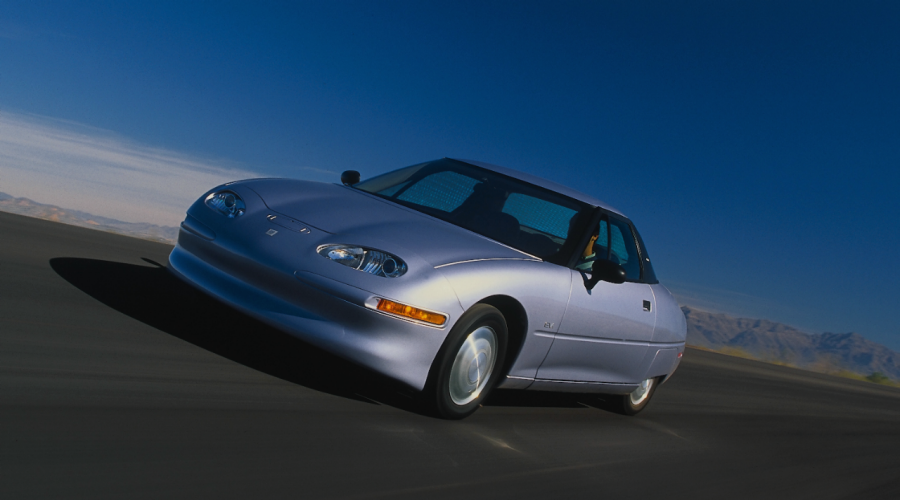
At the time, GM described this as “the world’s most efficient and intelligent stopping system ever fitted to a production automobile.”
Conceptually, the EV1’s braking system operates exactly like the braking systems in GM’s modern EVs. Press the brake pedal, and the car’s computers decide how much friction and regenerative braking to actuate. Should the electronic system fail, it’s connected to a mechanical backup, just as in the EV1.
Brandon Vivian, today Executive Chief Engineer for GM Defense and Cadillac V-Series, worked on the EV1 starting in 1995 as his first project at General Motors. He was also responsible for braking system improvements made for the 1999 model-year EV1.
“On the EV1, we had a friction-first strategy,” Vivian explains. Essentially, when the driver pressed the brake pedal, the EV1 would immediately engage the friction brakes, then blend in regenerative braking as needed, based on how much deceleration the driver wanted and how much charge the battery could accept.
For the updated 1999 EV1, regenerative braking did around 90% of the work of slowing the EV1 down at low speeds, which translated into a range boost of roughly 10 miles. That doesn’t sound like much until you consider that the EV1 offered around 90 miles on a charge.
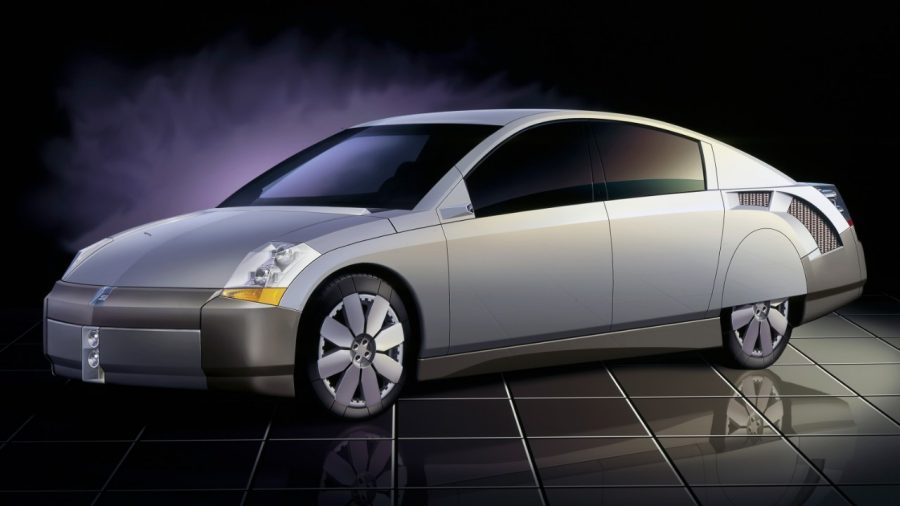
Vivian’s next project was the GM Precept concept, a diesel-electric hybrid that built on much of the technology pioneered with the EV1, including its braking system. The Precept used a “regen-first” braking strategy, which actuated regenerative braking when the driver pressed the brake pedal, then added in friction braking as necessary. Vivian says this basic control strategy is used in GM vehicles to this day. “We were able to apply the lessons we learned with the EV1 and the Precept as brake systems got more and more sophisticated,” Vivian says.
Modern GM EVs gives drivers the option of actuating regenerative braking simply by lifting off the accelerator pedal, with different levels of regenerative braking force available. One-Pedal Driving1 allows drivers to use regenerative braking alone to bring their EVs to a complete stop in many driving scenarios. Regen on Demand2 also lets drivers dial up even more regenerative braking for specific driving scenarios, like descending a long hill.
GM also incorporated a lot of the learnings from the EV1’s braking system into internal-combustion cars. Its modern brake-by-wire system, eBoost, allows for very precise tuning of the way the brake pedal feels when the driver presses on it. In Cadillac V-Series models and the Corvette, the brake pedal “feel” changes according to the drive mode selected, giving the driver tailored response for race-track driving. The eBoost system also allows for better implementation of driver-assistance features, like Super Cruise, automatic emergency braking and pedestrian braking.
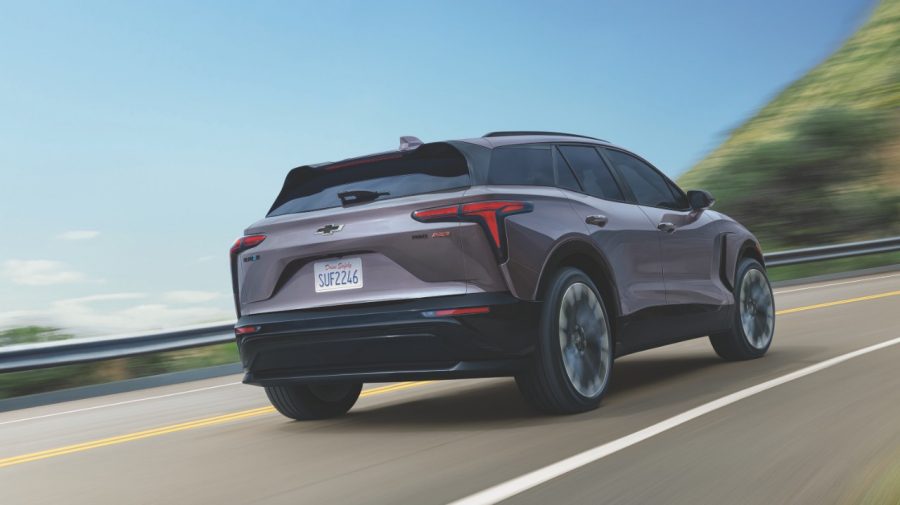
“What started as a small project has come full circle and is being applied ubiquitously across the fleet,” Vivian says. “That’s why you do these things, right? You have to develop the technology and the ecosystem around it.”
GM is revisiting the legacy of the EV1 supporting a restoration by YouTube channel The Questionable Garage. It’s the perfect opportunity to look back at the pioneering car, and its connections to today and tomorrow.
Like the rest of the EV1, the braking system wasn’t just technology for its own sake. “The definition of innovation is when you take technology and make someone’s life simpler or provide real value,” Vivian says. “Technology is just technology. Until it has value, it doesn’t become innovation.”
Check out our past installments of GM Firsts:
- How computers have kept GM vehicles stable in slippery conditions for more than 50 years
- How GM invented the concept car and changed automotive design forever
- Hands-free towing, a GM Super Cruise exclusive
1 Feature may be limited when the battery temperatures are extremely cold or hot or when battery is near full charge. See Owner’s Manual for details.
2 Feature may be limited when the battery temperatures are extremely cold or hot or when battery is near full charge. Always use the brake pedal when you need to stop immediately. See Owner’s Manual for details.