Blending artistry and AI to shape the future of GM Design
2026-06-05
At GM Design, the future still starts by hand.
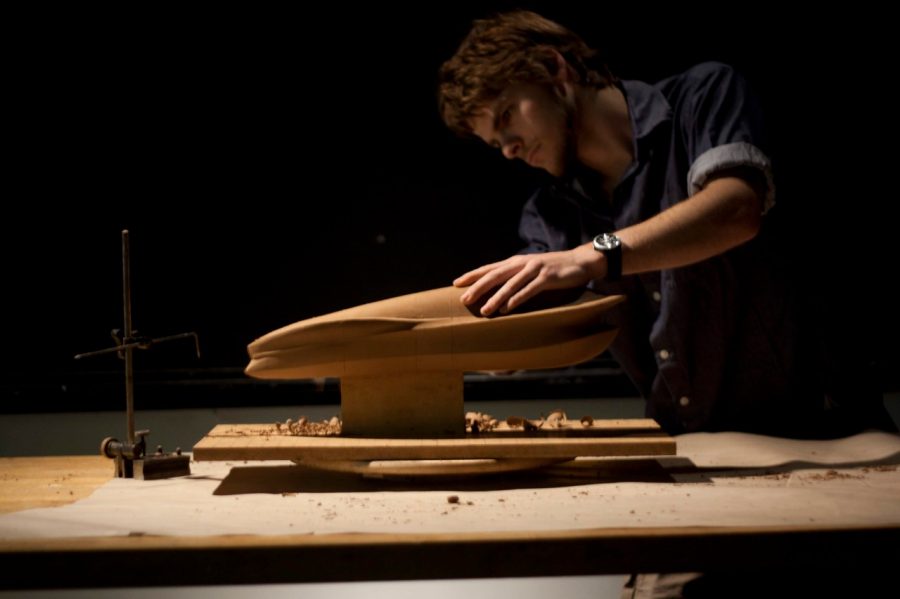
For sculptors Miranda Rumfelt and Tony Tarantino, that work begins in clay. They transform design ideas into full-scale clay models that designers can study, refine, and experience in ways that can’t be matched with a computer screen.
Pioneered at GM in the late 1920s, this clay modeling technique is now used by designers at nearly every mainstream automaker.
Both Miranda and Tony were inspired by their fathers and a love of cars, and they share a mission: to use artistry and technology to help GM drive what’s next.
Mary Barra saw this blend of craftsmanship and digital capabilities in action during a recent visit to the Design Center, and NBC News spotlighted the intersection in a recent Business in America segment.
Miranda discovered automotive sculpting at 13, after years of wrenching on race cars with her father. She later joined GM’s YMAD (Youth Modelers, Artists, and Designers) program, interned with GM Design, and joined GM full-time in 2022. She has worked on many concepts, including the Corvette CX.
“We have the power to make someone's favorite car that they love the moment they see it, step inside, and get behind the wheel,” Miranda said.
Tony grew up helping his father in the garage, surrounded by GM trucks, and developed a passion for Chevrolet, NASCAR, and Corvette. He studied transportation design at ArtCenter College of Design, with a focus on clay sculpting.
Before joining GM in 2019, Tony sculpted at Tesla, working on the Semi, Model Y, and Cybertruck. At GM, he has worked on the Sierra HD, Sierra EV, and Corvette CX concept.
“Working at GM has been a lifelong dream of mine,” Tony said. “This company not only invented the job [of clay sculpting] but also continues to deeply value the design and clay process while pushing the envelope in both the approach and the final product.”
Clay remains a critical part of GM’s creative process, even in a design environment powered by advanced digital tools. Sculpting, sketching, and physical review help teams evaluate proportion, light, and surface in ways technology alone cannot fully replicate.
“There’s something powerful about seeing a form in person,” Miranda said. “Technology helps us refine the process, but an artist’s creativity gives a vehicle its soul.”
Full-scale clay models help designers and sculptors assess vehicles in real space, spot opportunities earlier, and refine a design before it moves further downstream.
That work happens in a collaborative environment. GM’s Design West facility brings designers, engineers, and program teams together to review work around physical models from multiple angles.
Teams may be sculpting an exterior surface or working on an interior buck while digital reviews happen just steps away.
Technology is also accelerating the creative process. AI is helping shorten the path from sketch to rendering to 3D digital model, giving designers more opportunities to explore ideas and make stronger decisions in the same amount of time.
AI-powered aerodynamic prediction can provide earlier feedback, helping reduce iterations and avoid rework.
Designers define the vision, proportion, and character of a vehicle. Clay sculptors like Miranda and Tony help bring that vision into physical form, while AI helps teams work smarter and faster. Human judgment remains central to the final outcome.
The result is stronger collaboration between Design and Engineering and a faster path from concept to reality.
This spirit of collaboration is part of a larger legacy. The Cole Technical Campus has long been a hub for innovation at GM — a place where teams imagine, test, and shape what’s next as the company advances EVs, software, and mobility.
“We’re doing more than shaping clay,” Miranda said. “We’re shaping the future.”
At GM, that future is taking form through the partnership of artistry and technology. Team members like Miranda and Tony show that when human creativity and advanced tools work together, better ideas can move faster — and become real.
Watch the NBC News segment here.
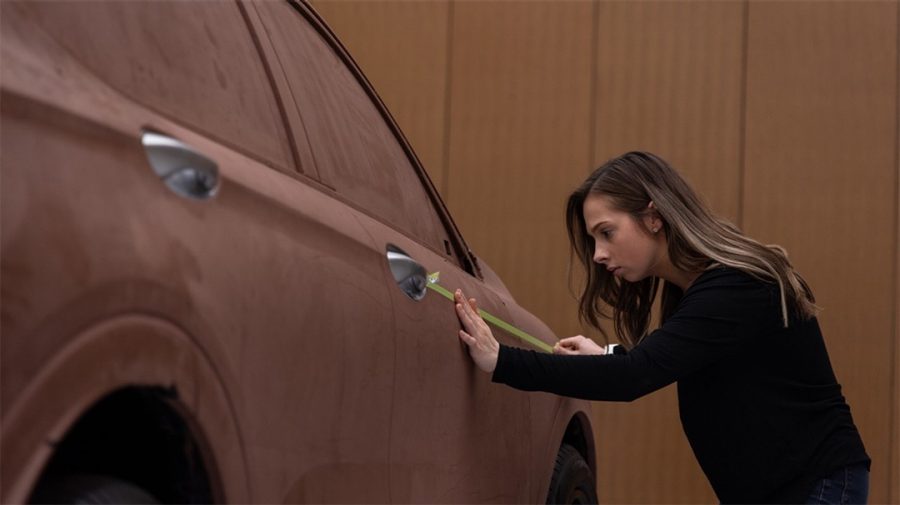
Miranda Rumfelt taping a line on a full-size Buick clay model in the new GM Design West building.
At GM Design, the future still starts by hand.
For sculptors Miranda Rumfelt and Tony Tarantino, that work begins in clay. They transform design ideas into full-scale clay models that designers can study, refine, and experience in ways that can’t be matched with a computer screen.
Pioneered at GM in the late 1920s, this clay modeling technique is now used by designers at nearly every mainstream automaker.
Both Miranda and Tony were inspired by their fathers and a love of cars, and they share a mission: to use artistry and technology to help GM drive what’s next.
Mary Barra saw this blend of craftsmanship and digital capabilities in action during a recent visit to the Design Center, and NBC News spotlighted the intersection in a recent Business in America segment.
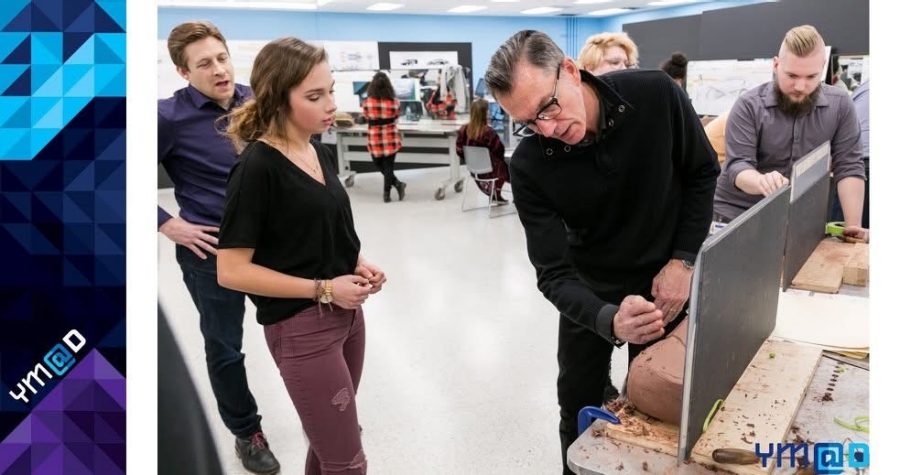
Miranda in the GM Design YMAD program.
Miranda discovered automotive sculpting at 13, after years of wrenching on race cars with her father. She later joined GM’s YMAD (Youth Modelers, Artists, and Designers) program, interned with GM Design, and joined GM full-time in 2022. She has worked on many concepts, including the Corvette CX.
“We have the power to make someone's favorite car that they love the moment they see it, step inside, and get behind the wheel,” Miranda said.
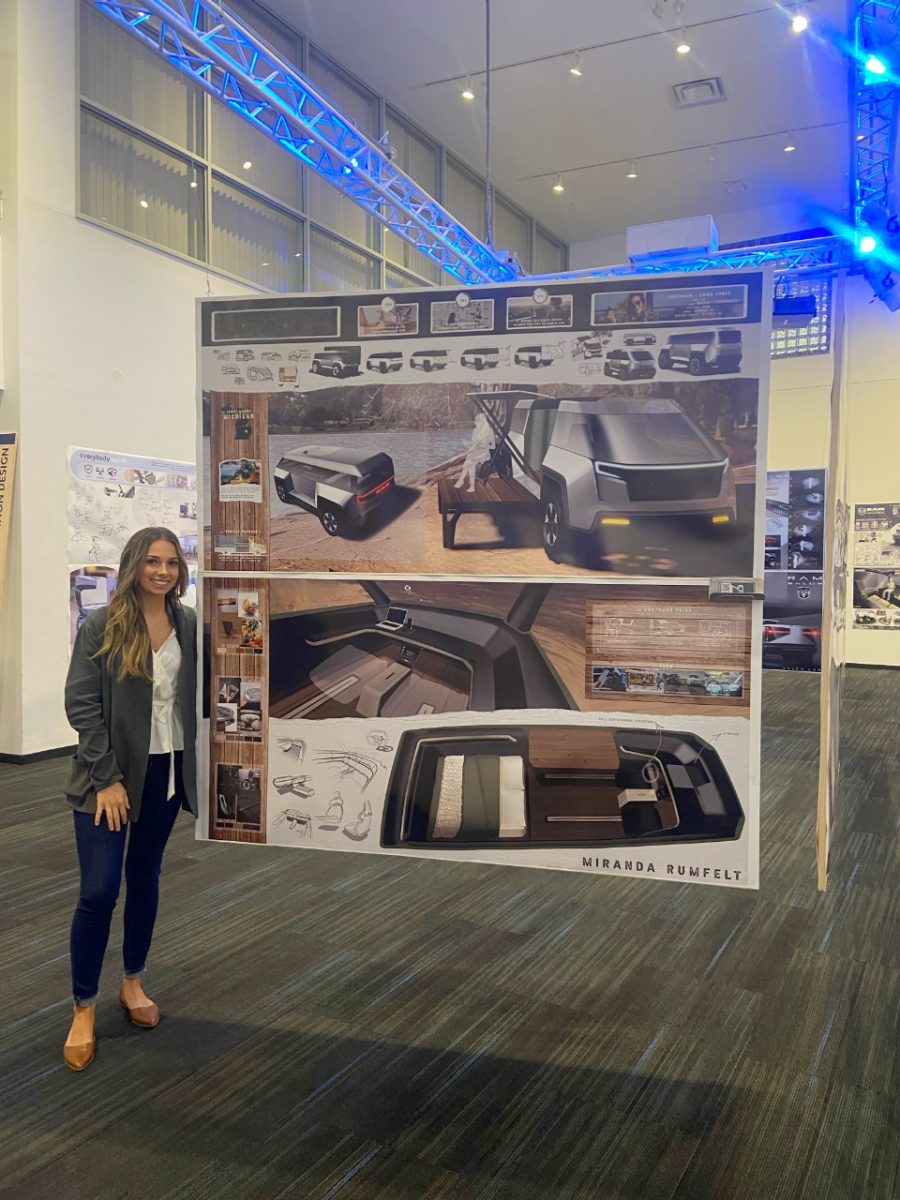
Miranda with her work at Lawrence Technological University.
Tony grew up helping his father in the garage, surrounded by GM trucks, and developed a passion for Chevrolet, NASCAR, and Corvette. He studied transportation design at ArtCenter College of Design, with a focus on clay sculpting.
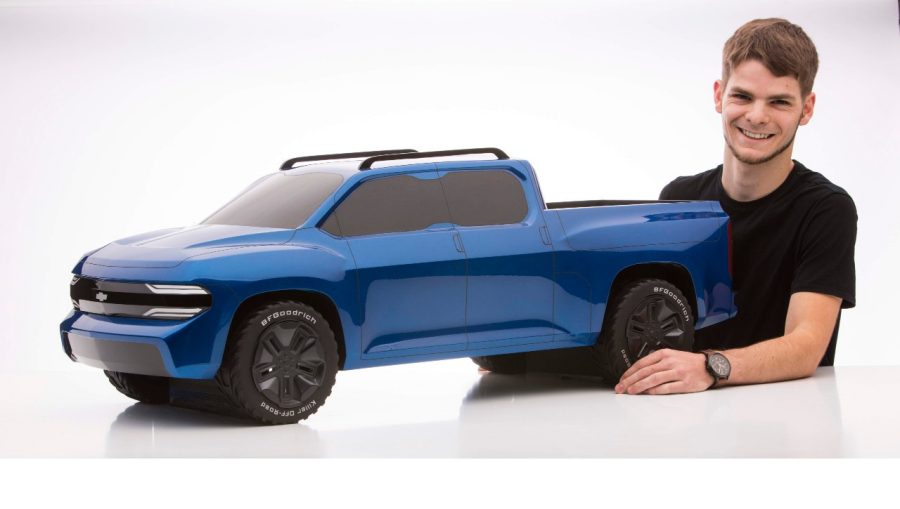
Tony with his senior thesis clay model, the Chevrolet Cheyenne plug-in hybrid pickup.
Before joining GM in 2019, Tony sculpted at Tesla, working on the Semi, Model Y, and Cybertruck. At GM, he has worked on the Sierra HD, Sierra EV, and Corvette CX concept.
“Working at GM has been a lifelong dream of mine,” Tony said. “This company not only invented the job [of clay sculpting] but also continues to deeply value the design and clay process while pushing the envelope in both the approach and the final product.”
Tony with his first-ever clay model at ArtCenter.
Clay remains a critical part of GM’s creative process, even in a design environment powered by advanced digital tools. Sculpting, sketching, and physical review help teams evaluate proportion, light, and surface in ways technology alone cannot fully replicate.
“There’s something powerful about seeing a form in person,” Miranda said. “Technology helps us refine the process, but an artist’s creativity gives a vehicle its soul.”
Full-scale clay models help designers and sculptors assess vehicles in real space, spot opportunities earlier, and refine a design before it moves further downstream.
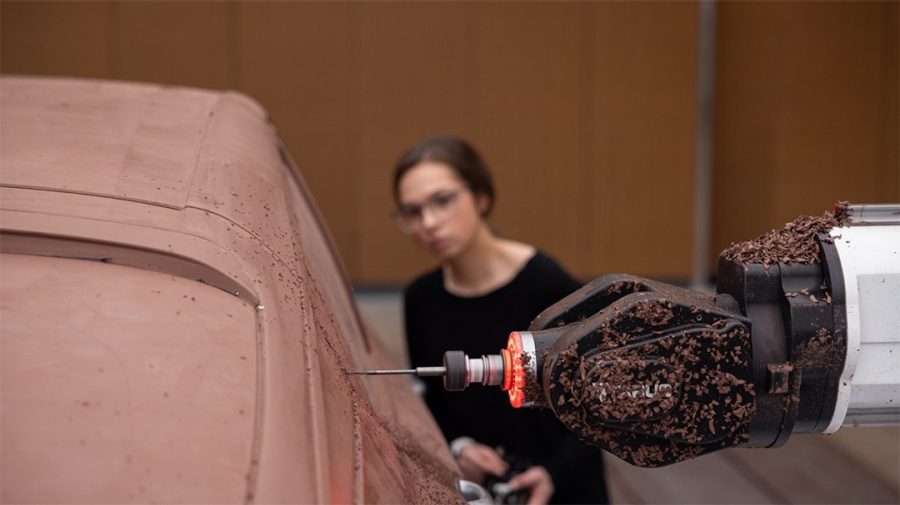
Miranda operates a clay milling machine on a full-size clay model.
That work happens in a collaborative environment. GM’s Design West facility brings designers, engineers, and program teams together to review work around physical models from multiple angles.
Teams may be sculpting an exterior surface or working on an interior buck while digital reviews happen just steps away.
Technology is also accelerating the creative process. AI is helping shorten the path from sketch to rendering to 3D digital model, giving designers more opportunities to explore ideas and make stronger decisions in the same amount of time.
AI-powered aerodynamic prediction can provide earlier feedback, helping reduce iterations and avoid rework.
Designers define the vision, proportion, and character of a vehicle. Clay sculptors like Miranda and Tony help bring that vision into physical form, while AI helps teams work smarter and faster. Human judgment remains central to the final outcome.
The result is stronger collaboration between Design and Engineering and a faster path from concept to reality.
This spirit of collaboration is part of a larger legacy. The Warren Technical Center has long been a hub for innovation at GM — a place where teams imagine, test, and shape what’s next as the company advances EVs, software, and mobility.
“We’re doing more than shaping clay,” Miranda said. “We’re shaping the future.”
At GM, that future is taking form through the partnership of artistry and technology. Team members like Miranda and Tony show that when human creativity and advanced tools work together, better ideas can move faster — and become real.
Watch the NBC News segment here.