
by Laryssa Hulcio and Stephen Harber, GM Talent Marketing
Built to be invisible: How a GM Canada software developer aims to make vehicles feel effortless
2026-04-24
By Laryssa Hulcio & Stephen Harber, Talent Marketing
You get into the vehicle, your playlist starts, your destination appears in navigation, and you use voice assistant to text a friend to let her know you’re on the way.
The best part? Nothing calls attention to itself.
Moments like that feel simple, but they depend on software built to perform in every condition, across years of use.
In a vehicle, the user experience is engineered to feel seamless and dependable. The software is designed to support ongoing communication with the hardware, wireless devices it syncs with, and vehicle functions. The goal is to maintain that communication consistently, even as devices are updated and the vehicle evolves with new features and capabilities.
For Youngju Do, a Senior Software Developer at General Motors Canada, solving that problem is what makes the work meaningful.
“A lot of people think the car should behave like their phone,” she says. “But the environment is completely different. In a vehicle, safety and stability are paramount considerations, shaping the experience drive after drive.”
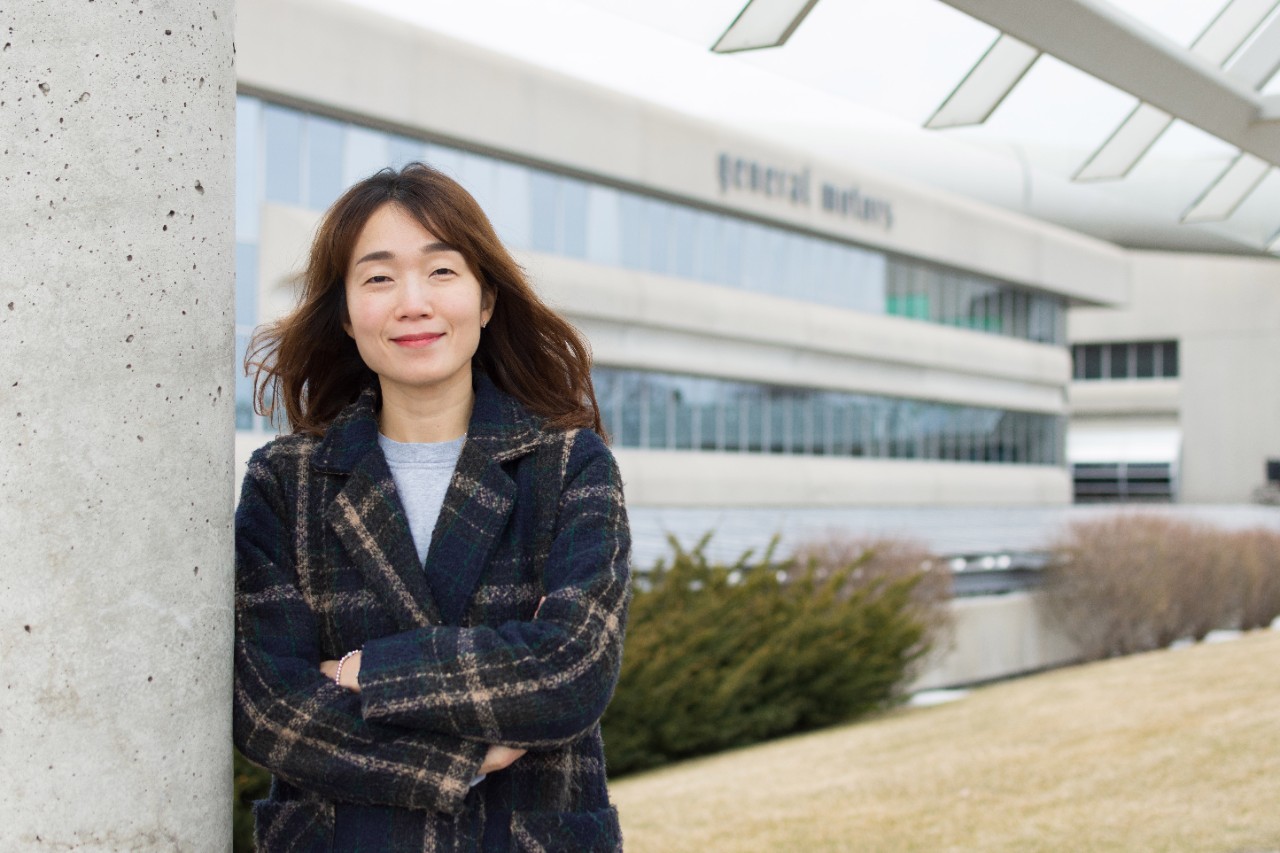
Image Caption: At GM Canada, Youngju Do works on the invisible layers behind Infotainment.
Simple features, complex dependencies
Do works on the Android frameworks and Bluetooth connectivity that support the infotainment systems inside GM vehicles. This is where consumer software meets automotive hardware, and where flexibility has to exist without sacrificing consistency.
Her interest in this kind of work started early.
She was drawn to engineering early, fascinated by how complex systems behave and how small changes affect the whole. That interest led her to LG Electronics, where she spent more than a decade developing Android-based software for mobile devices and vehicle infotainment.
That experience made the difference between consumer electronics and automotive software clear.
“With a phone, if something goes wrong, it is frustrating, but you can restart it,” Do says. “With a vehicle, the expectation is different. People paid a lot for it. They want everything to work without thinking about it.”
Infotainment systems connect frameworks, hardware interfaces and user applications while supporting different devices and wireless standards within the limits of the vehicle.
Inside the software stack
Do’s experience across the Android stack, including framework development, hardware abstraction layers and application software, gives her a broader view of how those pieces interact.
“There is a difference between knowing how a system should work and knowing how it works in real situations,” she says. “When you understand the whole system, you can find problems earlier. Small decisions can make a big difference.”
As vehicles become more software-defined, expectations for infotainment continue to grow. Drivers increasingly expect the same convenience they get from their phones, with experiences that are smoothly integrated with their car.
Where scale changes everything
“Vehicles are starting to feel more like part of your digital life,” Do says. “Software defined vehicles recognize the user and synchronize everything automatically. The goal is that you do not have to think about connecting anything.”
Reaching that point depends on building software that stays dependable as new features are added.
“Innovation only works when the foundation is strong,” she explains. “In automotive, safety and stability come first. When the system is reliable, then you can add new capabilities.”
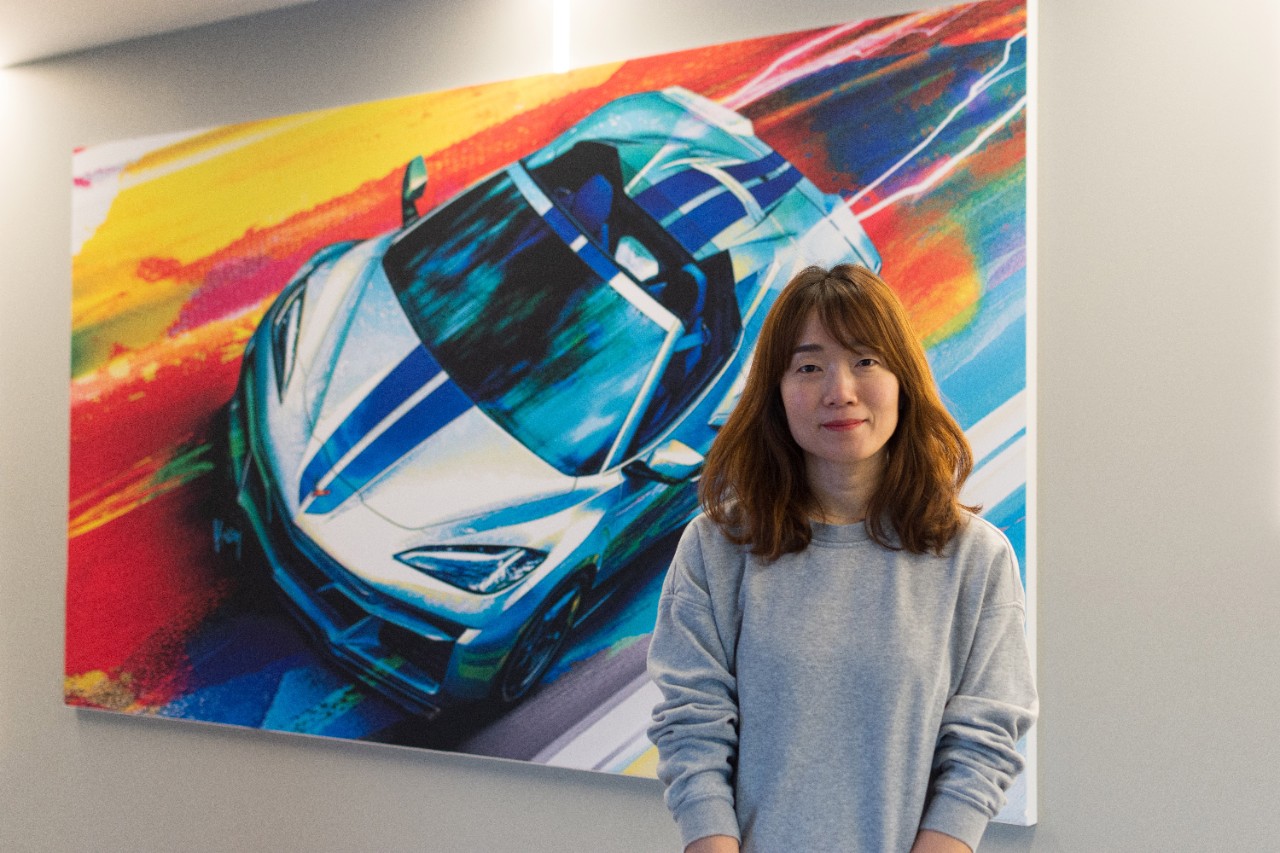
Image Caption: Surrounded by color at GM’s Technical Centre in Markham, Ontario, Youngju Do helps shape a more seamless drive.
Across teams and layers
Do joined GM after moving from South Korea to Canada later in her career, looking for a new challenge. The change meant adapting to a different engineering culture and working with teams across multiple disciplines.
“In Korea, the focus was speed and efficiency,” she says. “Moving to Canada showed me how important communication is. When problems become more complex, you need people to share ideas and solve them together.”
At GM Canada, she says that approach makes it easier to work on software that affects many parts of the vehicle.
“It feels very open,” Do states. “It is about how good the idea is, not who said it. When someone has a better solution, people listen. That helps us build better products.”
When everything just works
After nearly two decades in software development, she still approaches each project the same way she did at the beginning of her career.
“I think everyone has something that keeps them moving forward,” she says. “For me, it has always been growth. There’s always something new to learn.”
For drivers, the result of that work is almost invisible. The phone connects. The screen responds. The vehicle behaves the way it should.
For Do, that’s ideal.
“The best technology is the kind you don’t notice,” she says. “If everything works naturally, then we did our job.”
Explore more employee spotlights from GM Canada and meet the people behind the drive:
The software behind the screen: engineer Stanley Fok on Scaling GM Infotainment
The engineer helping to define GM’s software-defined future
The diagnostic architecture powering GM’s next-gen software platform
You get into the vehicle, your playlist starts, your destination appears in navigation, and you use voice assistant to text a friend to let her know you’re on the way.
The best part? Nothing calls attention to itself.
Moments like that feel simple, but they depend on software built to perform in every condition, across years of use.
In a vehicle, the user experience is engineered to feel seamless and dependable. The software is designed to support ongoing communication with the hardware, wireless devices it syncs with, and vehicle functions. The goal is to maintain that communication consistently, even as devices are updated and the vehicle evolves with new features and capabilities.
For Youngju Do, a Senior Software Developer at General Motors Canada, solving that problem is what makes the work meaningful.
“A lot of people think the car should behave like their phone,” she says. “But the environment is completely different. In a vehicle, safety and stability are paramount considerations, shaping the experience drive after drive.”

Simple features, complex dependencies
Do works on the Android frameworks and Bluetooth connectivity that support the infotainment systems inside GM vehicles. This is where consumer software meets automotive hardware, and where flexibility has to exist without sacrificing consistency.
Her interest in this kind of work started early.
She was drawn to engineering early, fascinated by how complex systems behave and how small changes affect the whole. That interest led her to LG Electronics, where she spent more than a decade developing Android-based software for mobile devices and vehicle infotainment.
That experience made the difference between consumer electronics and automotive software clear.
“With a phone, if something goes wrong, it is frustrating, but you can restart it,” Do says. “With a vehicle, the expectation is different. People paid a lot for it. They want everything to work without thinking about it.”
Infotainment systems connect frameworks, hardware interfaces and user applications while supporting different devices and wireless standards within the limits of the vehicle.
Inside the software stack
Do’s experience across the Android stack, including framework development, hardware abstraction layers and application software, gives her a broader view of how those pieces interact.
“There is a difference between knowing how a system should work and knowing how it works in real situations,” she says. “When you understand the whole system, you can find problems earlier. Small decisions can make a big difference.”
As vehicles become more software-defined, expectations for infotainment continue to grow. Drivers increasingly expect the same convenience they get from their phones, with experiences that are smoothly integrated with their car.
Where scale changes everything
“Vehicles are starting to feel more like part of your digital life,” Do says. “Software defined vehicles recognize the user and synchronize everything automatically. The goal is that you do not have to think about connecting anything.”
Reaching that point depends on building software that stays dependable as new features are added.
“Innovation only works when the foundation is strong,” she explains. “In automotive, safety and stability come first. When the system is reliable, then you can add new capabilities.”
Across teams and layers
Do joined GM after moving from South Korea to Canada later in her career, looking for a new challenge. The change meant adapting to a different engineering culture and working with teams across multiple disciplines.
“In Korea, the focus was speed and efficiency,” she says. “Moving to Canada showed me how important communication is. When problems become more complex, you need people to share ideas and solve them together.”
At GM Canada, she says that approach makes it easier to work on software that affects many parts of the vehicle.
“It feels very open,” Do states. “It is about how good the idea is, not who said it. When someone has a better solution, people listen. That helps us build better products.”
When everything just works
After nearly two decades in software development, she still approaches each project the same way she did at the beginning of her career.
“I think everyone has something that keeps them moving forward,” she says. “For me, it has always been growth. There’s always something new to learn.”
For drivers, the result of that work is almost invisible. The phone connects. The screen responds. The vehicle behaves the way it should.
For Do, that’s ideal.
“The best technology is the kind you don’t notice,” she says. “If everything works naturally, then we did our job.”
Explore more employee spotlights from GM Canada and meet the people behind the drive:
Learn more about careers at GM by visiting careers.gm.com.